

- ❓ Introduction
- 📄 Key Factors That Trigger a Roof Replacement
- 📅 Best Time of Year to Replace a Roof
- 💲 Understanding Roof Replacement Costs
- ⭐ Choosing the Right Roofing System
- 👷 Why Professional Installation Matters
- 🛡️ Importance of Warranties and Guarantees
- 🔍 Signs It’s Time for a Roof Inspection
- 🌎 Environmental and Energy Considerations
- 📊 Quick Checklist Before Replacing Your Roof
- FAQs
- 📚 Conclusion
❓ Introduction
When was the last time you looked at your roof and asked yourself if it’s still doing its job? A roof protects your home from rain, snow, heat, and wind. If it’s failing, you’re not just risking leaks—you’re risking your entire home’s structure and safety. In this guide, I’ll explain the most important things to think about when replacing your roof, so you can make the right choice for your home and family.
📄 Key Factors That Trigger a Roof Replacement
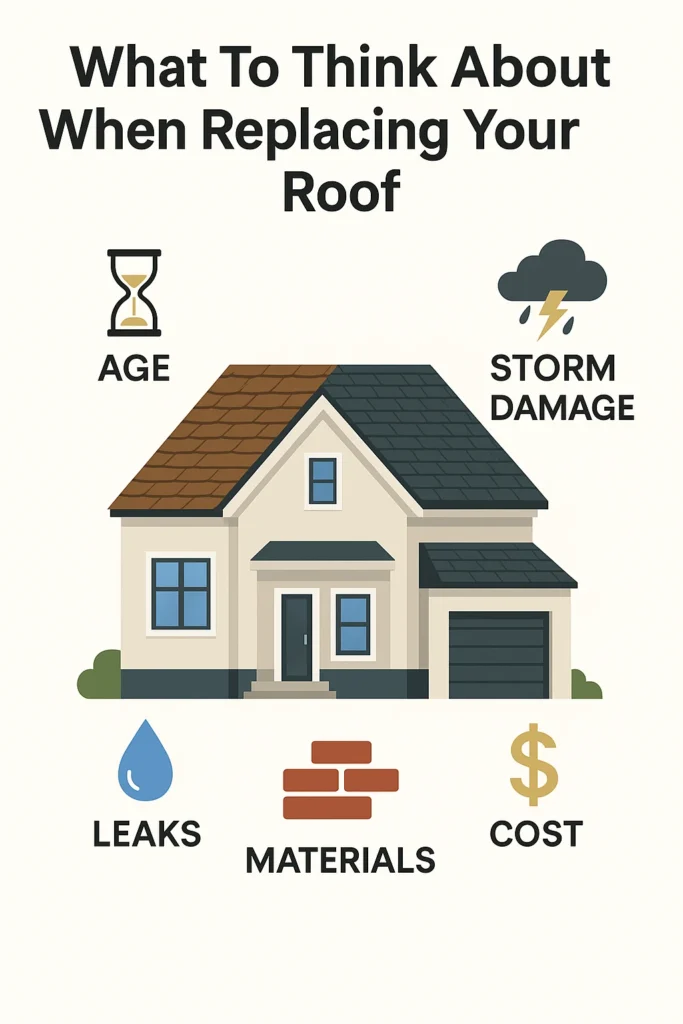
- ⏳ Age of the Roof: Asphalt shingle roofs usually last 20–25 years. Metal and tile systems can last longer, but every material has a limit. Once your roof hits its expected lifespan, it’s time to prepare for replacement.
- 🌪️ Storm Damage: Severe weather like hail, windstorms, and heavy snow cause billions of dollars in damage each year in the U.S. Damaged shingles and broken flashing often require full replacement.
- 💧 Leaks and Water Damage: Water stains, peeling paint, or mold growth signal roof failure. Even small leaks can damage insulation and wood framing.
- 🏠 Visible Wear and Tear: Missing shingles, sagging areas, or granules in gutters are clear signs your roof is breaking down.
📅 Best Time of Year to Replace a Roof
- 🌤️ Spring to Fall: Dry, warm weather is ideal for roof work. Materials seal better and crews work faster.
- ❄️ Winter Challenges: Cold makes shingles brittle and adhesives less effective.
- ☔ Rain Risks: Roof replacement should never happen during heavy rain.
| Season | Pros | Cons |
|---|---|---|
| Spring 🌸 | Mild weather, good sealing | Rain delays possible |
| Summer ☀️ | Long days, fast work | Extreme heat affects crews |
| Fall 🍂 | Stable conditions, prep for winter | High demand, higher cost |
| Winter ❄️ | Off-season discounts | Poor bonding, brittle shingles |
💲 Understanding Roof Replacement Costs
- 📐 Size and Shape: Larger or complex roofs require more materials and labor.
- 📦 Material Type: Asphalt shingles cost less but last shorter. Metal, tile, and slate are durable but expensive.
- 📑 Insurance: Many insurance policies cover storm-related roof replacements.
- 💳 Financing: Most roofing companies provide flexible payment options.
| Material | Lifespan | Cost per sq. ft. |
|---|---|---|
| Asphalt 🧱 | 20–25 yrs | $3.50–$5.50 |
| Metal 🔩 | 40–70 yrs | $7.00–$14.00 |
| Tile 🏰 | 50–100 yrs | $10.00–$18.00 |
| Slate | 75–150 yrs | $15.00–$25.00 |
⭐ Choosing the Right Roofing System
- 🏡 Asphalt Shingles: Affordable and easy to install.
- ⚙️ Metal Roofing: Fire-resistant and long-lasting.
- 🏰 Tile Roofing: Stylish and durable for hot climates.
- ⛰️ Slate Roofing: Premium choice with unmatched durability.
Choose systems backed by warranties and installed by certified contractors.
👷 Why Professional Installation Matters
- ✅ Safety: Roofing is dangerous without training.
- 📏 Precision: Poor installation voids warranties and creates leaks.
- 🔍 Hidden Issues: Professionals spot damage you may miss.
👉 For professional roofing advice, visit Akron Roofing Experts.
🛡️ Importance of Warranties and Guarantees
- Manufacturer Warranty: Protects against faulty materials.
- Workmanship Warranty: Covers installation quality.
- Extended Warranty: Adds resale value by transferring coverage to new owners.
🔍 Signs It’s Time for a Roof Inspection
- Missing or cracked shingles
- Sagging roof areas
- Shingle granules in gutters
- Interior leaks or ceiling stains
- Mold or mildew growth
| Inspection Type | Frequency | Purpose |
|---|---|---|
| DIY Check 🧑🔧 | Twice yearly | Spot visible issues |
| Professional 👷 | Every 2–3 years | Find hidden damage |
| Post-Storm 🌪️ | After major storms | Assess storm impact |
🌎 Environmental and Energy Considerations
- Cool Roofs: Reflect heat and cut cooling costs.
- Proper Ventilation: Prevents trapped moisture.
- Eco-Friendly Materials: Recycled shingles and solar-integrated roofing help reduce environmental impact.
📊 Quick Checklist Before Replacing Your Roof
✅ Check age and condition
✅ Inspect for leaks and damage
✅ Choose right season for work
✅ Compare materials and costs
✅ Review insurance and financing
✅ Hire certified contractors
✅ Understand warranty terms
✅ Plan for inspections after storms
FAQs
📚 Conclusion
Replacing a roof is a major investment, but the right decisions now will protect your home for decades. By focusing on age, materials, costs, warranties, and professional installation, you’ll ensure your house stays safe and energy-efficient. For trusted service and expert guidance, visit Akron Roofing Experts.