
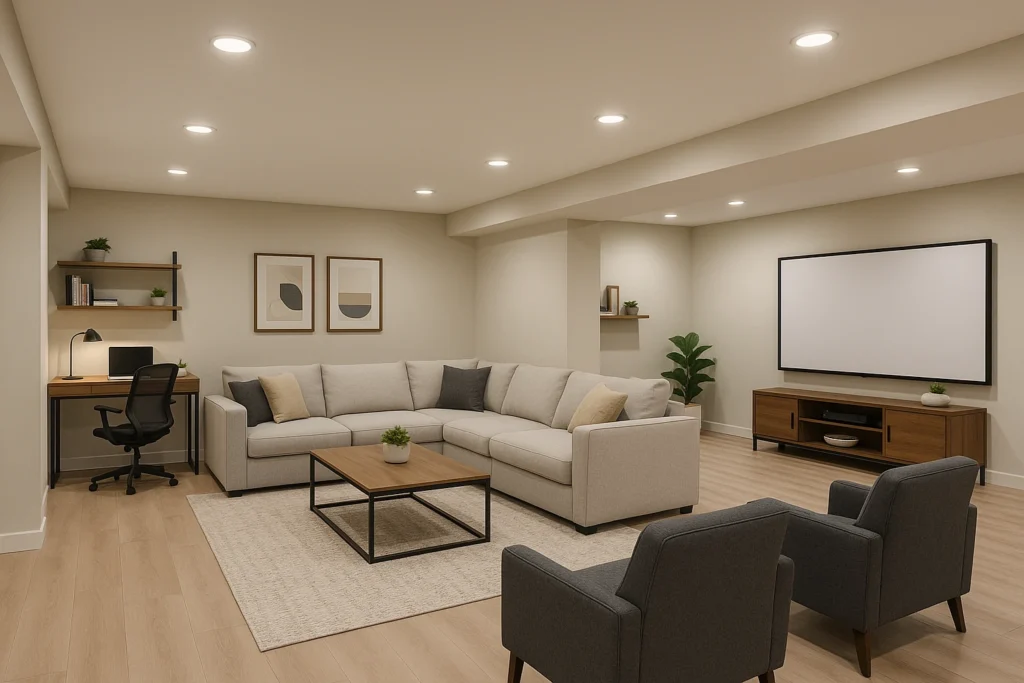
- 👀 Introduction: Have You Overlooked This Space?
- 📑 Step 1: Assess the Current Condition of Your Basement
- 📊 Basement Assessment Checklist
- 🎨 Step 2: Plan and Design with Purpose
- 📊 Popular Basement Conversions
- 💰 Step 3: Budgeting and Cost Management
- 📊 Average Basement Remodeling Costs
- 🛠️ Step 4: Hiring the Right Professionals
- 📊 Hiring Checklist
- 🧱 Step 5: Focus on Essential Renovations First
- 💡 Step 6: Lighting and Electrical Setup
- 📊 Lighting Options Overview
- 🎨 Step 7: Choose Durable
- 📊 Flooring Comparison
- 🛋️ Step 8: Furniture and Décor
- 🌟 Step 9: Safety and Compliance with Codes
- 🏡 Step 10: Add High-Value Features
- 📊 Feature ROI
- ⭐ Final Thoughts
- FAQs
👀 Introduction: Have You Overlooked This Space?
Have you ever looked at your basement and thought, “This could be so much more”? Many homeowners use basements only for storage, leaving valuable square footage untouched. Yet, this space can be transformed into a comfortable living area, a functional workspace, or even an entertainment hub. Ignoring it means missing out on adding both comfort and value to your home.
In this guide, I’ll walk you through everything you need to know about basement remodeling. From assessing conditions and planning layouts to budgeting, design, and safety codes, you’ll gain a complete understanding of how to maximize your basement’s potential. By the end, you’ll see how this project can unleash new possibilities in your home.
For professional guidance and remodeling services, visit 👉 Akron Roofing Experts.
📑 Step 1: Assess the Current Condition of Your Basement
Before design choices or furniture shopping, assess the condition of your basement. Remodeling without addressing structural or moisture problems is a recipe for wasted money.
Key Areas to Evaluate
- Signs of water damage or leaks
- Cracks in the foundation or walls
- Adequate ceiling height for living space
- Air circulation and existing ventilation
- Sources of natural light
📊 Basement Assessment Checklist
| Factor | Why Important | What to Check |
|---|---|---|
| Moisture | Prevents mold growth | Look for damp walls and floors |
| Foundation | Ensures stability | Inspect cracks and settlement |
| Ceiling Height | Determines usability | 7 feet minimum recommended |
| Ventilation | Improves air quality | Check ducts and vents |
| Natural Light | Affects comfort | Consider adding egress windows |
✅ Pro Tip: The U.S. Environmental Protection Agency (EPA) recommends testing for radon in basements before remodeling to ensure the space is safe for daily use.
🎨 Step 2: Plan and Design with Purpose
A successful remodel starts with a clear plan. Decide how you want to use the basement and then design around that purpose.
Common Uses for Basements
- Home office with built-in desks and extra outlets
- Guest suite with bathroom and closet space
- Home theater with soundproofing and projector setup
- Gym with durable flooring and ventilation
- Playroom or family lounge with storage options
Planning Essentials
- Map out plumbing and electrical lines
- Choose open layout vs. divided rooms
- Select features such as bathrooms, wet bars, or built-in storage
📊 Popular Basement Conversions
| Type of Space | Key Features |
|---|---|
| Home Theater | Soundproof walls, recliner seating |
| Guest Suite | Bathroom, closet, private entry |
| Office | Extra outlets, strong Wi-Fi setup |
| Gym | Rubber floors, mirrors, ventilation |
| Playroom | Built-in storage, soft flooring |
💰 Step 3: Budgeting and Cost Management
Setting a budget is crucial. Without one, remodeling costs can spiral quickly.
Major Cost Factors
- Materials: flooring, drywall, insulation, lighting
- Labor: contractors, electricians, plumbers, designers
- Permits: required for most basement projects
- Unexpected issues: waterproofing, structural reinforcements
📊 Average Basement Remodeling Costs
| Basement Size | Basic Remodel | Mid-Range | Luxury |
|---|---|---|---|
| 500 sq ft | $20,000 | $30,000 | $50,000+ |
| 800 sq ft | $35,000 | $50,000 | $75,000+ |
| 1,200 sq ft | $50,000 | $70,000 | $100,000+ |
✅ Fact: According to Remodeling Magazine’s Cost vs Value Report, a basement remodel can return up to 70% of its cost in increased home value.
🛠️ Step 4: Hiring the Right Professionals
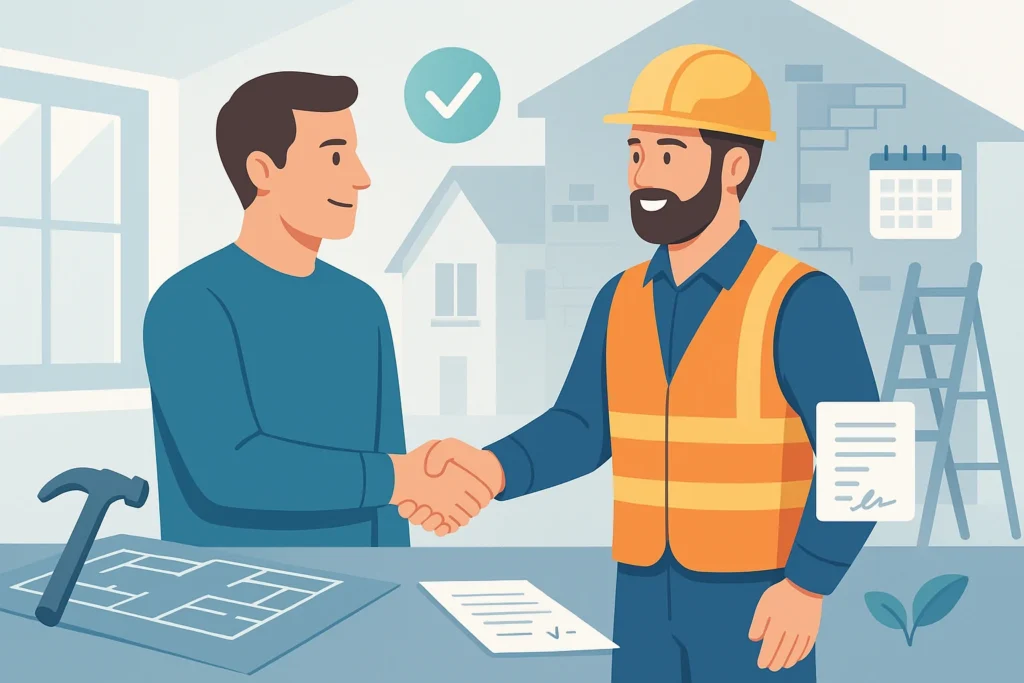
Basement remodeling is not a simple DIY task. Professionals ensure safety, quality, and code compliance.
Professionals You May Need
- General contractor 👷 for full project oversight
- Electrician 💡 for wiring and lighting installation
- Plumber 🚰 for bathrooms or wet bars
- HVAC specialist 🌬️ for ventilation and heating
- Interior designer 🎨 for layout and finishes
Smart Questions to Ask
- Are you licensed and insured?
- Can you share references and past project photos?
- How long have you specialized in basement remodeling?
- What warranties do you provide for work and materials?
📊 Hiring Checklist
| Role | Why Needed | Requirement |
|---|---|---|
| Contractor | Coordinates all work | License & insurance |
| Electrician | Ensures electrical safety | Local permit |
| Plumber | Installs water systems | Certified plumber |
| HVAC | Manages air circulation | Experience with basements |
| Designer | Creates functional layout | Portfolio review |
🧱 Step 5: Focus on Essential Renovations First
Before design upgrades, fix essential issues. This step prevents future damage and ensures your basement is safe.
Must-Do Renovations
- Waterproofing walls and floors to prevent leaks
- Installing insulation for temperature control
- Improving ventilation to avoid mold buildup
- Adding egress windows for fire safety and natural light
📌 Fact: The International Residential Code requires egress windows in basement bedrooms for emergency exits.
💡 Step 6: Lighting and Electrical Setup
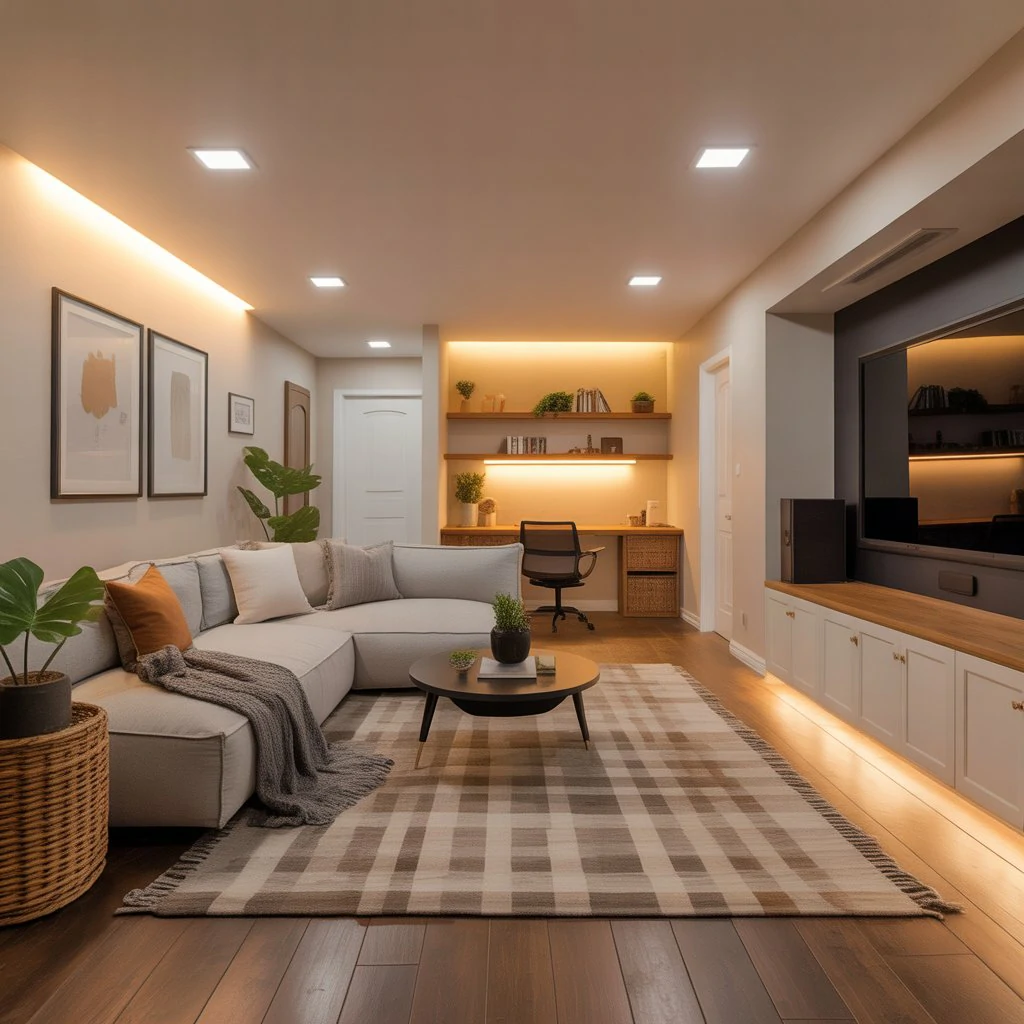
Basements often lack sunlight, so thoughtful lighting design is key.
Lighting Options
- Recessed ceiling lights for general brightness
- Wall sconces for warmth and ambiance
- LED strips for modern accent zones
Electrical Needs
- Outlets for TVs, computers, and appliances
- Dedicated circuits for large equipment
- GFCI outlets in wet areas for safety
📊 Lighting Options Overview
| Lighting Type | Advantages | Best Use |
|---|---|---|
| Recessed | Saves space, bright coverage | General lighting |
| Sconces | Creates warmth | Living or theater areas |
| Track Lighting | Adjustable | Workspaces |
| LED Strips | Stylish & energy-efficient | Accent zones |
🎨 Step 7: Choose Durable
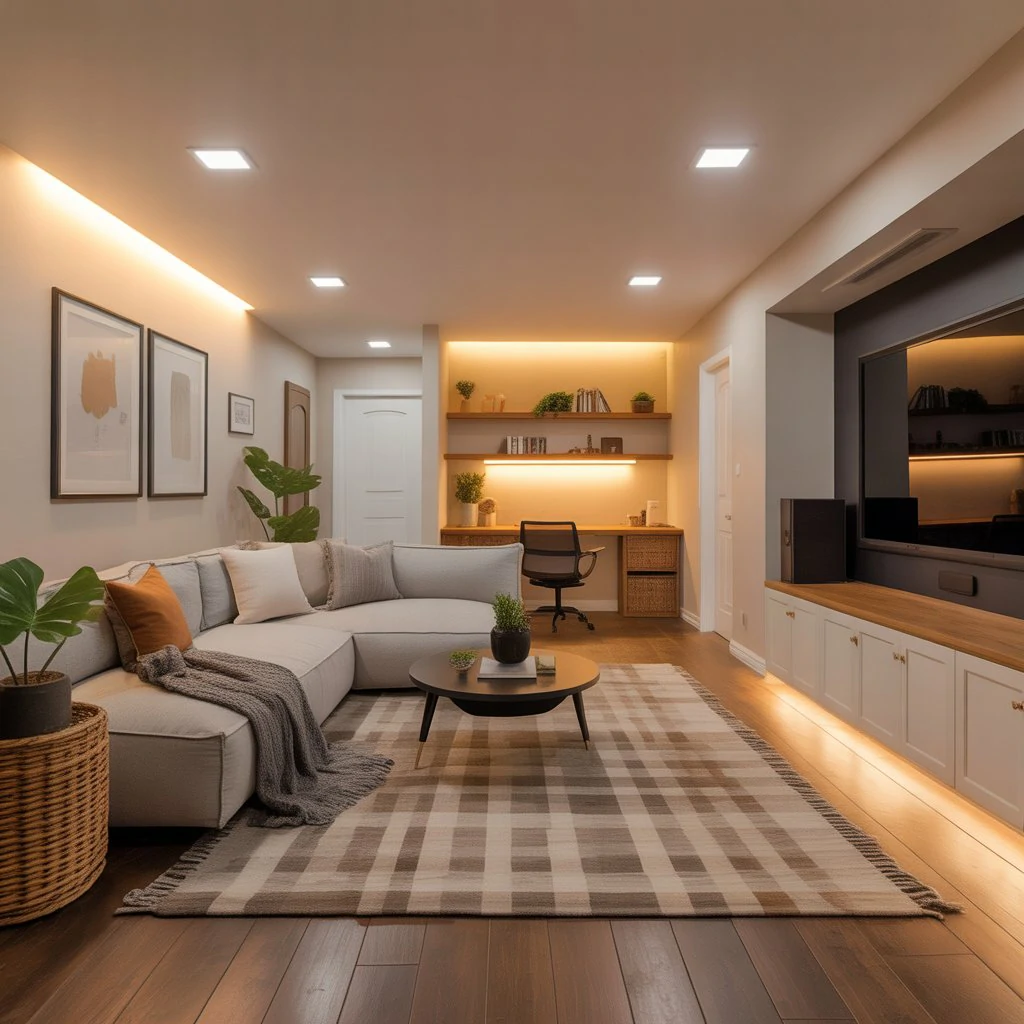
Basements require materials that withstand moisture and wear.
Flooring Options
- Luxury vinyl planks (waterproof and stylish)
- Ceramic tiles (durable and easy to clean)
- Engineered hardwood (warmer aesthetic but pricier)
Wall Options
- Waterproof drywall for safety
- Paneling for design appeal
- Soundproof insulation for entertainment areas
📊 Flooring Comparison
| Material | Pros | Cons |
|---|---|---|
| Vinyl Plank | Affordable, waterproof | Cold underfoot |
| Ceramic Tile | Durable, easy clean | Hard surface |
| Engineered Wood | Warm look | Higher cost |
🛋️ Step 8: Furniture and Décor
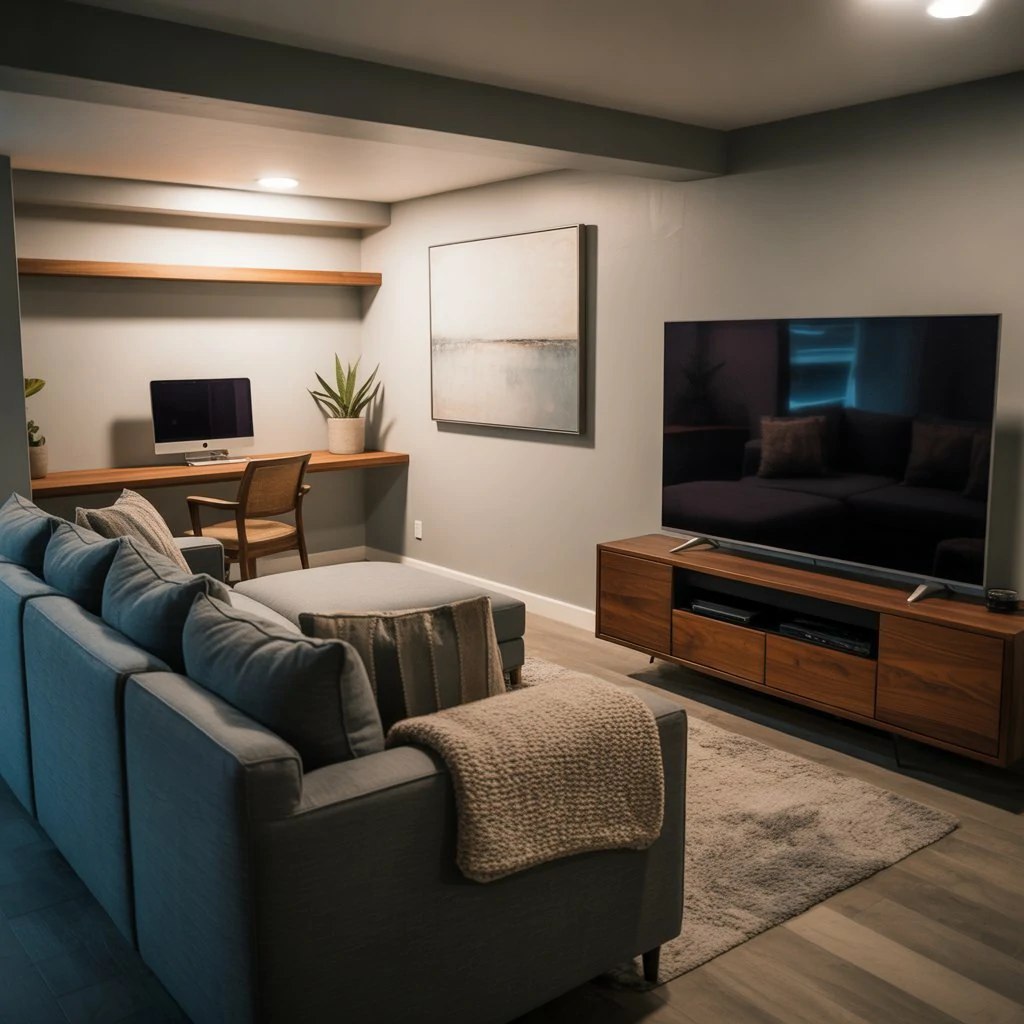
The right furniture transforms the basement from functional to inviting.
Furniture Ideas
- Sleeper sofas for multipurpose spaces
- Ottomans with hidden storage
- Modular shelving for organization
Décor Tips
- Rugs to define different zones
- Wall art to add personality
- Plants and mirrors to brighten the room
✅ Pro Tip: Multi-functional furniture maximizes space and keeps the basement clutter-free.
🌟 Step 9: Safety and Compliance with Codes
Safety comes before design. Following codes prevents legal issues and ensures family security.
Safety Must-Haves
- Smoke and carbon monoxide detectors
- Proper ceiling height (7 feet minimum in most states)
- Fire exits such as egress windows
- Adequate electrical grounding
📌 Fact: Failing to follow building codes can result in fines and reduce resale value.
🏡 Step 10: Add High-Value Features
Adding the right features increases comfort and boosts property value.
Value-Boosting Additions
- Full bathroom 🚿 for convenience
- Wet bar 🍷 for entertaining
- Guest bedroom 🛏️ for hosting
- Home theater 🎥 for family fun
📊 Feature ROI
| Feature | Average Cost | ROI Potential |
|---|---|---|
| Bathroom | $15,000–$25,000 | High |
| Wet Bar | $8,000–$12,000 | Medium |
| Theater | $10,000–$20,000 | Medium |
| Guest Room | $20,000–$35,000 | High |
⭐ Final Thoughts
A basement is one of the most underused areas in a home, but it doesn’t have to stay that way. With proper planning, smart budgeting, and professional guidance, you can transform it into a valuable living space. Whether you dream of a home office, a guest suite, or a theater, your basement can become the perfect solution.
FAQs
For expert help in basement remodeling or professional advice, visit 👉 Akron Roofing Experts.