

- Introduction ❓
- 📄 Step 1: Begin With Trusted Recommendations
- 🌐 Step 2: Use Verified Online Platforms
- 📞 Step 3: Check References Directly
- 🛡️ Step 4: Verify Licensing and Insurance
- 📝 Step 5: Get a Detailed Contract in Writing
- 🤝 Step 6: Communicate Clearly and Stay Involved
- 📌 Step 7: Compare Multiple Bids
- 🧾 Step 8: Understand Payment Structures
- 🏡 Step 9: Check for Warranties and After-Service
- ⭐ Step 10: Trust but Verify
- 📊 Quick Contractor Selection Checklist
- 📌 Professional Guidance
- ✨ Conclusion
- FAQs🔍💬
Introduction ❓
Have you ever wondered why so many home improvement projects end up costing more than expected—or worse, fail to meet your expectations? I’ve been there too. Starting a renovation or building project feels exciting, but one question often creates stress: “How do I find the right contractor I can truly trust?” This decision can shape the entire outcome of your project. With so many choices, hidden risks, and stories of unfinished jobs, choosing wisely is not optional—it’s essential. In this guide, I’ll walk you through proven steps to help you select the right professional so your project is completed on time, within budget, and with quality results.
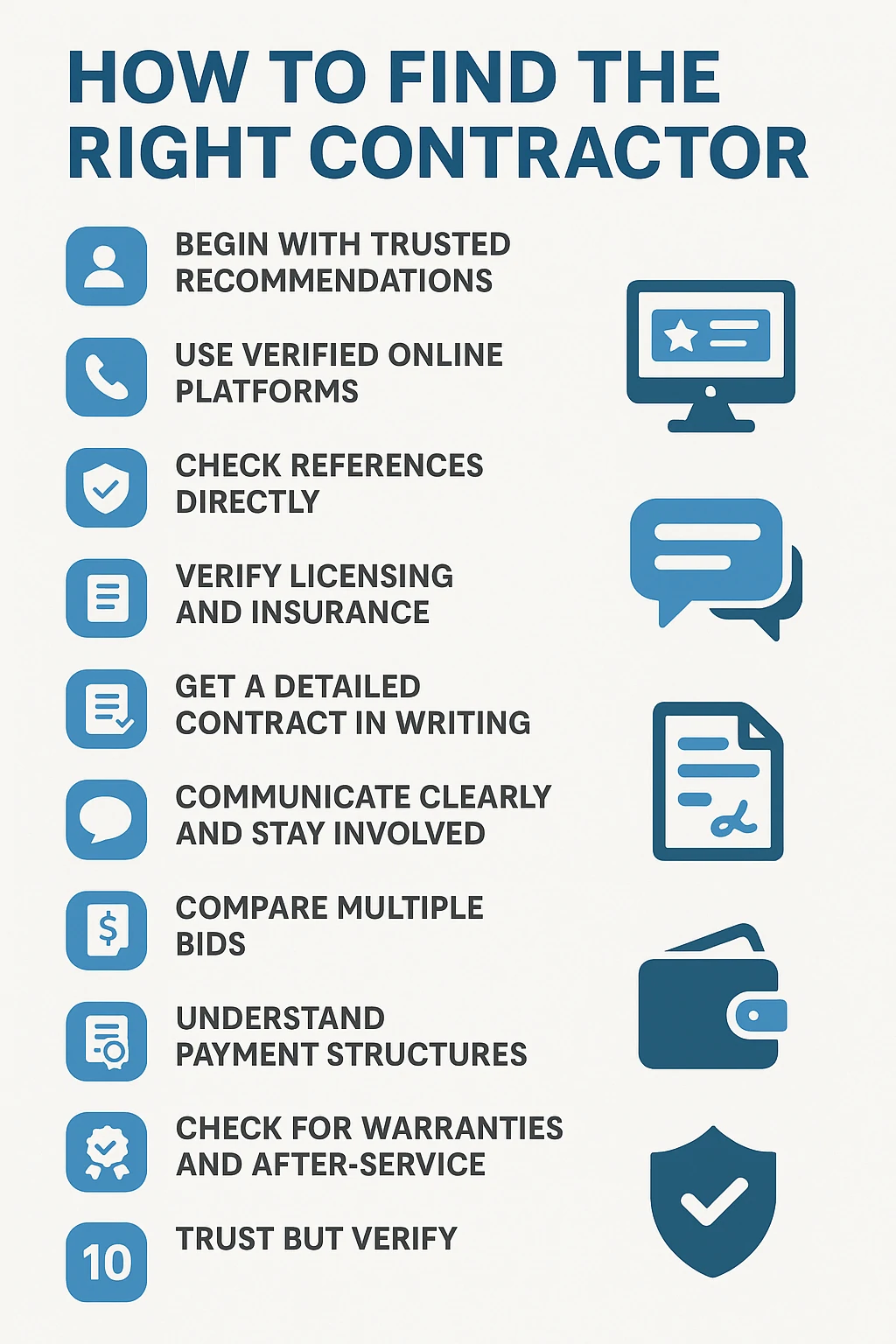
📄 Step 1: Begin With Trusted Recommendations
The first place to look is closer than you think. Friends, family, and neighbors can be your most reliable source of honest feedback. According to the National Association of Home Builders, nearly 34% of homeowners hire contractors through referrals. Personal experiences—good or bad—help you understand what to expect before signing any agreement.
Ask questions such as:
- Did the contractor stay on schedule?
- Was the final cost close to the estimate?
- How was the communication during the project?
👉 Pro tip: Keep a small list of at least three names from trusted people before searching online.
🌐 Step 2: Use Verified Online Platforms
Technology makes contractor research easier than ever. Websites like Angi, Thumbtack, and HomeAdvisor allow you to compare prices, read verified customer reviews, and see photos of past work. These platforms often include star ratings and certifications.
What to look for online:
- Minimum of 10 verified reviews for consistency.
- Average rating above 4.0 stars.
- Active responses from the contractor to customer feedback.
🔎 Data shows that 87% of homeowners read online reviews before hiring a contractor (BrightLocal, 2025).
📞 Step 3: Check References Directly
Never hesitate to ask contractors for references. A professional should provide at least three recent clients you can contact. Speaking directly with past customers helps you verify the quality of work and professionalism.
Questions to ask references:
- Was the contractor punctual?
- Did the project match the original agreement?
- How did they handle unexpected issues?
📌 Fact: Contractors with strong references are 2.5 times more likely to secure repeat business (Harvard Joint Center for Housing Studies).
🛡️ Step 4: Verify Licensing and Insurance

Hiring an unlicensed contractor is one of the biggest risks homeowners face. Each state and city has different requirements, but the essentials remain the same:
| Requirement | Why It Matters | How to Check |
|---|---|---|
| License | Confirms legal authority to operate | Local building authority or state database |
| Liability Insurance | Protects you from property damage | Ask for a valid insurance certificate |
| Worker’s Compensation | Covers worker injuries | Verify with insurance provider |
⚠️ According to the Better Business Bureau (BBB), nearly 25% of complaints involve contractors without proper credentials.
📝 Step 5: Get a Detailed Contract in Writing
Verbal promises can easily be forgotten. A written agreement ensures both sides stay on the same page.
Your contract should include:
- Full project scope with material details.
- Estimated start and completion dates.
- Itemized cost breakdown and payment schedule.
- Warranty terms for labor and materials.
📊 Projects with written contracts are 42% less likely to experience disputes, according to the Consumer Federation of America.
🤝 Step 6: Communicate Clearly and Stay Involved
Even the best contractors need your input. Misunderstandings often come from unclear expectations.
Ways to stay involved:
- Schedule weekly updates.
- Request progress photos if you can’t visit the site.
- Keep communication through email or written notes for records.
🕒 Research shows that projects with consistent client involvement finish 20% faster and within budget more often.
📌 Step 7: Compare Multiple Bids
Don’t settle for the first estimate you receive. Experts recommend gathering at least three written bids. This allows you to see industry averages and spot overpricing.
Evaluate bids by:
- Material quality
- Labor cost
- Timeline commitment
- Warranty length
💡 Beware of unusually low bids—they can be a red flag for cutting corners.
🧾 Step 8: Understand Payment Structures
A professional contractor won’t demand full payment upfront. A common structure is:
| Stage | Payment % | Description |
|---|---|---|
| Initial deposit | 10–20% | Paid at signing |
| Progress payments | 40–50% | Based on milestones |
| Final payment | 30–40% | After project completion |
✅ The Federal Trade Commission advises never to pay more than one-third upfront.
🏡 Step 9: Check for Warranties and After-Service
Good contractors stand by their work. Ask about warranties for both materials and labor.
- Manufacturer warranties usually cover materials (5–30 years).
- Contractor warranties cover workmanship (1–5 years).
📊 A study by Remodeling Magazine shows that projects with warranties increase home resale value by 12%.
⭐ Step 10: Trust but Verify
Finally, don’t ignore your instincts. If something feels wrong—whether it’s poor communication or pressure to sign quickly—it’s best to walk away.
🚨 The Federal Trade Commission reports that home improvement scams cost Americans over $1 billion annually. Protect yourself by verifying every detail before committing.
📊 Quick Contractor Selection Checklist
| Step | Action | Why It Matters |
|---|---|---|
| 1 | Ask for referrals | First-hand experiences are reliable |
| 2 | Research online | Compare ratings and services |
| 3 | Check references | Confirms work quality |
| 4 | Verify license & insurance | Protects you legally and financially |
| 5 | Get everything in writing | Prevents disputes |
| 6 | Stay involved | Keeps project on track |
| 7 | Compare bids | Avoids overpaying |
| 8 | Review payment terms | Prevents scams |
| 9 | Ask for warranties | Ensures long-term quality |
| 10 | Trust your instincts | Protects you from fraud |
📌 Professional Guidance
Hiring the right contractor is not only about cost—it’s about safety, quality, and peace of mind. If you’re unsure, consulting with professionals can save you thousands in mistakes. For more professional insights and trusted roofing services, visit 👉 Akron Roofing Experts.
✨ Conclusion
Finding the right contractor doesn’t have to be overwhelming. By using referrals, verifying licenses, securing written contracts, and staying involved, you can avoid common pitfalls. Remember, a contractor is not just building or repairing your home—they are protecting one of your most valuable investments. The right choice today leads to years of comfort, safety, and added value tomorrow.