
- Introduction ❓
- 📄 What Does Tax Deductible Mean?
- ⭐ When Roof Replacement Is Not Deductible
- 🧾 When Roof Replacement May Be Deductible
- 📊 Roof Replacement Tax Treatment by Property Type
- 📂 IRS Rules on Capital Improvements
- 🧮 Calculating Depreciation for Rental Roofs
- 🔑 Tips for Homeowners Considering Tax Benefits
- 📖 Frequently Asked Questions
- ⭐ Conclusion
Introduction ❓
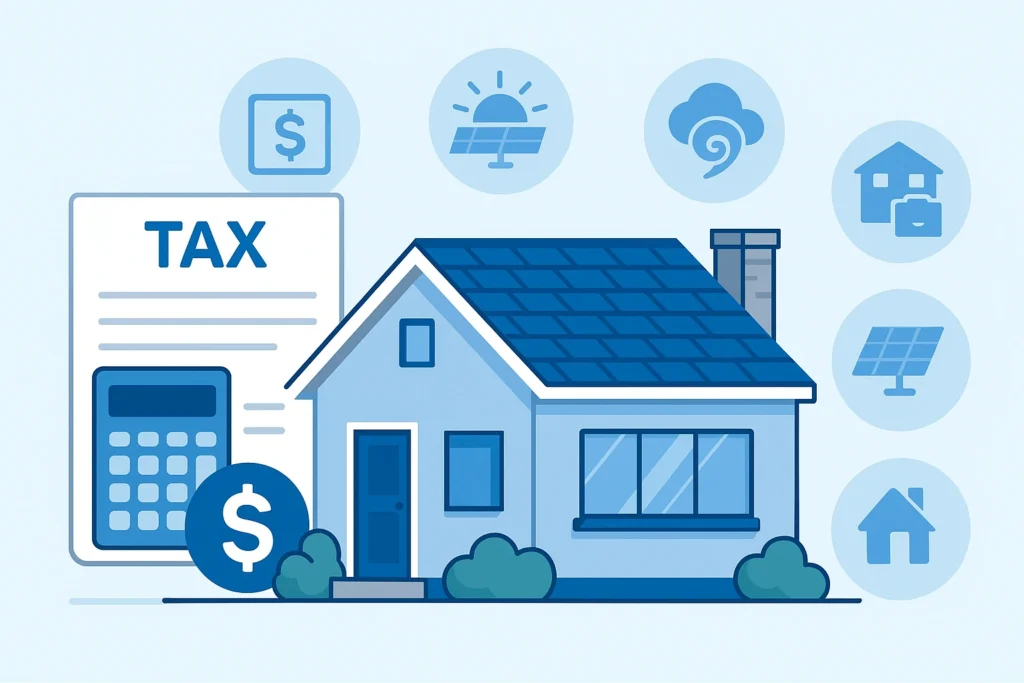
Have you ever looked at the cost of replacing your roof and asked yourself: Can I deduct this on my taxes? It’s one of the most common questions homeowners face, especially when a major repair carries such a heavy price tag. Roof replacement can cost thousands of dollars, and many families wonder if tax laws provide any relief.
I once asked myself the same question after reviewing a roof replacement estimate. The truth is, the answer depends on several important factors including whether the home is used as a personal residence, a rental property, or for business purposes. In this guide, you’ll learn exactly when a roof replacement may qualify for tax deductions, what the IRS says about it, and how to avoid mistakes that cost homeowners money.
For more expert advice, visit 👉 Akron Roofing Experts.
📄 What Does Tax Deductible Mean?
The IRS defines a tax deductible expense as a cost that reduces your taxable income. This lowers the total amount of income subject to federal taxes.
- Ordinary deductible expenses: mortgage interest, property taxes, charitable donations
- Business deductible expenses: supplies, equipment, maintenance, and repairs
- Capital improvements: usually not deductible right away, but may be added to your home’s basis for future tax savings when selling
A roof replacement is often classified as a capital improvement because it increases the value of your home and extends its lifespan.
⭐ When Roof Replacement Is Not Deductible
For most homeowners, replacing a roof on a primary residence is considered a personal expense. Personal home improvements are not tax deductible because they do not qualify as medical, charitable, or necessary business-related expenses.
Key points:
- A new roof on a personal home cannot be deducted as a current expense
- Cosmetic upgrades such as new shingles for appearance only are not deductible
- General wear and tear replacement is not deductible
However, there are special cases where tax benefits may apply.
🧾 When Roof Replacement May Be Deductible
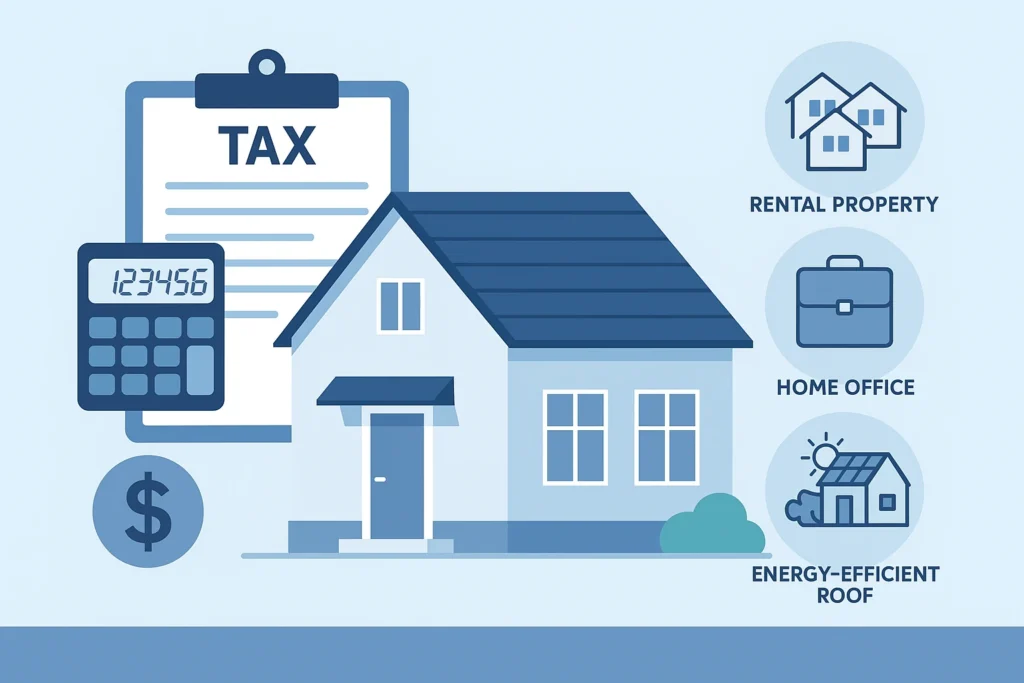
1. Rental Properties 🏘️
If you own rental property, the IRS allows deductions for improvements and repairs. A roof replacement in this case is treated as a capital expense. You cannot deduct the full cost in the year it is installed, but you can depreciate the cost over 27.5 years for residential rental properties.
2. Home Office Use 💼
If you use part of your home exclusively as a home office for business, a portion of your roof replacement may qualify as a business expense. The deductible amount is calculated based on the percentage of your home used for business.
Example: If 20% of your home is used as a home office, then 20% of the roof replacement cost may qualify for deduction.
3. Energy Efficiency Credits ☀️
The federal government provides tax credits for certain energy-efficient improvements. If your roof replacement includes certified materials such as Energy Star–rated shingles or if you add solar panels, you may qualify for residential energy credits.
As of the Inflation Reduction Act 2022, homeowners can claim up to 30% of the cost of qualifying energy improvements.
4. Casualty Loss Deduction 🌪️
If your roof is destroyed by a sudden event such as a hurricane, fire, or other federally declared disaster, you may qualify for a casualty loss deduction. These are rare but important for homeowners living in storm-prone areas.
📊 Roof Replacement Tax Treatment by Property Type
| Property Type | Tax Treatment |
|---|---|
| Primary Residence | Not deductible as a regular expense |
| Rental Property | Capitalized and depreciated over 27.5 years |
| Business Property | Deductible as a business improvement |
| Home Office Portion | Deductible based on business-use percentage |
| Energy Efficient Upgrade | Eligible for federal tax credits |
| Casualty Loss | Deductible if from a federally declared disaster |
📂 IRS Rules on Capital Improvements
The IRS classifies a capital improvement as an upgrade that:
- Adds value to the property
- Extends its useful life
- Adapts it for new use
A roof replacement meets all three conditions. While not immediately deductible, the expense increases the adjusted basis of your home. When you eventually sell the property, this higher basis may reduce your taxable gain.
Example:
- Purchase price of home: 200,000 dollars
- Roof replacement cost: 15,000 dollars
- Adjusted basis after replacement: 215,000 dollars
If you sell later, this increased basis helps lower taxable capital gains.
🧮 Calculating Depreciation for Rental Roofs
For rental property owners, depreciation is key. A roof replacement on a rental is spread over 27.5 years under the Modified Accelerated Cost Recovery System (MACRS).
Example:
- Roof cost: 20,000 dollars
- Depreciation: 20,000 ÷ 27.5 = 727 dollars per year
This yearly deduction lowers taxable rental income.
🔑 Tips for Homeowners Considering Tax Benefits
- 📄 Keep all receipts, contracts, and material certifications
- 🏦 Consult a tax professional before claiming deductions
- 💻 Check official IRS publications such as IRS Publication 523 and Publication 946
- 🌟 Consider energy upgrades for extra tax credits
- 📝 Document business or rental use clearly in case of an audit
📖 Frequently Asked Questions
⭐ Conclusion
Roof replacement is a major investment, and while most homeowners cannot deduct the full cost on their taxes, there are several important exceptions. Rental property owners, business users, and homeowners making energy-efficient upgrades can often benefit from deductions or credits.
Even if you cannot claim an immediate deduction, a new roof increases your home’s basis, which may lower capital gains tax when you sell.
If you need expert roofing help, visit 👉 Akron Roofing Experts.