
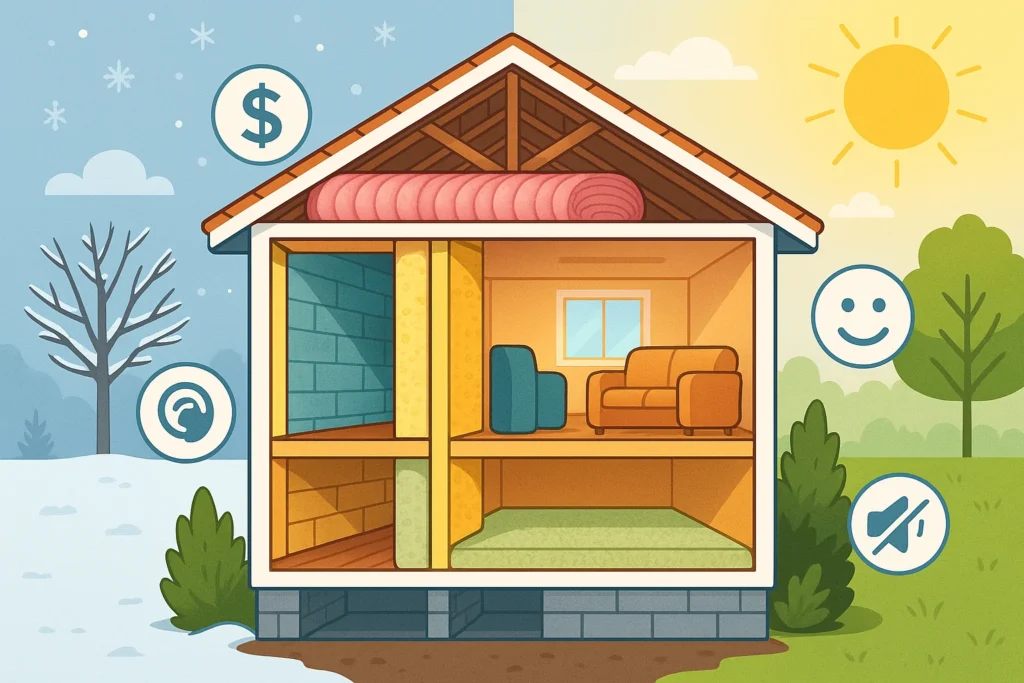
✨ Introduction
Have you ever asked yourself, “Why is my home always uncomfortable no matter how I adjust the thermostat?” I used to wonder the same thing until I realized insulation was the missing piece. The right insulation is more than a hidden layer in your walls—it’s your home’s thermal shield. It cuts energy bills, improves comfort, and protects your property year-round.
📘 What Is Insulation and Why It Matters
Insulation slows down heat transfer between indoors and outdoors, keeping temperatures stable in every season.
How Insulation Works
- Conduction 🔥: Heat moving through solid materials like walls.
- Convection 🌬️: Heat carried by air movement inside cavities.
- Radiation ☀️: Heat traveling directly from hot surfaces to cooler ones.
According to the U.S. Department of Energy, proper insulation reduces heating and cooling costs by 15% or more.
👉 For expert roofing and insulation services, visit Akron Roofing Experts.
🧱 Types of Insulation Materials
Fiberglass Insulation 🧾
- Made from fine glass fibers.
- Sold as batts, rolls, or loose-fill.
- Affordable and common in walls, ceilings, and floors.
- Adds moderate soundproofing.
Average R-value per inch: 2.9–3.8
Cellulose Insulation 🌱
- Made from 85% recycled paper with fire-retardant treatment.
- Installed as loose-fill, blown into attics and walls.
- Eco-friendly and excellent at reducing noise.
Average R-value per inch: 3.2–3.8
Spray Foam Insulation 🧴
- Expands to fill cracks and gaps.
- Types: open-cell (softer) and closed-cell (dense, moisture-resistant).
- Works well in crawl spaces, basements, and attics.
- Strong air and moisture barrier.
Average R-value per inch: 3.5–6.5
Mineral Wool Insulation 🔥
- Made from natural rock or slag by-products.
- Fire-resistant, dense, and durable.
- Excellent for soundproofing.
- Less prone to settling than fiberglass.
Average R-value per inch: 3.0–3.3
Natural Fiber Insulation 🌿
- Includes sheep’s wool, cotton (denim), and hemp.
- Eco-friendly and biodegradable.
- Wool regulates moisture naturally.
- Strong acoustic properties.
Average R-value per inch: 3.4–3.8
📊 Insulation Types
| Insulation Type | Eco-Friendly | Fire Resistant | Moisture Resistant | Soundproofing | Average R-Value per Inch |
|---|---|---|---|---|---|
| Fiberglass | Moderate | Low | Low | Moderate | 2.9–3.8 |
| Cellulose | High | Moderate | Low | High | 3.2–3.8 |
| Spray Foam | Low | High (closed-cell) | High | High | 3.5–6.5 |
| Mineral Wool | Medium | High | Medium | High | 3.0–3.3 |
| Natural Fiber | High | Low | Medium | High | 3.4–3.8 |
📌 Key Factors to Consider Before Choosing Insulation
R-Value 📏
Higher R-values equal stronger thermal resistance.
- Attics: R-38 to R-60
- Walls: R-13 to R-23
- Basements: R-11 to R-19
(Source: U.S. Department of Energy)
Moisture Resistance 💧
Areas like basements require closed-cell spray foam to prevent mold and water damage.
Climate Zone 🌍
Colder climates need higher R-values. The U.S. has eight climate zones, each with unique insulation needs.
Budget 💵
Fiberglass and cellulose are cost-effective. Spray foam costs more but delivers long-term savings.
Environmental Impact 🌿
Eco-friendly options like cellulose, wool, or hemp reduce your carbon footprint.
🏘️ Where to Install Insulation
- Attics: Loose-fill or batts prevent rising heat loss.
- Walls: Spray foam or batts improve comfort and sound control.
- Basements: Closed-cell foam resists moisture.
- Floors: Insulating above unheated garages prevents cold floors.
⭐ Benefits of Proper Insulation
- Energy Savings ⚡: Cuts bills by 15–30%.
- Comfort 🛋️: Keeps rooms evenly heated or cooled.
- Noise Reduction 🔇: Blocks outdoor sounds and reduces indoor echo.
- Safety 🔥: Fire-resistant options add protection.
- Sustainability 🌎: Eco materials support a greener home.
🧑🔧 Professional vs DIY Installation
DIY 🛠️
- Works for fiberglass batts in simple areas.
- Lower cost but may leave air gaps if done poorly.
Professional 👷
- Best for spray foam, cellulose, or mineral wool.
- Ensures correct R-values and moisture control.
- Reduces long-term repair risks.
👉 Trusted experts like Akron Roofing Experts provide safe, professional installation.
🧹 Post-Installation Tips

- Seal gaps around doors and windows.
- Maintain attic ventilation to prevent condensation.
- Inspect insulation annually for settling or damage.
- Upgrade every 15–20 years for maximum efficiency.
FAQs
🌟 Final Thoughts
Insulation is your home’s silent protector. From fiberglass to natural fibers, each option offers unique strengths in energy savings, comfort, and safety. The best choice depends on your climate, budget, and goals. Investing in quality insulation transforms your home into a true thermal shield, reducing costs and improving comfort for years.
👉 For professional roofing and insulation advice, visit Akron Roofing Experts.