
- Introduction ❓
- Why Fixing a Roof Leak Matters 🏚️✨
- Common Signs of a Roof Leak 🔍
- Visible vs Hidden Leak Signs 📑
- Step 1: Interior Inspection 🏠🕵️
- Step 2: Exterior Roof Inspection
- Step 3: Water Testing 💦
- Removing Damaged Shingles 🔧
- Applying Roofing Cement 🏗️
- Installing New Shingles or Patches
- Sealing Edges and Flashing 🧰
- Final Inspection and Water Testing 🔎💦
- Preventive Measures to Avoid Future Leaks 🛡️
- DIY vs Professional Repair 📑
- Emergency Roof Repairs ⚡
- Cost of Roof Leak Repairs 💵
- Long-Term Maintenance Tips 🛠️
- When to Call a Professional 📞
- Common Issues
- Conclusion 🌟
Introduction ❓
Have you ever seen a dark water stain spreading across your ceiling or heard the drip-drip of water during a storm? I know the sinking feeling that comes with discovering a roof leak. It’s not just a small problem—water intrusion can ruin insulation, weaken wood, and even put your family’s safety at risk. That’s why learning how to repair a roof leak is one of the most important things any homeowner can do. This guide will walk you step by step through identifying, repairing, and preventing roof leaks while sharing professional tips, real facts, and proven strategies to save your home from costly damage. For expert help anytime, you can visit Akron Roofing Experts.
Why Fixing a Roof Leak Matters 🏚️✨
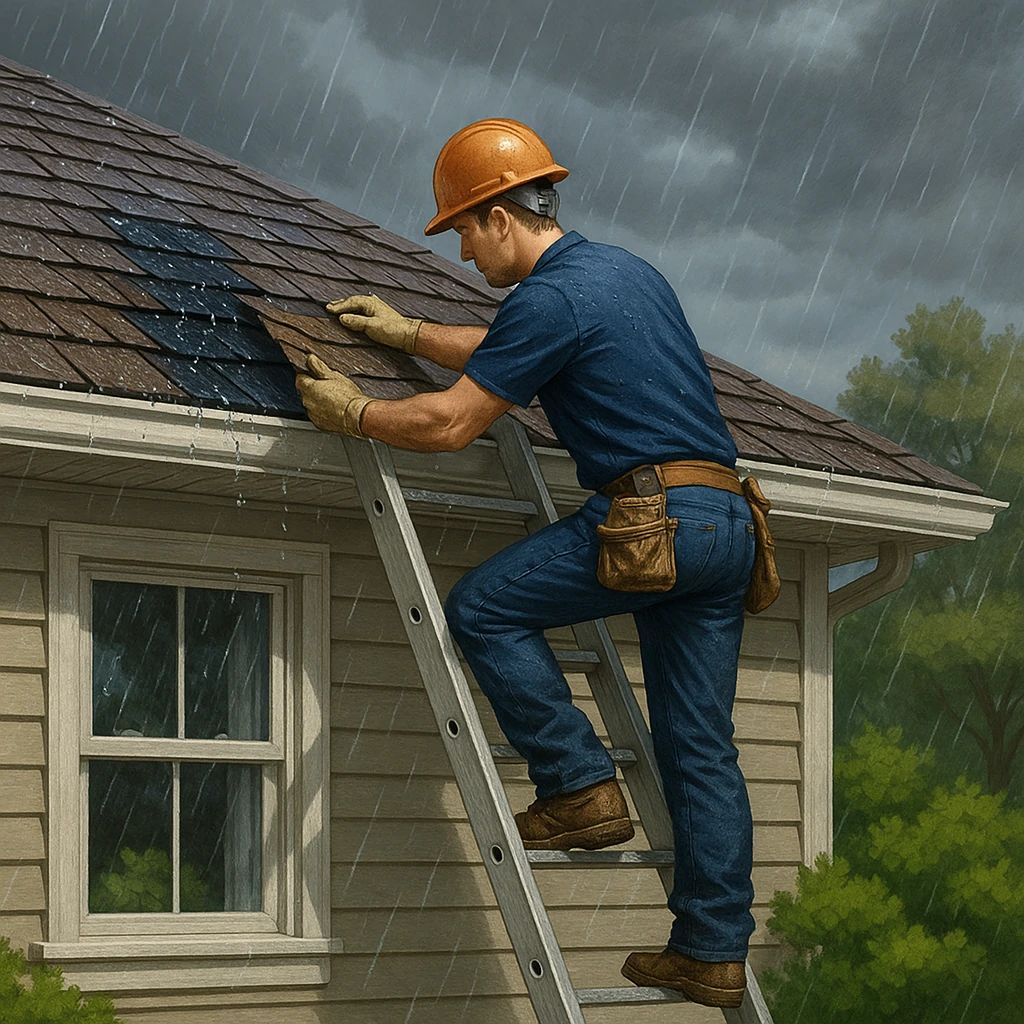
Water spreads fast. According to the Insurance Information Institute, nearly 29% of all homeowners’ insurance claims involve water damage. Even a small leak can:
- Cause mold within 24–48 hours
- Rot structural wood within weeks
- Damage drywall and paint
- Increase energy bills by ruining insulation
- Create electrical fire hazards
Repairing leaks immediately keeps your home safe, lowers costs, and maintains its long-term value.
Common Signs of a Roof Leak 🔍
It’s easier to fix a leak if you catch it early. Watch for:
- Ceiling stains: Brown or yellow patches on ceilings and walls
- Musty smells in the attic
- Peeling paint or bubbling plaster
- Dripping water during rainstorms
- Curled or missing shingles
Visible vs Hidden Leak Signs 📑
| Visible Signs | Hidden Signs |
|---|---|
| Water stains on ceilings | Damp insulation in attic |
| Missing shingles | Rotting roof deck |
| Damaged flashing | Musty odor indoors |
| Dripping after rainfall | Higher indoor humidity |
Step 1: Interior Inspection 🏠🕵️
Begin inside your home:
- Enter the attic with a flashlight
- Look for wet insulation, mold spots, or water trails
- Trace stains upward to find leak entry points
- Mark suspected areas with chalk for easier tracking later
Pro Tip ⭐: Leaks often run along beams before dripping. Always trace water back to its highest point.
Step 2: Exterior Roof Inspection
Once you know the general area, inspect outside:
- Check for missing or cracked shingles
- Look at chimney flashing, vent pipes, and skylights
- Examine gutters for clogs or standing water
- Inspect vent boots and caulking for cracks
According to the National Roofing Contractors Association (NRCA), 90% of roof leaks are caused by faulty flashing.
Step 3: Water Testing 💦
If the leak isn’t obvious:
- Use a garden hose to wet roof sections one by one
- Have someone inside watching for drips
- Move slowly until the leak reveals itself
This controlled testing is especially useful for hidden leaks.
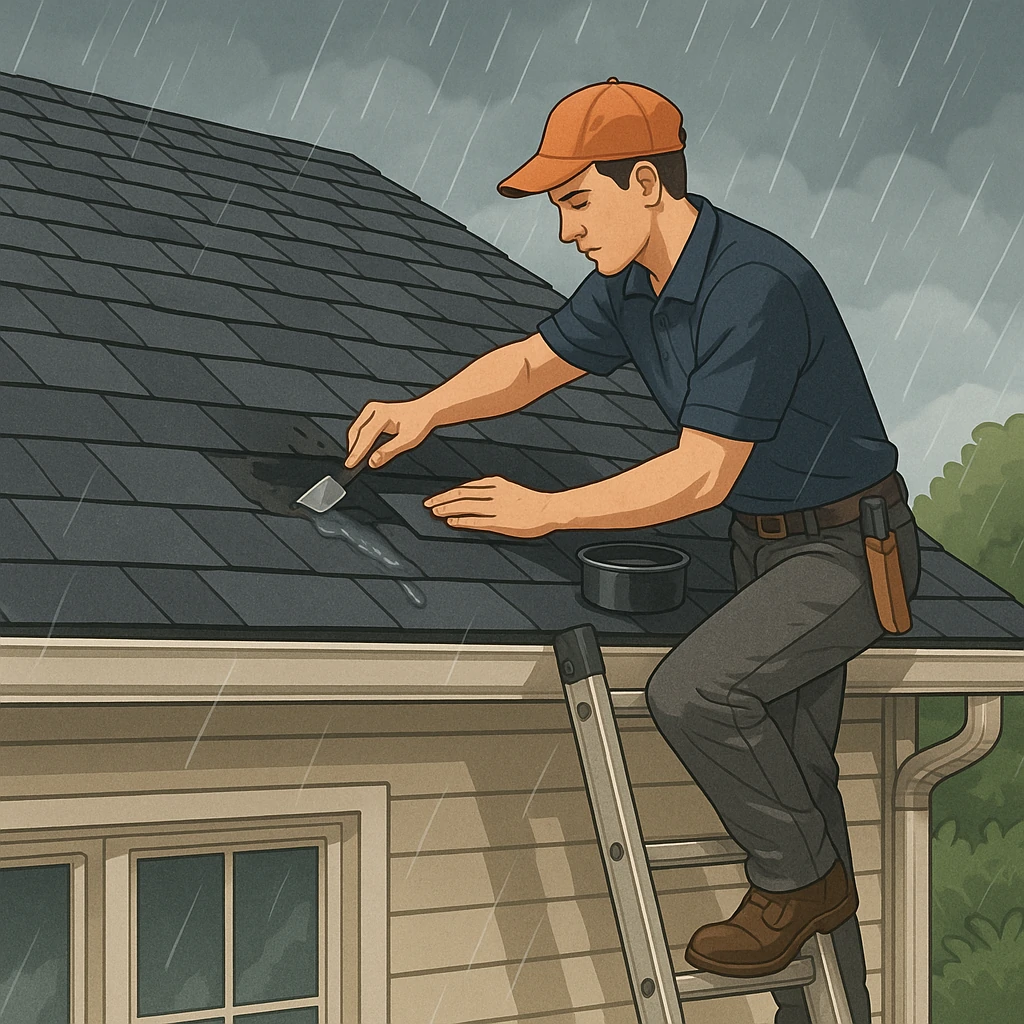
Removing Damaged Shingles 🔧
When you find the leak source:
- Lift surrounding shingles with a pry bar
- Remove nails holding the damaged piece
- Slide out the broken shingle carefully
Removing the damage lets you inspect the underlayment for hidden problems.
Applying Roofing Cement 🏗️
Roofing cement creates a strong seal.
- Spread cement on the exposed area generously
- Cover cracks, nail holes, and weak spots
- Apply extra around the edges
This step prevents rain from sneaking under the patch.
Installing New Shingles or Patches
Now replace the damaged material:
- Slide the new shingle into place
- Nail it down securely
- Seal the nail heads with roofing cement
Important Fact: Shingles overlap to shed water. Make sure your replacement lines up exactly with existing shingles.
Sealing Edges and Flashing 🧰
Reinforce weak points:
- Use caulk or sealant on chimney and skylight flashing
- Seal pipe boots and roof valleys
- Cover gaps where water can creep in
Proper sealing is critical because flashing failures are the leading cause of leaks.
Final Inspection and Water Testing 🔎💦
Once repairs are complete:
- Spray the area again with water
- Check inside for drips
- Inspect edges, flashing, and nail seals closely
Testing ensures your repair will hold up during heavy storms.
Preventive Measures to Avoid Future Leaks 🛡️
Regular Inspections 📅
Check your roof twice a year and after big storms. Catching small cracks early saves money later.
Clean Gutters 🧹
Clogged gutters push water under shingles. Clear them at least twice a year.
Trim Overhanging Trees 🌳
Branches scrape shingles and shade roofs, increasing moss growth.
Replace Old Sealants 🔧
Caulk dries and cracks with time. Refresh sealants every few years.
Professional Maintenance 👷
Roofing experts use tools like infrared moisture scanners to find hidden leaks you can’t see.
DIY vs Professional Repair 📑
| Aspect | DIY Repair | Professional Repair |
|---|---|---|
| Cost | $50–$200 | $300–$1,000+ |
| Tools Needed | Ladder, pry bar, nails, cement | Full equipment & safety gear |
| Risk | High if untrained | Low (trained crew) |
| Lifespan | 2–5 years | 10–20+ years |
Emergency Roof Repairs ⚡
Sometimes you need a quick fix before full repairs:
- Cover the area with a tarp secured by 2x4s
- Apply temporary roofing cement on cracks
- Use roofing tape inside the attic to contain drips
These methods buy time until permanent repairs are possible.
Cost of Roof Leak Repairs 💵
According to HomeAdvisor (2024):
- Small repairs: $150–$400
- Moderate repairs: $400–$1,000
- Major structural repairs: $1,500–$7,000
Long-Term Maintenance Tips 🛠️
- Replace asphalt shingle roofs every 20–25 years
- Inspect after hail, hurricanes, or heavy snowfall
- Keep attic ventilation strong to prevent condensation
Average Lifespan of Roofing Materials 📑
| Material | Lifespan |
|---|---|
| Asphalt Shingles | 20–25 years |
| Metal Roof | 40–70 years |
| Clay Tiles | 50–100 years |
| Slate | 75–150 years |
When to Call a Professional 📞
DIY works for small leaks, but call a pro if:
- Multiple leaks appear across different rooms
- The roof structure shows sagging or rot
- Water stains keep spreading even after patching
- You need full roof replacement
For expert roofing services, visit Akron Roofing Experts.
Common Issues
Conclusion 🌟
A leaking roof is never a problem to ignore. By identifying leaks early, replacing damaged shingles, sealing flashing, and testing your repairs, you can protect your home from serious water damage. Preventive care like gutter cleaning, inspections, and timely maintenance extends the life of your roof and keeps your family safe. For long-lasting solutions, professional roofing help is always the smartest investment.