
- 🌟 Introduction
- 📑 Why Kitchen Flooring Matters More Than You Think
- 🏠 Key Factors to Consider Before Choosing Kitchen Flooring
- 📊 Kitchen Flooring
- 🧱 Popular Kitchen Flooring Options Explained
- 🧾 Pros and Cons
- 🧩 Tips for Different Household Needs
- 🛠️ Installation Costs
- 📅 Average Lifespan of Kitchen Floors
- 🔒 Safety and Health Considerations
- FAQs
- ⭐ Final Thoughts
🌟 Introduction
Have you ever stepped into your kitchen and thought, “Why does my floor never look or feel right?” Maybe it scratches too easily, feels cold, or shows stains no matter how much you clean. Kitchens are the heart of every home, but they face constant challenges like heavy traffic, spills, and moisture. Choosing the wrong flooring can lead to expensive replacements, wasted time, and daily frustration.
In this guide, I’ll share everything you need to know about selecting the perfect kitchen floor. From durability and style to costs and maintenance, you’ll learn how to make the best investment for your home. And if you’re looking for professional support, you can always visit 👉 Akron Roofing Experts for expert advice.
📑 Why Kitchen Flooring Matters More Than You Think
Your kitchen floor is more than a design feature—it’s the foundation of the most active room in your home. Unlike other spaces, kitchens deal with:
- 🍴 Food and liquid spills
- 🧽 Cleaning chemicals that wear down surfaces
- 👟 Heavy daily traffic from family and pets
- 🔪 Dropped cookware that can crack or dent flooring
- 🌊 High moisture and humidity levels from cooking and washing
Research shows that more than 70% of kitchen flooring replacements happen due to water damage or wear within the first decade. Choosing wisely saves you money and stress long-term.
🏠 Key Factors to Consider Before Choosing Kitchen Flooring
1. 💪 Durability
The average kitchen floor should last between 10–20 years, but premium materials like porcelain or stone can last decades. Consider how much daily activity your kitchen sees before choosing.
2. 💧 Water and Stain Resistance
Kitchens face constant spills, so waterproof flooring is crucial. Vinyl, porcelain, and ceramic offer strong resistance, while wood and stone need sealing to withstand moisture.
3. 🧼 Maintenance and Cleaning
Some floors are almost effortless to clean. Vinyl and ceramic are easy, while natural stone and hardwood require more care, including sealing and polishing.
4. 👣 Comfort and Safety
Standing for long periods in the kitchen means comfort matters. Softer floors like cork and vinyl reduce fatigue, while textured tiles lower the risk of slips.
5. 💲 Budget and Installation
Prices range widely. Vinyl starts around $2 per sq. ft., while natural stone can climb to $30 per sq. ft. Always include professional installation costs in your budget.
📊 Kitchen Flooring
| Flooring Type | Avg. Cost (per sq. ft.) | Lifespan | Water Resistance | Maintenance | Comfort | Safety (Slip Resistance) |
|---|---|---|---|---|---|---|
| Ceramic/Porcelain Tile | $3 – $12 | 20–50 years | Excellent | Low | Hard | High if textured |
| Vinyl/Luxury Vinyl | $2 – $7 | 10–20 years | Excellent | Low | Soft | Good |
| Hardwood (Engineered) | $5 – $15 | 20–30 years | Moderate | Medium | Comfortable | Medium |
| Natural Stone | $10 – $30 | 50+ years | Moderate | High | Hard | Slippery if polished |
| Laminate | $1.50 – $5 | 10–20 years | Moderate | Medium | Comfortable | Low |
| Cork | $4 – $9 | 10–25 years | Moderate | Medium | Soft | Good |
🧱 Popular Kitchen Flooring Options Explained
🍴 Ceramic and Porcelain Tile
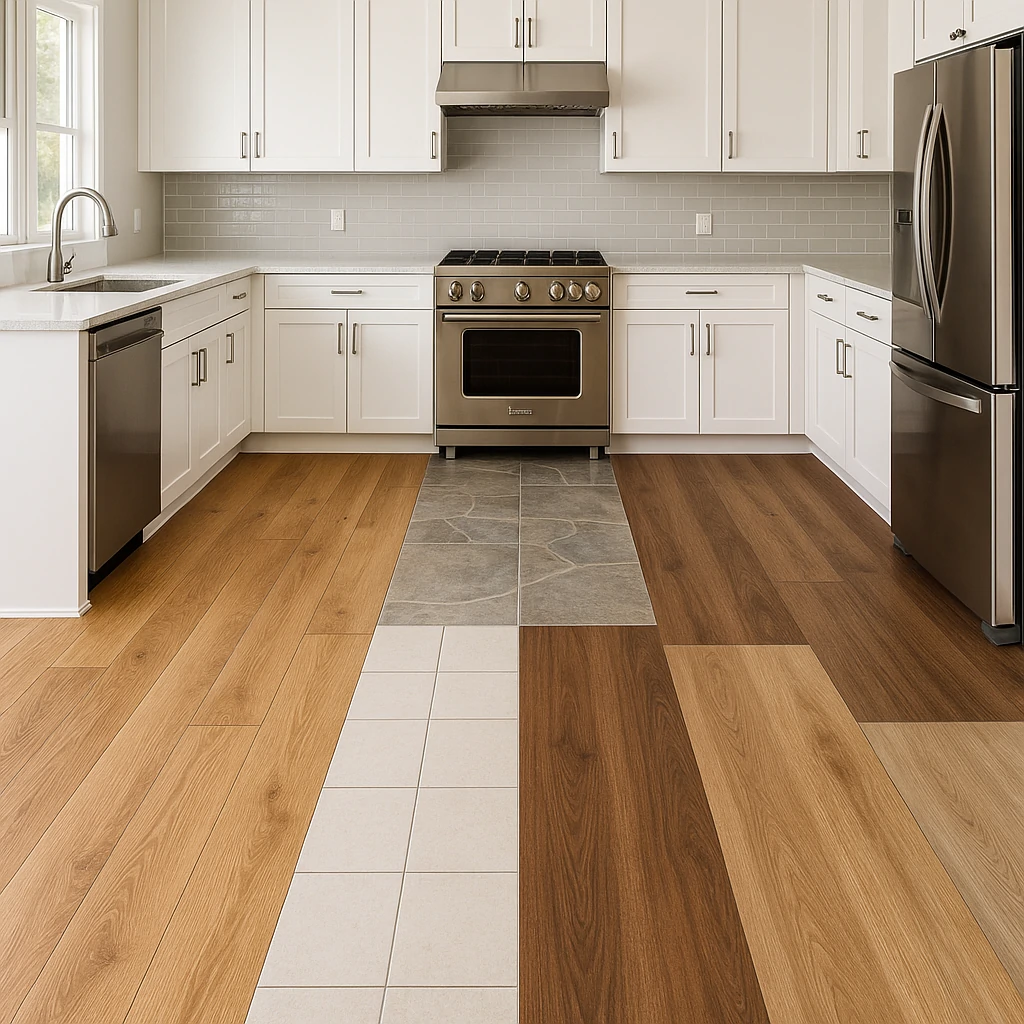
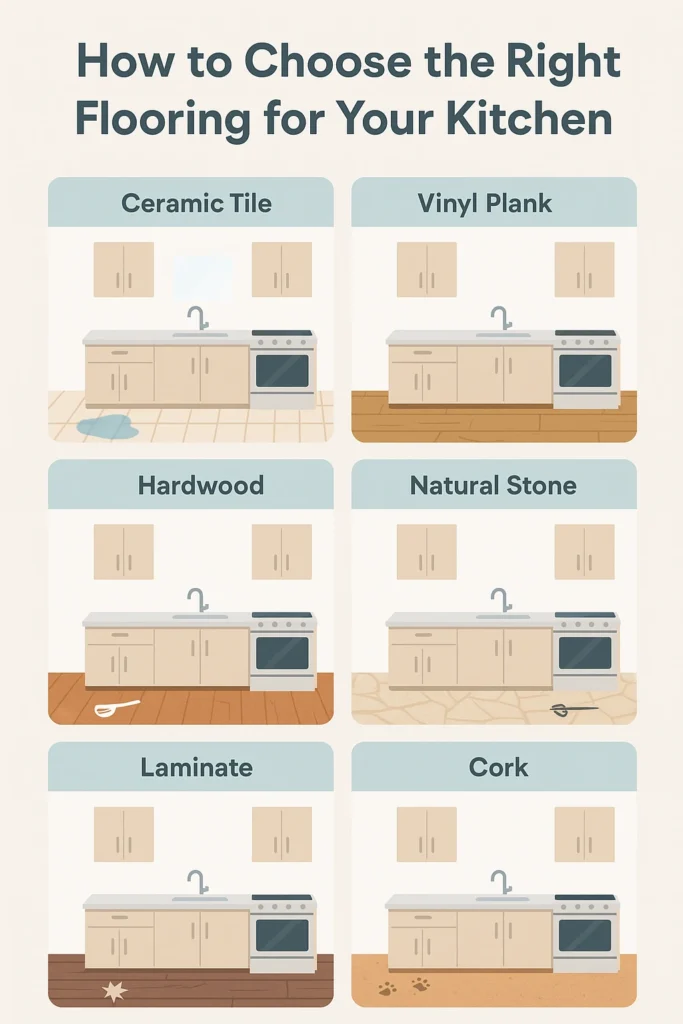
Ceramic and porcelain tiles are among the toughest choices. Porcelain is denser and nearly waterproof, while ceramic is affordable and versatile. They come in endless designs, including wood-look patterns. The main drawbacks are hardness underfoot and cold temperatures without radiant heating.
📌 Fact: Porcelain absorbs less than 0.5% of water, making it highly resistant to spills.
💡 Vinyl and Luxury Vinyl Tile (LVT)
Vinyl is budget-friendly, stylish, and fully waterproof. It’s softer than stone, easy to clean, and perfect for busy families. While it can dent under heavy furniture or fade in sunlight, it remains one of the most practical kitchen flooring options.
📌 Stat: Vinyl flooring made up 38% of U.S. residential sales in 2023.
🌳 Hardwood (Engineered or Solid)
Hardwood offers timeless warmth and character. Solid wood can be refinished several times, while engineered wood resists moisture better. However, both require sealing and careful cleaning. They remain a premium, high-maintenance option.
📌 Tip: Engineered hardwood is more stable in kitchens than solid wood.
🏔️ Natural Stone (Granite, Slate, Marble, Travertine)
Stone provides unmatched elegance and can last for generations. Slate is slip-resistant and durable, while marble offers luxury but scratches easily. All stone flooring requires sealing and professional installation, making it one of the most expensive choices.
📌 Example: Properly sealed stone floors can last 50+ years.
Laminate Flooring
Laminate mimics the look of wood at a fraction of the cost. It’s easy to install and resists scratches well. However, it does not handle water as effectively as vinyl and can swell if exposed for too long.
📌 Fact: Waterproof laminate options can withstand 24–72 hours of water exposure.
🌱 Cork Flooring
Cork is eco-friendly, soft, and naturally slip-resistant. It also reduces noise and provides comfort for long cooking sessions. The downsides include fading from sunlight and the need for sealing every few years.
📌 Fact: Cork contains suberin, a substance that naturally resists mold and insects.
🧾 Pros and Cons
| Flooring Type | Pros ✅ | Cons ❌ |
|---|---|---|
| Ceramic/Porcelain | Durable, waterproof, many styles | Hard, cold, grout needs sealing |
| Vinyl/LVT | Affordable, waterproof, soft | Can dent, fades in sun |
| Hardwood | Timeless, can be refinished | Expensive, moisture-sensitive |
| Stone | Elegant, long-lasting | Costly, slippery, heavy |
| Laminate | Budget-friendly, easy install | Poor water resistance |
| Cork | Eco-friendly, soft | Needs sealing, dents easily |
🧩 Tips for Different Household Needs
👨👩👧 Families with Kids
Choose vinyl or tile for easy cleaning and durability. Avoid wood if spills are frequent.
🐶 Pet Owners
Tile and vinyl resist scratches. Cork is also good as it absorbs sound and adds comfort.
🏠 Small Kitchens
Use light-colored flooring to make the space look bigger.
🍳 Heavy Cooks
Pick cork or vinyl for softer standing surfaces. If using tile or stone, add anti-fatigue mats.
🛠️ Installation Costs
| Flooring Type | DIY-Friendly | Installation Cost per sq. ft. | Notes |
|---|---|---|---|
| Ceramic Tile | No | $7 – $14 | Requires leveling by pros |
| Vinyl/LVT | Yes | $1.50 – $3 | Best DIY option |
| Hardwood | No | $6 – $12 | Skilled installation needed |
| Stone | No | $10 – $20 | Heavy, needs pros |
| Laminate | Yes | $2 – $5 | Click-lock system |
| Cork | Yes | $3 – $8 | Needs sealing after install |
📅 Average Lifespan of Kitchen Floors
| Flooring Type | Average Lifespan | Best For |
|---|---|---|
| Ceramic Tile | 20–50 years | Long-term durability |
| Vinyl/LVT | 10–20 years | Affordable remodels |
| Hardwood | 20–30 years | Classic design lovers |
| Stone | 50+ years | Luxury homes |
| Laminate | 10–20 years | Budget updates |
| Cork | 10–25 years | Eco-conscious homes |
🔒 Safety and Health Considerations
- Textured tile, cork, and vinyl reduce slipping risks.
- Cork and tile resist allergens and mold.
- Cork and stone are eco-friendly, while vinyl is synthetic but highly practical.
FAQs
⭐ Final Thoughts
The right kitchen flooring balances style, safety, durability, and cost. For families, vinyl or tile makes sense. For luxury designs, stone or hardwood stands out. For eco-friendly comfort, cork is a smart choice.
👉 For tailored guidance and professional installation, visit Akron Roofing Experts to get expert support today.