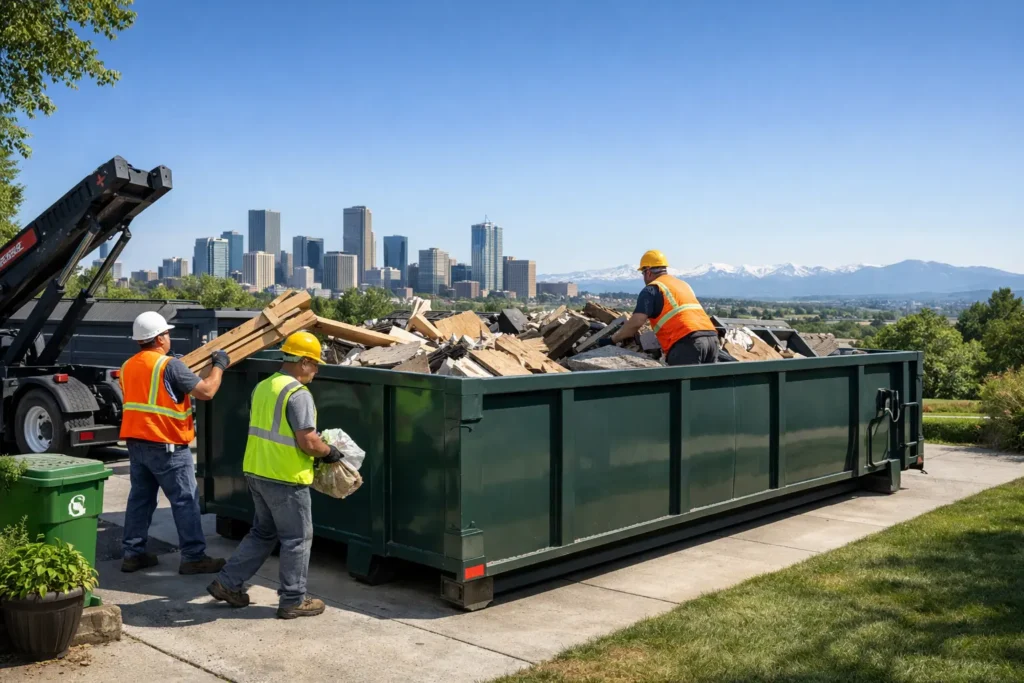
Have you ever stared at a pile of waste and wondered, how will I clear this without overspending or breaking city rules? I asked myself that when I first handled a big roof and yard cleanup—and I learned the hard way that the right dumpster partner and a little planning save time, money, and stress.
Bargain Bins Dumpster Rental Denver delivers the basics you need: clear pricing ranges, correct dumpster sizes, local permit know-how, and proper disposal practices. This guide breaks each step down with facts, quick tables, and practical tips so you can book confidently and finish the job cleanly.
Why choose Bargain Bins Dumpster Rental Denver? ⭐📌
- 🧾 Transparent pricing and clear weight limits — average national roll-off rental sits near the mid-hundreds per week; local ranges vary by size and material.
- 🏙️ Local code compliance — placing a dumpster in Denver’s right-of-way often requires a permit and registration with DOTI. Follow rules to avoid fines and delays.
- ♻️ Responsible disposal — Colorado’s recycling and composting rates show room for improvement; proper sorting at the job site reduces landfill volume.
Quick facts (one glance) 📊📄
| Fact | Value / Note |
|---|---|
| U.S. municipal solid waste per person (2018) | 4.9 lbs/day. Use this to estimate debris volumes for planning. |
| Typical U.S. roll-off rental (average) | ~$426–$857 per week depending on size & region. |
| Denver dumpster placement rule | Dumpsters in public ROW must meet DOTI dimensions and have a Denver ROW Dumpster License. |
| Colorado recycling rate (2023) | ~15.5% — highlights need for better diversion on construction debris and organics. |
Dumpster sizes, capacities, and typical uses 🧰📦
| Size (cubic yards) | Common uses | Usable load (approx.) |
|---|---|---|
| 10 yd | Small cleanouts, minor roofing, garage clearouts | 2–3 tons |
| 15 yd | Medium remodels, roofing shingles for small homes | 3–4 tons |
| 20 yd | Larger remodels, mid-size construction projects | 4–5 tons |
| 30 yd | Major renovations, siding & roof tear-offs | 6–8 tons |
| 40 yd | Large construction or demolition sites | 8+ tons |
Note: Weight allowances and per-ton overage fees vary by provider and material. Always confirm ton limits before booking.
Denver rules and permits: what you must know 🛑🏛️
- 🗂️ Right-of-way placement needs a permit. If the dumpster sits on the street, parking lane, or sidewalk area, a DOTI permit and a Denver ROW Dumpster License are usually required.
- 🛣️ Placement limits exist. Dumpsters must be a minimum distance from corners, fire hydrants, alleys, and entrances—often 20 feet from intersections and must not block travel lanes or sidewalks.
- 🔒 Reflective tape and safety — containers placed in the ROW often require reflective markings and proper lighting for night visibility.
- ⚖️ Weight and tipping rules — exceeding weight limits leads to per-ton charges; some materials (e.g., hazardous waste) are prohibited for standard roll-offs. Check provider waste-type policies.
Cost drivers and realistic price ranges 💵📈
Pricing depends on size, weight, debris type, rental length, location, and disposal fees. Use these national and local ranges to estimate a Denver job:
- National average roll-off rental: roughly $426–$857 per week (size & region vary).
- 🧾 Typical local examples: Denver operators often list 14-day rental packages from $475–$550 for 15–30 yd units with ton allowances; overage charges commonly apply per extra ton. Always ask for an itemized quote.
- 🧭 Extra fees to expect: delivery/pickup, landfill disposal fees, over-weight charges, permit assists, extended rental days, and prohibited material handling.
How to pick the right dumpster size — a simple guide 🔍📦
- 🟦 Small cleanouts (1–2 rooms): 10–15 yd — fits carpet, furniture, small demo.
- 🟩 Kitchen or bath remodel: 15–20 yd — room for cabinets, drywall, tiles.
- 🟥 Full house tear-off or major remodel: 30–40 yd — picks up roof shingles and bulk debris.
- 🟨 Roofing jobs: lean toward 15–30 yd depending on home size and layers removed. Use local weight estimates for shingles per square.
Tip: Overestimate slightly. Running out of space triggers emergency pickups or second dumpsters and raises total cost.
Allowed vs. prohibited materials (common rules) 🚫✅
- ✅ Allowed (typical): wood, metal, concrete, tiles, shingles, household debris, furniture (confirm with provider).
- 🚫 Prohibited (typical): asbestos, paint cans with liquids, batteries, motor oil, solvents, medical waste, propane tanks, certain electronics unless provider accepts them.
- 🧪 Special handling: hazardous and regulated materials require licensed disposal and special permits. Ask the provider before loading.
Sustainable disposal — reduce landfill load ♻️🌱
- The U.S. generated ~292 million tons of municipal solid waste in 2018 (≈4.9 lbs/person/day). Proper sorting and recycling cut landfill costs and environmental impact.
- Colorado’s recycling rate has hovered near 15–17% recently, showing opportunity to divert more materials from landfills. Sort construction debris (metal, untreated wood, concrete) to recycling streams when possible.
Actionable steps for job sites:
- 🪵 Separate reusable lumber and metal for recycling.
- 📦 Keep a small bin for cardboard and clean cardboard gets recycled easily.
- 🧹 Sweep and sort on site to avoid contaminating recyclables.
- 🗑️ Clearly label dumpster loads when scheduling pickups to reduce landfill surprises.
Booking process — what to ask and how to prepare 📞📝
- 📅 Confirm rental period — standard packages run 7–14 days; ask for extension rates.
- ⚖️ Confirm ton limits and per-ton overage charges.
- 🧾 Get an itemized quote that separates delivery, pickup, disposal, fuel surcharges, and taxes.
- 🏷️ Ask about permits — will the company obtain the DOTI permit (if needed) or do you need to? If they pull permits, confirm cost and timing.
- 📍 Decide placement — pick a level, stable spot with space for the roll-off truck. If in the ROW, secure a permit and mark lines to keep clearances.
Recommended dumpster sizes & rough cost cues 🔨📋
| Project | Recommended size | Typical price cue (Denver area) |
|---|---|---|
| Small garage cleanout | 10–15 yd | $300–$500 (depends on weight & provider) |
| Kitchen remodel (minor) | 15–20 yd | $450–$700 |
| Full roof tear-off (single-family) | 20–30 yd | $550–$950 (shingles heavy — check per-ton fees) |
| Whole-house demo | 30–40 yd | $800+ (heavy, multiple tons) |
These are illustrative ranges. Always request a tailored quote that lists disposal destinations and per-ton rates.
Common mistakes to avoid ❌🔧
- 🧯 Ignoring permit needs — placing a dumpster in the street without a DOTI permit risks fines and delays.
- ⛔ Mixing hazardous materials with general debris — this can lead to rejected loads and added fees.
- 📦 Underestimating weight — especially with roofing shingles or concrete; overage fees add up fast.
- 🕒 Not confirming pickup windows — unclear pickup schedules can extend job timelines.
Denver permit checklist — quick copyable list ✅🗂️
- 🟢 Confirm dumpster placement (private property vs. public ROW).
- 🟢 If in ROW: obtain DOTI permit and Denver ROW Dumpster License.
- 🟢 Ensure reflective tape, markings, and safety setup if required.
- 🟢 Notify neighbors if placement impacts parking or sidewalks (best practice).
- 🟢 Keep paperwork (permit, license) on site until pickup.
Frequently asked questions❓🧑🔧
Putting it together: a practical 5-step action plan ✅🔧
- 📏 Measure and estimate your debris volume and likely weights.
- 🧾 Request 2–3 itemized quotes that include permit handling and per-ton fees.
- 📍 Choose placement—private property if possible to avoid ROW permits.
- ♻️ Sort materials on site to divert recyclables and reduce disposal fees.
- 📞 Confirm pickup windows and keep records (permit copies, receipts).
Where to get professional help and next steps 🔗🏢
For project-specific quotes and professional handling in Denver, visit akronroofingexperts.com for guidance tailored to roofing and construction cleanups. They can advise on dumpster sizing for roof tear-offs, roofing material weights, and permit coordination.
Conclusion 📬⭐
Bargain Bins Dumpster Rental Denver can save you time and money when you pick the right size, follow Denver’s placement rules, and sort materials for recycling. Plan ahead, get clear quotes, and keep permits in order—those steps turn a messy job into a smooth finish.