
- Introduction ❓
- 📄 What Does Liability Mean in Roofing?
- ⭐ Types of Damage Roofing Companies Can Cause
- 📊 Common Roofing Damage and Liability
- 📚 Insurance Roofing Companies Should Carry
- 🏠 When Roofing Companies Are Liable
- 🚫 When Roofing Companies Are Not Liable
- 📂 How Homeowners Can Protect Themselves
- 🔑 Real Examples of Liability Cases
- 📖 Frequently Asked Questions
- ⭐ Conclusion
Introduction ❓
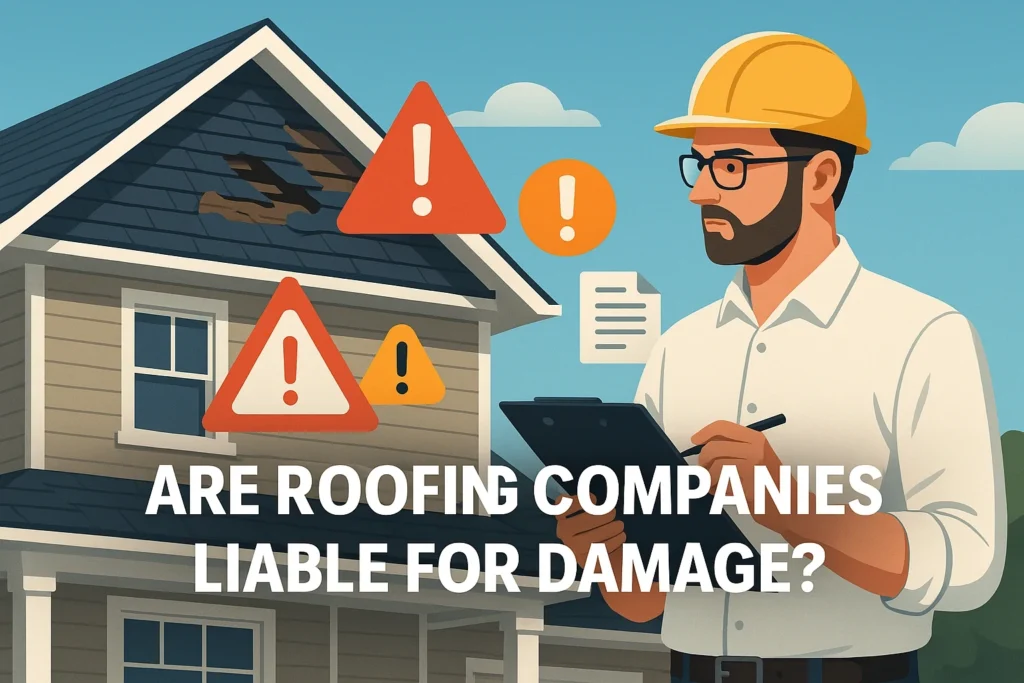
Have you ever wondered what happens if a roofing crew accidentally damages your home while making repairs? I asked myself the same question when I noticed scratches on siding after a roofing project at my neighbor’s house. Homeowners invest thousands of dollars in roof replacements or repairs, and the thought of unexpected damage creates stress and doubt.
The good news is that roofing companies are legally responsible for certain types of damage — but not always for everything. In this guide, I’ll explain when a roofing company is liable, what protections you have as a homeowner, and how you can avoid costly disputes.
For professional help with roofing, visit 👉 Akron Roofing Experts.
📄 What Does Liability Mean in Roofing?
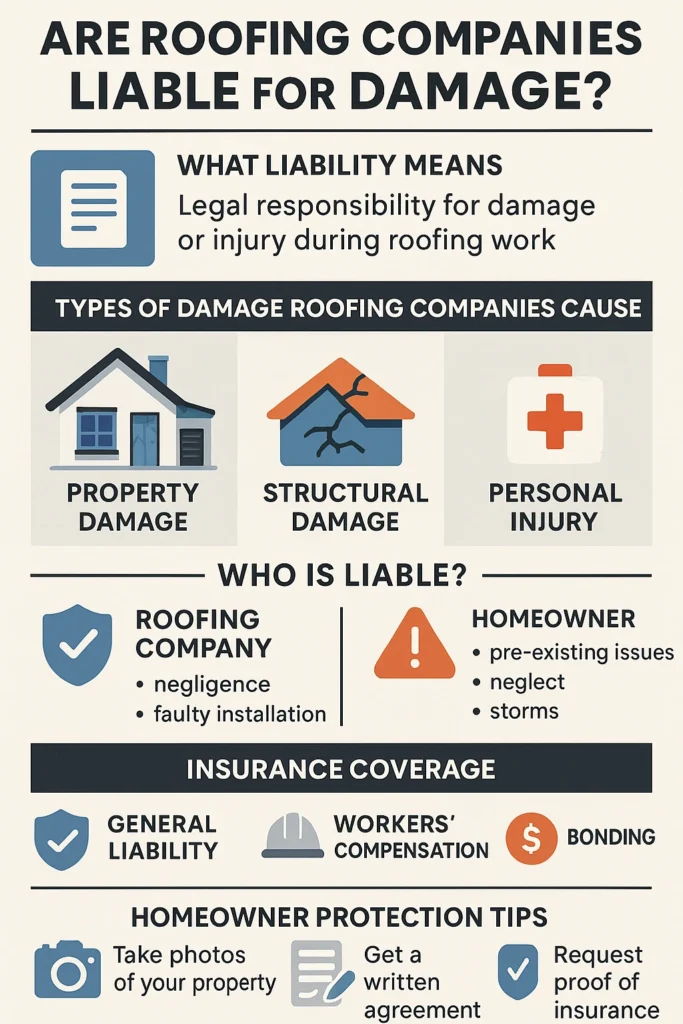
Liability refers to legal responsibility for damage or injury. When you hire a roofing contractor, they assume a duty to perform the work correctly and without causing unnecessary harm. If they fail, they can be held liable for damage to:
- Your property (gutters, siding, landscaping, or interior leaks)
- Neighboring property (fences, driveways, or vehicles)
- People on-site (workers or visitors)
Roofing companies protect themselves with insurance policies, but knowing what’s covered and what’s not is critical for homeowners.
⭐ Types of Damage Roofing Companies Can Cause
Property Damage 🏚️
- Broken windows from falling materials
- Damaged gutters during roof tear-off
- Cracked driveways from heavy equipment
- Leaks caused by poor installation
Structural Damage 🧱
- Improper flashing that leads to water intrusion
- Incorrect installation reducing roof lifespan
- Sub-roof damage left unrepaired
Personal Injury 🚑
If a worker falls or a visitor is injured on-site, liability insurance or workers’ compensation usually covers medical costs.
📊 Common Roofing Damage and Liability
| Type of Damage | Who is Liable | How It’s Covered |
|---|---|---|
| Gutter damage | Roofing company | Contractor’s general liability insurance |
| Broken windows | Roofing company | General liability insurance |
| Worker injury | Roofing company | Workers’ compensation insurance |
| Faulty installation | Roofing company | Workmanship warranty or liability insurance |
| Homeowner’s neglected maintenance | Homeowner | Homeowners’ insurance, not contractor |
📚 Insurance Roofing Companies Should Carry
General Liability Insurance 📄
Covers accidental property damage such as broken gutters, cracked siding, or leaks caused by negligence.
Workers’ Compensation 👷
Protects homeowners from being liable if a worker is injured on the job.
Bonding 💵
Provides financial protection if a contractor fails to complete the project or follow the contract.
Roofing-Specific Coverage 🏠
Not all policies cover roofing, so contractors must have insurance tailored to roofing work. Always request a certificate of insurance before hiring.
🏠 When Roofing Companies Are Liable
- Improper installation that causes leaks
- Damage to siding, landscaping, or interior ceilings during work
- Failure to clean up debris leading to injury
- Breach of contract when promised work is not completed
🚫 When Roofing Companies Are Not Liable
- Pre-existing damage before work began
- Problems caused by homeowner neglect
- Natural disasters such as storms occurring after installation
- Using unapproved materials at homeowner request
📂 How Homeowners Can Protect Themselves
- 📄 Request proof of insurance and bonding before signing a contract
- 📝 Get all promises in writing, including cleanup responsibilities
- 👀 Take photos of your property before work begins
- 💵 Never pay the full amount upfront
- 🧑⚖️ Understand your own homeowners’ insurance coverage
🔑 Real Examples of Liability Cases
- A Texas homeowner sued a roofing company after improper flashing caused interior mold damage. The court found the contractor liable for full repair costs.
- In Florida, a roofing crew damaged a neighbor’s vehicle with falling shingles. The contractor’s general liability insurance covered the replacement.
According to industry surveys, nearly 30% of roofing disputes involve damage claims. Most are settled through insurance payouts, but clear contracts prevent the majority of conflicts.
📖 Frequently Asked Questions
⭐ Conclusion
Roofing companies are responsible for the quality of their work and any damage caused during the process. However, homeowners must protect themselves by hiring licensed contractors with proper insurance, documenting their property condition, and understanding the limits of liability.
If you’re planning a roofing project and want professional service with peace of mind, visit 👉 Akron Roofing Experts.