
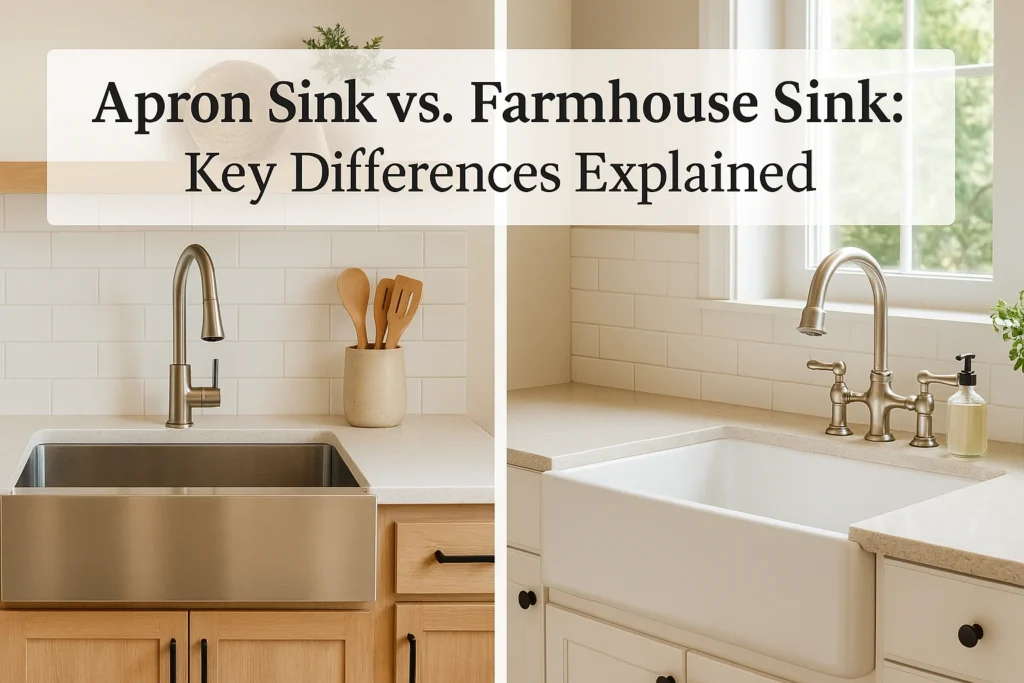
- ❓ Introduction: Are You Stuck Choosing the Right Kitchen Sink?
- 📑 What Is an Apron Sink?
- 👩🍳 What Is a Farmhouse Sink?
- 📊 Apron Sink vs. Farmhouse Sink: Side-by-Side Comparison
- 🏠 Comparing With Traditional Sink Options
- ⭐ Pros and Cons of Apron Sinks
- ⭐ Pros and Cons of Farmhouse Sinks
- 📊 Sink Materials Explained
- 🛠️ Installation Differences
- 💡 Key Considerations Before Choosing
- 📑 Frequently Asked Questions
- 📌 Final Thoughts
❓ Introduction: Are You Stuck Choosing the Right Kitchen Sink?
Have you ever wondered whether an apron sink or a farmhouse sink is the better fit for your kitchen? Many homeowners face this same question during a remodel. The sink you pick isn’t just about looks—it changes how you cook, clean, and maintain your kitchen every single day. Choosing the wrong type can mean extra costs, constant upkeep, or a design that doesn’t fit your lifestyle.
This guide explains everything you need to know about apron sinks and farmhouse sinks. You’ll see the main differences, pros and cons, materials, installation needs, and expert considerations. By the end, you’ll know exactly which one is right for your home. For more professional advice, you can always visit Akron Roofing Experts.
📑 What Is an Apron Sink?
An apron sink, also known as an apron-front sink, has a bold front panel that sticks out from the countertop. Unlike standard sinks that blend into cabinets, the apron sink becomes part of the kitchen’s design and often serves as the main visual feature.
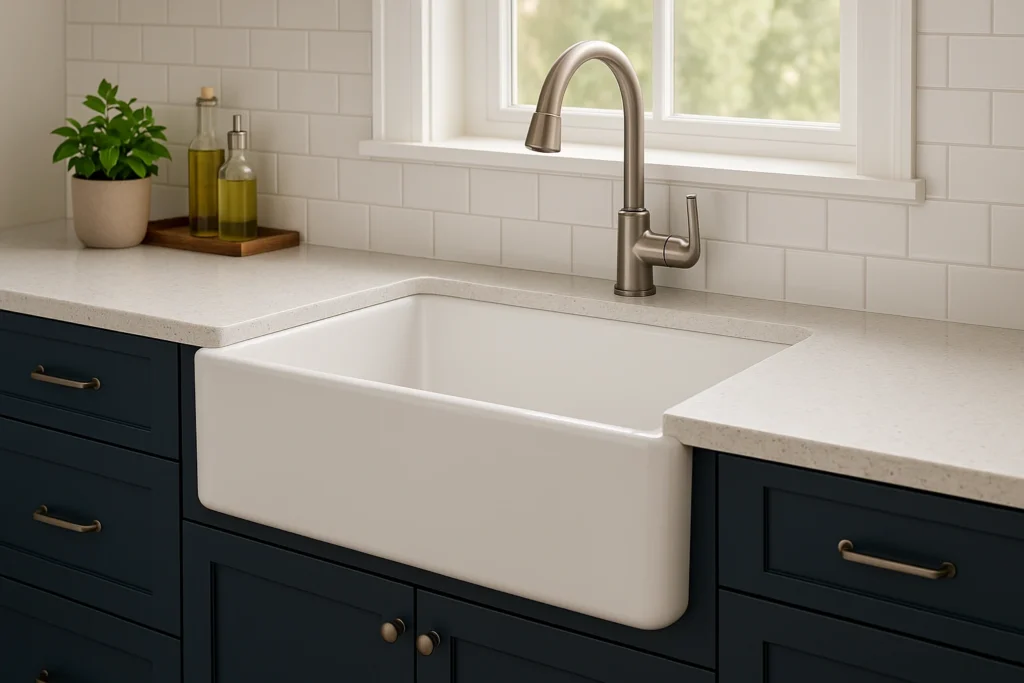
✨ Key Features of Apron Sinks
- 📄 Exposed front design that creates a dramatic kitchen focal point
- ⭐ Available in fireclay, stainless steel, cast iron, and composite
- 🛠️ Usually installed under-mount or flush with countertops
- 💧 Helps reduce cabinet water damage by controlling splashes
- 🏠 Works well in both modern and classic kitchens
👩🍳 What Is a Farmhouse Sink?
A farmhouse sink is a deep, wide sink originally built for traditional farm kitchens where water came from wells. Today, it has become a popular choice for rustic and transitional kitchens because of its size and old-world charm.
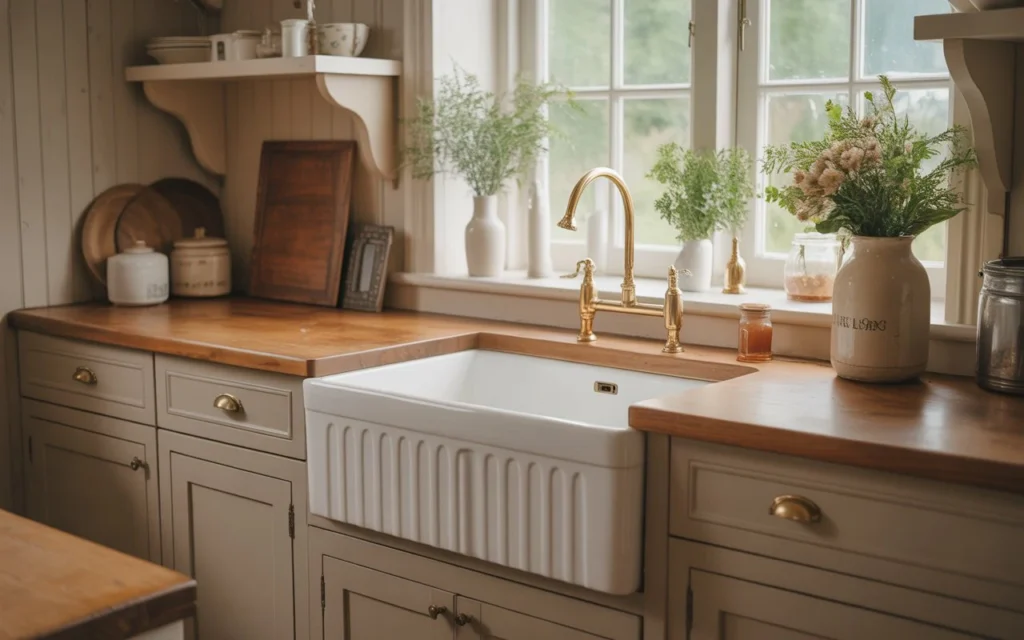
✨ Key Features of Farmhouse Sinks
- 📄 Deep, wide basin that can handle oversized cookware
- ⭐ Usually made from fireclay, stainless steel, or cast iron
- 🛠️ Can be installed under-mount or top-mount
- 🏡 Best suited for farmhouse and rustic kitchen designs
- 💧 Spacious size makes everyday cleaning more convenient
📊 Apron Sink vs. Farmhouse Sink: Side-by-Side Comparison
| Feature | Apron Sink | Farmhouse Sink |
|---|---|---|
| Front Design | Always has exposed front panel | May or may not have exposed front |
| Depth | Shallow and deep models available | Always deep and wide |
| Installation | Under-mount or flush | Top-mount or under-mount |
| Kitchen Style | Modern and traditional kitchens | Farmhouse and rustic kitchens |
| Materials | Fireclay, stainless steel, cast iron, composite | Fireclay, cast iron, stainless steel |
| Maintenance | Easy to clean, prevents splashes | Shows stains, requires frequent cleaning |
| Cabinet Needs | Requires cabinet modification | Needs reinforced support due to weight |
🏠 Comparing With Traditional Sink Options
If you compare apron and farmhouse sinks with regular sinks, the differences are striking.
📄 Drop-In Sinks
- Sit on top of countertops
- Affordable and simple to install
- Shallow and less dramatic in style
📄 Undermount Sinks
- Installed beneath the countertop for a seamless look
- Saves counter space and easier to clean
- Lacks the bold exposed front panel
📄 Apron and Farmhouse Sinks
- Deeper than regular sinks
- Add strong design elements to the kitchen
- Help prevent water damage to cabinets
⭐ Pros and Cons of Apron Sinks
✅ Pros
- 📄 Stylish design with visual impact
- 💧 Protects cabinets from water splashes
- ⭐ Many durable material options
❌ Cons
- 🛠️ Needs cabinet modifications before installation
- 💲 Higher cost compared to traditional sinks
⭐ Pros and Cons of Farmhouse Sinks
✅ Pros
- 📄 Large basin fits big pots and trays easily
- 🏡 Classic rustic style that boosts kitchen design
- ⭐ Strong materials like fireclay and cast iron
❌ Cons
- 🛠️ Requires heavy cabinet reinforcement
- 💲 More expensive than most other sink types
- 💧 Can show water stains if not cleaned regularly
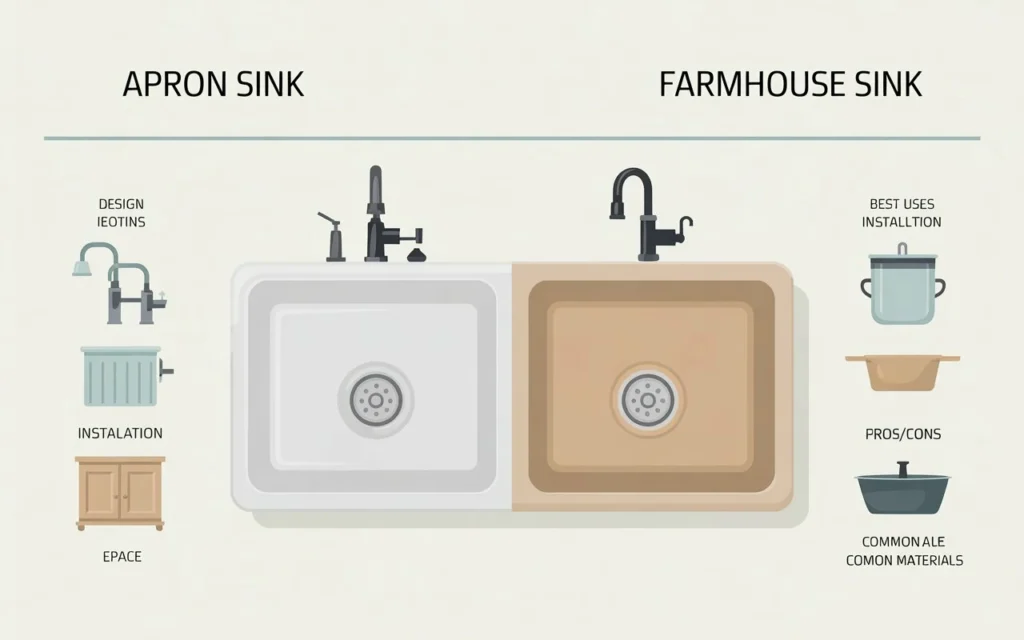
📊 Sink Materials Explained
| Material | Benefits | Drawbacks | Best For |
|---|---|---|---|
| Fireclay | Scratch-resistant, glossy finish, long lifespan | Very heavy, higher price | Farmhouse-style kitchens |
| Stainless Steel | Affordable, durable, modern look | Can show scratches and water spots | Modern kitchens |
| Cast Iron (enameled) | Timeless look, smooth finish | May chip if hit hard | Traditional and rustic kitchens |
| Composite | Resistant to stains and heat | Less common in stores | Contemporary kitchens |
🛠️ Installation Differences
Apron sinks extend outward, so cabinets must be trimmed or customized to fit. They are usually under-mounted or installed flush with countertops. Farmhouse sinks are extremely heavy, so they require a strong cabinet base. They can be installed top-mount or under-mount depending on the design.
💡 Key Considerations Before Choosing
- Kitchen Style – Decide if you want rustic charm or modern boldness
- Functionality – Consider if you need space for oversized cookware
- Budget – Factor in both sink cost and cabinetry modifications
- Durability – Choose materials that resist scratches and stains
- Maintenance – Be realistic about how much cleaning you can handle
📑 Frequently Asked Questions
📌 Final Thoughts
Both apron sinks and farmhouse sinks add beauty, depth, and practical value to a kitchen. Apron sinks are perfect for modern kitchens because of their bold exposed panels, while farmhouse sinks bring a timeless rustic charm with extra depth. The best choice depends on your kitchen style, budget, and how much cooking you do.
For professional advice on picking the right sink and ensuring proper installation, check out Akron Roofing Experts.