- Introduction
- Why squirrels enter lofts
- Quick checklist: First things to look for
- Common signs explained (what each one means)
- Risks and damage to your home
- Legal and conservation notes — what UK homeowners should know
- Health concerns — are squirrels dangerous to people?
- Immediate steps if you suspect squirrels in your loft
- DIY fixes you can try safely
- When to call a professional pest controller
- Humane removal and welfare — what to expect
- Long-term prevention — keeping squirrels out for good
- Choosing a pest control company — key questions to ask
- Typical costs
- Real-life examples
- FAQs
- Conclusion
Introduction
Hearing scuffles above your ceiling? Seeing shredded insulation or odd chews on timber? Squirrels in your loft can cause real damage and make life noisy and stressful. This guide shows clear signs to watch for, the risks involved, and sensible steps you can take right away. Read on to spot problems early and protect your home and family.
Why squirrels enter lofts
Squirrels want food, safety, and shelter. In towns and suburbs they find plenty of food from gardens and bird feeders. A loft gives them a dry, warm space to nest, raise young, and hide from predators. They can squeeze through small gaps in the roof eaves, broken tiles, or damaged soffits. Grey squirrels, in particular, have learned to use houses as shelter, especially in colder months.
Quick checklist: First things to look for
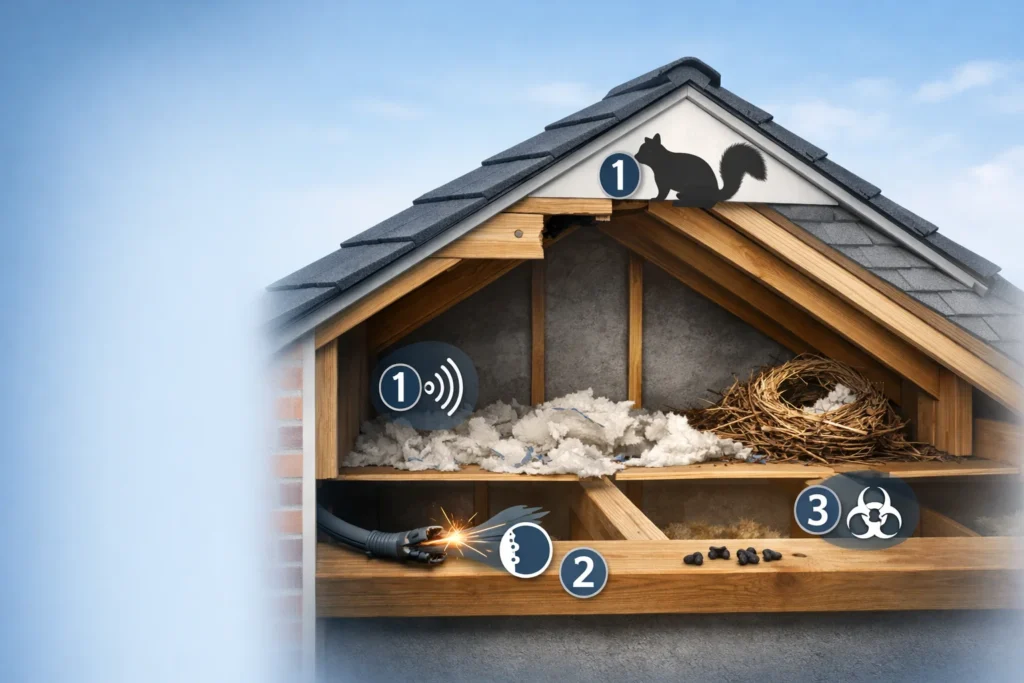
- Noises — scratching, scuttling, or a thumping sound from the roof space.
- Droppings — small, dark droppings in the loft or on joists.
- Chewed materials — gnawed wood, wires, or insulation pulled into nests.
- Visible entry points — gaps under ridge tiles, holes in soffits, or torn flashing.
- Nests (dreys) — piles of leaves, twigs, or shredded insulation.
- Daytime sightings — seeing squirrels on the roof, chimney, or near vents.
These signs often appear in combination. If you spot more than one, act fast to avoid bigger repair bills.
Common signs explained (what each one means)
Noises — when and what to listen for
Squirrels make a range of noises. You may hear light scratching, scurrying at dawn, or a soft thumping as they jump between joists. These sounds often sound louder at early morning and late afternoon when squirrels are most active. Children’s bedrooms directly under the loft are often where residents notice noise first. If the noise increases in spring, squirrels may be breeding or feeding young.
Droppings and urine — spotting contamination
Squirrel droppings are small and pellet-like. Over time, a build-up can stain insulation and timber. A strong musty or ammonia smell comes from urine and can indicate the presence of animals for some time. Contaminated insulation and water tanks can mean hygiene problems and may need professional cleaning.
Chewed cables, joists, and vents — a real hazard
Squirrels chew to keep teeth short and to make access points larger. This chewing can damage electrical cables, roof timbers, soffits, and plastic vents. Chewed cables pose a fire risk if left unchecked. If you find gnawed wiring, avoid using electrical circuits in that area and get a qualified electrician and pest professional to inspect.
Nests (dreys) and nesting material
Squirrels build nests from leaves and twigs in trees — but lofts provide a safer site. Inside a loft, they use shredded insulation, nesting paper, and twigs to build a warm nest. Nests may be tucked into corners or near the eaves. A single drey does not always mean a long-term problem, but a drey plus other signs usually does.
Grease marks, footprints, and run-lines
Grease marks where squirrels repeatedly pass or jump leave smudges along roof beams or the outside of entry points. You might see small footprints in dusty spaces or along insulation. These are helpful clues for professionals to identify where they enter and how they move.
Risks and damage to your home
Structural and material damage
Squirrels can strip insulation, chew timber, and damage roof lining. Over time, this reduces insulation performance and raises heating bills. Replacing insulation and repairing timber or roof felt can be costly if the problem is allowed to spread.
Fire risk from chewed cables
When squirrels chew electrical wiring, they create an ignition risk. Exposed wires can spark and cause fires in roof spaces. If you suspect cable damage, switch off power at the consumer unit for affected circuits and seek immediate help.
Contamination and hygiene problems
Droppings, urine, and dead animals contaminate insulation and stored items. This contamination can require specialist cleaning and replacement of insulation and, sometimes, the water tank. Clean-up after wildlife is best done by trained staff with protective equipment to avoid health hazards.
Noise and sleep disturbance
Repeated noise can affect sleep and quality of life. Squirrels are active in daylight hours, so owners may hear scratching soon after dawn or near dusk. If noise keeps you awake, tackling the cause quickly will restore comfort.
Legal and conservation notes — what UK homeowners should know
Not all squirrels are the same legally. In the UK, red squirrels are protected under the Wildlife and Countryside Act 1981 and related conservation laws. You must not intentionally harm, disturb, or damage a red squirrel or its resting place without a licence. Grey squirrels, which are non-native and widespread, do not enjoy the same legal protection, but their handling and control are subject to animal welfare law and species controls. If you need to remove or control squirrels, use qualified professionals who know the law and who follow humane, legal methods.
Simple rule: if you spot a red squirrel in or near your home, contact local wildlife or conservation bodies for advice. If greys are the issue, speak to a licensed pest controller who follows current UK guidance and humane practices.
Health concerns — are squirrels dangerous to people?
Squirrels can carry fleas, ticks, and other parasites. Their droppings and urine can contaminate loft spaces and stored goods. While direct disease risk to humans from squirrels is low, the indirect risks from parasites, damaged insulation, or contaminated water tanks mean you should treat any infestation seriously. Use protective equipment and professional cleaners if contamination is heavy.
A special note on squirrelpox: this virus affects red squirrels severely and is carried harmlessly by many grey squirrels. It’s not a direct human health risk, but it’s a conservation concern. This is one reason wildlife bodies warn against moving squirrels between areas.
Immediate steps if you suspect squirrels in your loft
- Listen and note times. Keep a short log of when you hear noises. This helps professionals locate activity.
- Do a visual check. From the outside, look for chewed eaves, loose tiles, or holes in soffits. Do not climb on the roof alone.
- Avoid sealing entry points immediately. If an animal is inside, sealing exits can trap young and cause distress or illegal harm. Wait until the animal is absent or call a professional.
- Protect family and pets. Keep loft access closed, and avoid breathing in loft dust. Wear a mask if you’ll enter the loft.
- Contact a licensed pest controller or wildlife charity. They can identify species, advise on legalities, and remove animals safely. GOV.UK and BPCA provide guidance on legal and safe control.
DIY fixes you can try safely
Do only what you can do without risk. Keep paragraphs short and simple.
- Trim trees that touch the roof. Squirrels use branches to jump onto roofs. Cutting branches back 2–3 metres reduces access.
- Secure bird feeders so they don’t spill seed that attracts squirrels. Use squirrel-proof feeders or move feeders to posts away from the house.
- Patch small external gaps with temporary mesh if you are sure no animal is inside and only for short periods. Use metal mesh (not plastic) that squirrels can’t chew through.
- Fit a chimney cap and check vents for gaps. These fixes reduce entry points and are low-cost.
Avoid putting poison or traps in the loft. These methods can cause trapped, injured, or dead animals that contaminate the space and may be illegal. If you are unsure, call a pro.
When to call a professional pest controller
Call a professional if:
- You hear continuous noise over days or weeks.
- You find chewed electrical cables or severe insulation damage.
- You discover a nest with young, or you see multiple animals.
- You cannot locate the entry point or the animals come back despite DIY measures.
Choose a company that follows the British Pest Control Association (BPCA) guidance or similar standards. Ask if they are insured, use humane methods, and can provide references and a clear follow-up plan (proofing and repairs).
Humane removal and welfare — what to expect
Good pest professionals follow humane practices. They will:
- Identify the species (red vs grey) and check for young.
- Use exclusion methods (one-way exit devices) where legal and safe. This allows animals to leave but not return.
- Avoid relocation of grey squirrels unless law permits — in many cases relocation is restricted. In some situations captured greys must be humanely dispatched under legal rules. GOV.UK guidance covers how certain animals must be dealt with.
- Clean and disinfect heavily contaminated areas and advise on insulation replacement if needed.
Ask the company for a written plan and a guarantee on proofing work. A good contractor will also suggest follow-up checks.
Long-term prevention — keeping squirrels out for good
- Roof and eaves maintenance: Replace loose tiles and repair damaged felt. Check for gaps after storms.
- Install metal mesh around soffits and vents. Metal is harder for squirrels to chew.
- Fit bird feeder baffles or place feeders away from trees and fences.
- Manage garden food sources: Clean up fallen fruit, seal compost bins, and secure bin lids.
- Regular checks: Inspect roofs and lofts twice a year, ideally in autumn and spring.
Prevention costs much less than repeated repairs. A simple chimney cap plus trimming trees will cut most entry routes.
Choosing a pest control company — key questions to ask
When you call a company, ask:
- Are you a member of the BPCA or similar professional body?
- Do you follow the Wildlife and Countryside Act and current UK guidance?
- How will you identify the species?
- What methods will you use to remove animals, and are those methods humane?
- Who does the repair and proofing work? Do you provide a guarantee?
- Can you give a written quote and references?
A clear, professional answer and a written plan show that a company takes animal welfare and legal rules seriously.
Typical costs
Costs vary by size of the job, region, and whether repairs are needed. Expect the following rough ranges (always get quotes):
- Initial survey and inspection: £50–£150.
- Squirrel proofing (patching small gaps, mesh, caps): £150–£700 depending on work.
- Removal and exclusion work: £150–£600.
- Insulation replacement or heavy cleaning after contamination: £200–£1,500+ depending on area and materials.
These are ballpark figures. The final price depends on how long the squirrels have been active and the extent of damage. Always get a written quote and check what the fee covers (labour, materials, clean-up).
Real-life examples
Case 1 — Early detection, small cost: Mrs A in Surrey heard light scratching at dawn. A quick loft check found a small drey and a hole in the soffit. A pest pro fitted a one-way device, sealed the hole, and cleaned a small area of insulation. Total cost: modest. No lost insulation, no wire damage.
Case 2 — Late action, big repairs: Mr B in Manchester waited months after hearing noise. Squirrels had chewed many joists and an electrical cable. Work included electrical rewiring, insulation replacement, and structural timber repair. The bill was several times higher than a prompt fix would have been.
These examples show the value of fast action and professional advice.
FAQs
Conclusion
Squirrels in your loft are common but manageable. Watch for scratching noises, droppings, chewed materials, and visible entry points. Early detection saves money and stress. If you suspect an infestation, keep people and pets away from the loft, avoid sealing exits if animals may be inside, and contact a reputable, licensed pest controller. Remember the legal difference between red and grey squirrels — if you think you have red squirrels, contact local wildlife conservation groups first.
If you want professional help with inspection, safe removal, or roof repairs and proofing, visit akronroofingexperts.com for more information and to arrange an assessment. Protect your home now — small steps early make a big difference.