- 📄 Introduction
- 📄What "Salvage and Recycling" Means for Roofing
- 📄Why It Matters — Big Facts
- 📄Quick Benefits of Roofing Salvage & Recycling
- 📄Common Roofing Materials — Salvage Options & Typical Reuse
- 📄Who Benefits — Stakeholders and Roles
- 📄Step-by-Step: How Roofing Salvage Works
- 📄Safety and Compliance Checklist
- 📄Practical Tips for Homeowners Who Want Salvage Value
- 📄How Asphalt Shingle Recycling Works
- 📄Roof Material — Typical End Markets After Recycling
- 📄Cost & Environmental Case Notes
- 📄Common Misconceptions — Corrected with Facts
- 📄How to Set Up a Small On-Site Salvage Program
- 📄Regulations, Certifications, and Standards to Know
- 📄Real-World Example: Asphalt Shingle Diversion
- 📄Quick Action Checklist for Homeowners Before a Roof Tear-Off
- 📄How Salvage Raises Project Value
- 📄Barriers and How to Overcome Them
- 📄Policy & Market Trends That Affect Salvage
- 📄Top Tools & Supplies for Safe Salvage Work
- 📄Where to Sell or Donate Salvaged Roofing Materials
- 📄Measuring Success — Useful Metrics for a Salvage Program
- 📄Frequently Asked Questions
- 📄Implementation Plan — 90-Day Roadmap for a Small Roofing Business
- 📄Final Checklist Before You Hire a Roofer
- 📄Closing Summary — Clear, Evidence-Based Takeaway
📄 Introduction
Have you ever felt angry watching a roof get torn off and still-useful shingles, flashing, and timber end up in a dumpster while your repair bill climbs and landfills grow?
📄What “Salvage and Recycling” Means for Roofing
Salvage and recycling focus on keeping building materials in use longer by recovering, repairing, and returning them to the market or industrial process. In roofing, salvage targets materials such as asphalt shingles, tiles, metal roofing, flashing, underlayment, decking, and vintage hardware. Proper salvage reduces waste, lowers material costs, and cuts greenhouse gas emissions by avoiding new production.
📌 Key idea: Salvage recovers usable parts; recycling converts unusable pieces into raw material for new products.
📄Why It Matters — Big Facts
Construction and demolition debris is a massive waste stream in many countries. In the United States, one authoritative estimate shows roughly 600 million tons of construction and demolition debris in 2018.
Asphalt roofing produces millions of tons of scrap each year — commonly reported 11–13 million tons in the U.S. alone — yet only a small share reaches recycling facilities.
Recycling programs can and do redirect huge amounts of material: one report notes over 455 million tons of C&D debris were directed to next use while under 145 million tons were landfilled in the U.S. data set.
Globally, construction and demolition waste often represents around 30% of solid waste generation, highlighting the scale of the opportunity.
📄Quick Benefits of Roofing Salvage & Recycling
-
⭐ Lower disposal costs — less to tip at the landfill.
-
⭐ Material savings — reuse nails, flashing, specialty tiles, and wood.
-
⭐ Lower carbon footprint — less demand for new raw materials.
-
⭐ Historic value — reclaimed roof tiles and metal often match older homes better.
-
⭐ New markets — recycled asphalt can go into paving and road projects.
📄Common Roofing Materials — Salvage Options & Typical Reuse
| Material | Can it be salvaged? | Typical reuse or recycling route |
|---|---|---|
| Asphalt shingles | Yes (select pieces) + recycling of grindings | Reuse for patching; grind into recycled asphalt shingles or pavement additive. |
| Clay or concrete tiles | Yes (careful removal) | Reinstall on other roofs, landscape edging, or crushed aggregate. |
| Metal roofing (steel, aluminum, copper) | Yes | Recycle at metal yard — high scrap value; can be reformed into new metal panels. |
| Roofing timber / decking | Yes if dry and undamaged | Reclaimed decking, furniture, or structural reuse after inspection. |
| Flashing & fasteners | Yes | Reuse or recycle as scrap metal. |
| Underlayment / felt | Limited | Typically not reusable; may be diverted to specialist recycling if available. |
📄Who Benefits — Stakeholders and Roles
-
👤 Homeowners — save on disposal and sometimes on replacement costs.
-
👤 Roofing contractors — earn by offering salvage removal and by selling recovered materials.
-
👤 Salvage yards & recyclers — source inventory for resale and feedstock for manufacturing.
-
👤 Municipalities & environment — reduced landfill pressure and lower emissions.
📄Step-by-Step: How Roofing Salvage Works
-
📄 Pre-job planning — inspect the roof before teardown to identify reusable tiles, flashing, and trim.
-
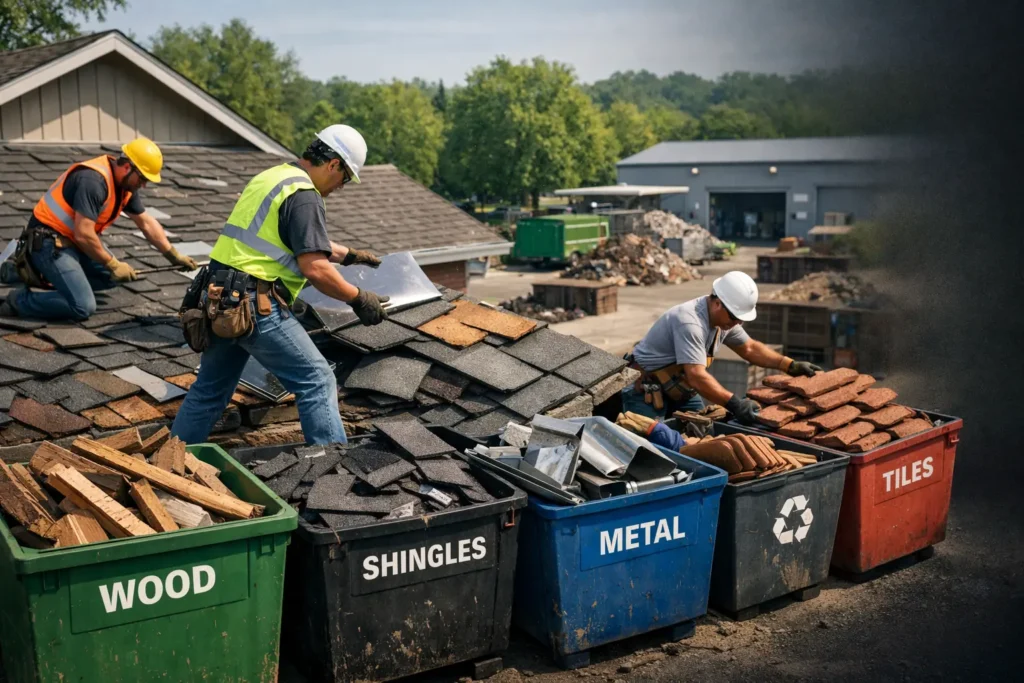
📄 Labeling and sorting on site — separate intact tiles, metal, and timber into marked containers.
-
📄 Safe removal — remove materials carefully to avoid damage; use pry bars, nail pullers, and scaffolding.
-
📄 Transport to salvage or recycler — coordinate with a local salvage yard or licensed recycler.
-
📄 Documentation — record quantities, weights, and destinations for client invoices and local reporting.
-
📄 Sell or donate — arrange resale, donation to reuse centers, or collection by recycler.
📄Safety and Compliance Checklist
-
📄 Confirm local disposal and recycling rules; some places require special handling for treated wood or asbestos-containing materials.
-
📄 Use PPE (gloves, eye protection, harnesses) and follow fall-protection rules.
-
📄 Avoid mixing hazardous wastes with recoverable materials.
-
📄 Keep clear chains of custody for materials sold or donated.
📄Practical Tips for Homeowners Who Want Salvage Value
-
⭐ Ask the roofer to preserve nails where possible — de-nailed boards often hold higher value.
-
⭐ Request a pre-tear inspection and a simple salvage plan on the estimate.
-
⭐ Offer materials to local salvage shops or list them on reuse marketplaces.
-
⭐ Consider donating quality materials to nonprofits for tax receipt potential (confirm local rules).
📄How Asphalt Shingle Recycling Works
-
Collection — shingles are collected from tear-offs or manufacturing scrap.
-
Sorting — debris is cleaned of contaminants like wood or metal.
-
Grinding — shingles grind into a powder called RAS (recycled asphalt shingles).
-
Processing & blending — RAS mixes with hot mix asphalt for roads or modified asphalt products.
📄Roof Material — Typical End Markets After Recycling
| Material | End markets |
|---|---|
| Asphalt shingles (RAS) | Road paving, asphalt binder modifier. |
| Metal roofing | Melted and recast into new metal products. |
| Clay/concrete tiles | Reuse on buildings; crushed for landscaping or aggregate. |
| Reclaimed timber | Furniture, interior finishes, or engineered wood products. |
📄Cost & Environmental Case Notes
-
Material redirection lowers landfill tonnage and saves disposal fees; EPA indicators show large quantities steered to next use rather than landfill in aggregate C&D data.
-
Asphalt shingle recycling changed from rare to an expanding market: industry resources document millions of tons diverted into paving since programs began, yet a large share still goes to landfill each year.
📄Common Misconceptions — Corrected with Facts
-
Myth: All roofing waste is worthless.
Fact: Many roofing components have resale or recycling value, especially metal and intact tiles; asphalt shingles can be ground and reused in paving. -
Myth: Salvage always delays the job and raises costs.
Fact: With planning, salvage adds a small time overhead that often pays for itself through disposal savings and resale of materials.
📄How to Set Up a Small On-Site Salvage Program
-
👤 Appoint a salvage lead to inspect and sort materials each day.
-
👤 Provide labeled bins for metal, tiles, treated wood, and mixed waste.
-
👤 Partner with local recyclers and salvage yards — create price lists for common items.
-
👤 Track weights and receipts; integrate resale into estimating templates to show clients potential offsets.
📄Regulations, Certifications, and Standards to Know
-
Local waste management rules: check municipal guidelines for C&D handling and diversion targets.
-
Asphalt recycling specs: road agencies often set limits on RAS content for pavements — recyclers will confirm acceptable blends.
-
Historic building rules: salvage of historic roof components may require approvals; consult preservation authorities.
📄Real-World Example: Asphalt Shingle Diversion
Multiple industry and government sources estimate 11–13 million tons of asphalt roofing scrap are generated annually in the U.S.; only a minority is recycled into pavement and other products, showing a significant opportunity to scale recycling operations.
📄Quick Action Checklist for Homeowners Before a Roof Tear-Off
| Action | Why it matters |
|---|---|
| Book a pre-tear inspection | Spots salvageable material and reduces damage. |
| Ask for on-site sorting | Preserves value and reduces landfill fees. |
| Request receipts from recycler | Needed for tax, resale, or warranty records. |
| Consider donation options | Local reuse centers can take good materials. |
📄How Salvage Raises Project Value
-
Historic tile reuse: Reused clay tiles often match existing roofs better than new replacements, preserving curb appeal and property value.
-
Metal flashings & trims: Copper and lead flashings hold scrap value; recycling recovers cash and reduces raw metal demand.
-
Hardwood decking: Reclaimed decking can sell for premium per board-foot compared to new lower-grade timber.
📄Barriers and How to Overcome Them
-
Barrier: Logistics and sorting labor.
Fix: Add a modest line item on estimates for salvage removal — it often covers labor and yields net savings. -
Barrier: Lack of local recyclers.
Fix: Expand the search radius, combine loads with nearby contractors, or ship to regional processors for asphalt and metals. -
Barrier: Contaminated materials.
Fix: Train crews to avoid contamination during removal and to separate obvious problem items on site.
📄Policy & Market Trends That Affect Salvage
-
Roadway markets increasingly accept RAS, boosting asphalt shingle recycling demand.
-
Circular economy initiatives and municipal diversion goals create incentives and sometimes grants for C&D recycling infrastructure.
📄Top Tools & Supplies for Safe Salvage Work
-
Pry bars and shingle-removal tools
-
Nail pullers and magnetic drum collectors
-
Labeled salvage containers and tarps
-
Fall-protection equipment and scaffolding
-
Inspection checklists and digital photo logs
📄Where to Sell or Donate Salvaged Roofing Materials
-
Local salvage yards and architectural reuse centers
-
Online marketplaces for building materials (regional sites)
-
Contractors and restoration specialists who prefer reclaimed materials
For professional roofing salvage services and guidance, visit: akronroofingexperts.com
📄Measuring Success — Useful Metrics for a Salvage Program
-
Tons diverted from landfill per job
-
Dollars recovered from resale or scrap per job
-
Percentage of materials reused on other projects
-
Reduction in client disposal fees
📄Frequently Asked Questions
-
Can my old shingles be recycled?
Many can. Clean asphalt shingles often enter RAS programs for paving; check local availability. -
Do I need special permission to remove historic tiles?
Often yes. Consult local preservation authorities before removal. -
Will salvage delay my project?
With planning, salvage adds minimal time and usually saves money overall.
📄Implementation Plan — 90-Day Roadmap for a Small Roofing Business
-
Days 1–14: Audit jobs for salvageable materials and map local recyclers.
-
Days 15–45: Train crews in removal and sorting; buy basic salvage containers.
-
Days 46–90: Launch salvage line item in estimates; track results and adjust pricing.
📄Final Checklist Before You Hire a Roofer
-
Confirm salvage and disposal plan is on the written estimate.
-
Ask how materials will be sorted and where they will go.
-
Request proof of recycling receipts or donation forms if that matters to you.
-
Decide whether you want any materials returned to you for reuse.
📄Closing Summary — Clear, Evidence-Based Takeaway
Salvage and recycling in roofing are proven ways to reduce waste, save money, and keep materials in productive use. Major data sources show construction and demolition waste is a significant portion of the waste stream, and asphalt roofing alone produces millions of tons of scrap annually — a sizeable resource that recycling programs already use but can scale further. Implementing pre-tear planning, on-site sorting, and local recycling partnerships delivers environmental and economic benefits for homeowners and contractors alike.
For professional help, assessments, or to discuss salvage options for your roofing project, visit akronroofingexperts.com.
📄Appendix: Selected Authoritative Sources (for further reading)
-
U.S. EPA — Construction and Demolition Debris data.
-
ShingleRecycling.org / CDRA — shingle recycling resources.
-
Industry & manufacturer reports on asphalt shingle volumes and recycling.