Intro
Have you ever stood at your sink and wondered, “How much will it cost to fix the main sewer line if it backs up again?” I’ve seen homeowners panic when a clog turns into a full sewer backup. This guide explains real price ranges, what drives the cost, and how to choose the right service so you avoid surprise bills and repeated visits.
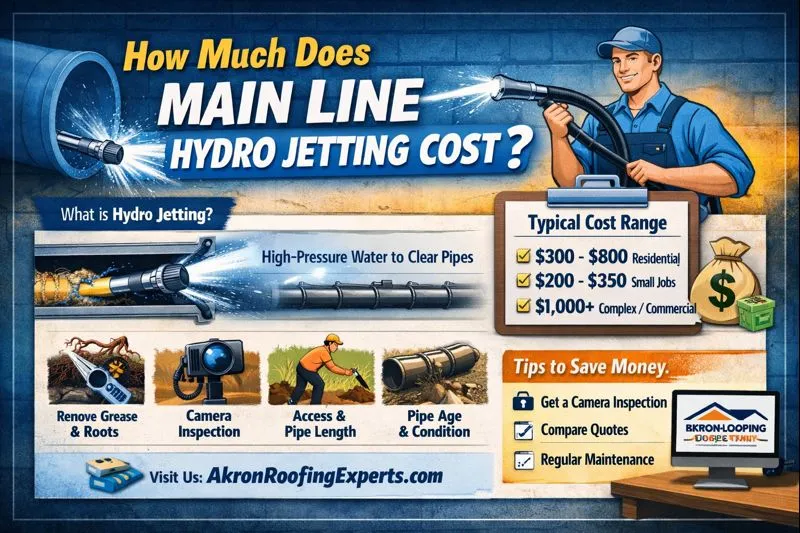
🔎 What is main line hydro jetting?
Hydro jetting uses a special hose and high-pressure water to wash the inside of sewer pipes. Technicians push a hose into the sewer cleanout, then blast water to remove grease, scale, sludge, and tree roots. The process cleans the entire pipe wall rather than just punching through a single clog.
💲 Typical cost ranges (quick answer)
-
Residential average: Most sources put a common residential range near $300–$800 for a typical main-line hydro jet.
-
Lower-end jobs / small lines: Simple jobs can cost around $200–$350.
-
Complex or commercial jobs: Costs can rise to $1,000 or more for long lines, heavy root removal, or commercial systems.
These ranges reflect the work itself. Final invoices often add inspection, travel, permits, or repairs if the camera finds damage.
📈 Why prices vary — main cost drivers
-
Severity of the clog / buildup. Thick grease, mineral scale, or heavy root intrusion takes more time and may need stronger jetting or repeat passes.
-
Pipe access and cleanout location. If techs must cut a slab or dig to reach a line, labor and materials increase the bill.
-
Pipe length and diameter. Longer runs take more time and water. Larger commercial pipes need bigger equipment.
-
Pipe material and age. Old clay or brittle cast-iron pipes may need lower pressure or pre-inspection; some companies refuse to jet severely damaged pipes.
-
Camera inspection and diagnostic work. A video camera inspection before or after jetting adds cost but reduces surprise repairs. Many pros include or recommend it.
🛠 Hydro jetting vs. snaking — cost and value
-
Drain snaking (augering) often costs $100–$300 for typical clogs. It can clear immediate blockages but won’t remove grease or scale from pipe walls.
-
Hydro jetting costs more up front (commonly $300–$800) but cleans the full pipe and lowers the chance of repeat visits for the same problem. For recurring clogs, jetting often saves money over time.
⚖️ When hydro jetting is the right choice
-
You get repeated clogs or slow drains across the house (not just one sink).
-
Camera shows grease build-up, heavy scale, or root intrusion.
-
You want preventive maintenance to avoid big repairs later.
-
Hydro jetting removes the root cause (deposits and roots) rather than just making a temporary hole.
🔬 Pressure levels and safety (what pros use)
Hydro jet machines operate across ranges. Many professional machines for residential work use about 1,500–4,000 PSI, while some heavy units or commercial setups can be higher. Technicians choose pressure by pipe material and condition to avoid damage. Always expect a camera check first if your pipes are old or fragile.
📊 Cost tables — quick reference
Typical price bands (residential)
| Scenario | Typical cost (USD) | Notes |
|---|---|---|
| Minor snaking / auger only | $100–$300 | Quick clogs near fixtures. |
| Standard hydro jet (single-line) | $300–$800 | Most common residential range; includes cleaning and flow test. |
| Severe root/scale removal | $800–$1,500+ | Heavily blocked or long lines; may need additional passes. |
| Commercial / complex systems | $1,000–$5,000+ | Large diameters or special equipment required. |
Cost drivers and expected add-ons
| Added work | Typical extra cost | Why |
|---|---|---|
| Camera inspection | $75–$300 | Locates damage and confirms cleaning. |
| Digging / access work | $200–$2,000+ | If no cleanout, digging or slab cutting may be required. |
| Emergency / after-hours | 25–100% surcharge | Nights and weekends cost more. |
| Repairs or relining | $500–$10,000+ | If jetting reveals cracks, fixes can be costly. |
🧾 Example cost scenarios (realistic reads)
-
Simple kitchen-main clog: Camera shows grease near kitchen branch. Pro uses jetter, clears line, tests flow. $350–$550.
-
Recurring backups with root intrusion: Tech finds roots and heavy buildup. Jetting takes longer; video shows compromised pipe. $800–$1,800 plus possible relining or replacement.
-
Preventive whole-main clean (scheduled maintenance): Company cleans main line to prevent backups. $300–$600 per visit; repeating yearly or every 18–24 months protects the line.
🔁 How often should you hydro jet the main line?
Most pros recommend every 12–24 months for typical homes. If you run a restaurant, live near big trees, have old pipes, or use garbage disposals heavily, you may need jetting more often (every 6–12 months). Regular maintenance reduces the risk of emergency repairs and costly replacements.
⚠️ Risks, limitations, and when to avoid jetting
-
Very old or fragile pipes: High pressure can crack or worsen failing pipes. A camera inspection helps decide if jetting is safe.
-
Collapsed or severely broken lines: Jetting will not fix structural failure; it can reveal the problem but won’t repair it.
-
Hidden costs: If jetting uncovers damage, you might need relining or replacement—these costs can drastically exceed cleaning. Always budget for inspection and possible repair.
✅ How to prepare and what to expect on service day
-
Clear access to cleanout and driveway. Make space for the service truck if needed.
-
Expect a camera inspection first. It tells the tech if jetting is safe and what pressure to use.
-
Technician explains findings and provides a quote. Ask for a written, itemized estimate before they start.
-
Service includes flow-test and sometimes a short warranty (ask what they guarantee for clogs returning). If not included, ask about a follow-up policy.
❓Questions to ask your plumber before hiring
-
Do you include a camera inspection? (If not, ask why.)
-
What is your pressure range and will you lower pressure for older pipes?
-
Do you have insurance and bonding? (Essential if they dig or cut concrete.)
-
What’s the total price if you find pipe damage? (Request a tiered estimate.)
-
Do you offer maintenance plans? (Annual or 18-month plans save money long term.)
Use these questions to compare bids and avoid surprise charges or unsafe work.
📉 Hydro jetting vs replacement — money sense
Full sewer line replacement often costs $50–$200 per foot (or much more when deep excavation, landscaping, or permits add costs). Compared to replacement, scheduled jetting—even if it costs a few hundred per visit—usually saves thousands by keeping pipes flowing and catching problems early.
🧾 Sample maintenance plan (simple, effective)
-
Year 1: Camera inspection + preventive hydro jet — $350
-
Year 2: If clear, skip or jet only kitchen/main — $200–$400
-
Year 3: Full main jet + inspection — $350
This cycle keeps buildup down and delays or avoids expensive repairs or full replacement. Adjust frequency if you spot slow drains or odors.
🔍 How technicians price a real job (step-by-step)
- Call and describe the problem. You’ll give symptoms (slow drains, backups, smells).
- On-site camera inspection. Tech scouts pipe condition and blockage location.
- Written estimate. It should show camera fee, jetting fee, time estimate, and possible extras.
- Work and final test. After jetting, tech runs camera again and shows video to confirm success.
- Invoice and follow-up guidance. Ask for prevention tips and recommended schedule.
🧩 Real savings tips
- Keep a maintenance log. Note dates when technicians clean or inspect the line.
- Avoid pouring grease, coffee grounds, or wipes down drains. Grease and wipes cause heavy buildup.
- Install or maintain an accessible cleanout. Easy access cuts labor and cost.
- Bundle services. Some plumbing companies lower per-service cost if you schedule multiple lines or annual plans.
📞 Choosing a trustworthy contractor
- Check reviews on trusted sites and ask for references.
- Confirm licensing and insurance.
-
Prefer companies that show camera footage and give an itemized bill.
- Compare 2–3 quotes and ask how they protect old pipes.
These steps reduce the chance of poor work or invoices that balloon unexpectedly.
🔬 Evidence-based takeaways (quick facts with sources)
-
Hydro jetting commonly costs about $300–$800 for residential main-line cleaning.
-
Snaking usually costs much less ($100–$300) but may not stop recurring blockages.
-
Pro machines often operate around 1,500–4,000 PSI for residential jobs; higher pressures exist for industrial work.
-
Routine jetting every 12–24 months suits most homes; high-use or problem properties need tighter schedules.
-
Replacement costs per foot often range $50–$200+, so regular jetting can be cost effective by delaying replacement.
🏁 Final steps — budget and next move
-
Ask for a camera inspection first. It limits risk and gives a clear price path.
-
Get an itemized written estimate. Compare the line-cleaning fee, camera fee, and any access or repair charges.
-
Consider preventive jetting on a 12–24 month schedule to lower long-term costs.
If you want professional help or a local quote, visit https://akronroofingexperts.com for contact options and more information.
📌 Quick summary (for copy-paste use)
-
Expect $300–$800 for typical main-line hydro jetting.
-
For recurring clogs, jetting often costs less over time than repeated snaking.
-
Always request a camera inspection and an itemized estimate before work.