
✨ Introduction
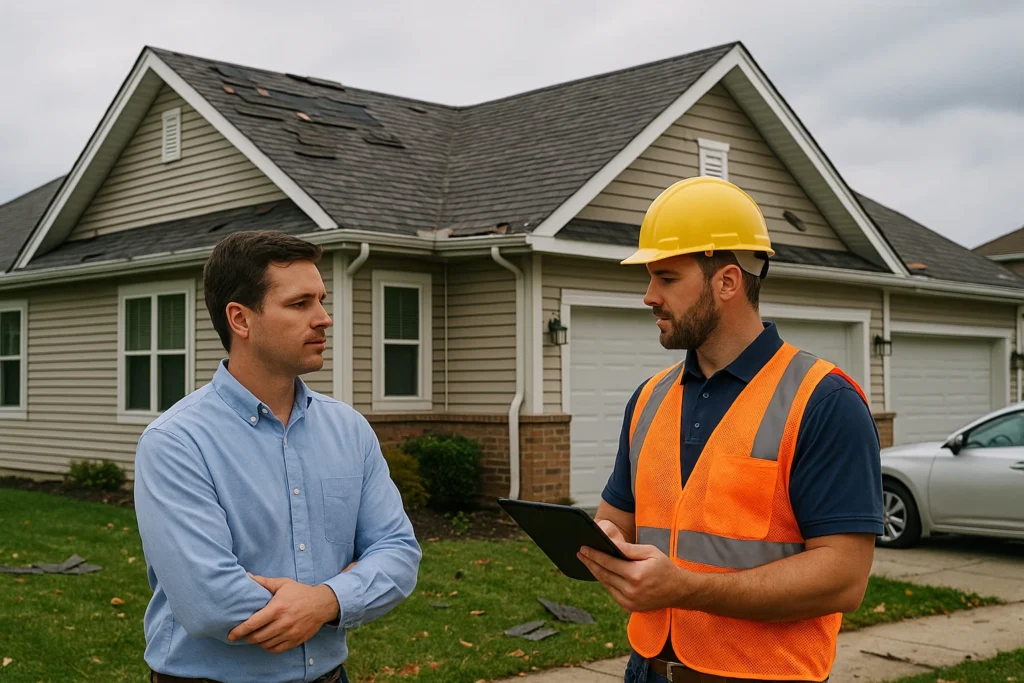
Have you ever stepped outside after a storm, spotted shingles on the ground, and asked yourself, “Should I call a roofer or my insurance company first?” This is a common pain point for homeowners because making the wrong call can delay repairs, lower payouts, or even cause claim denials. Roof damage is stressful enough—adding confusion about the first step only makes it harder.
In this guide, I’ll walk you through the facts on roof damage, insurance claims, and why calling the right person first matters. You’ll learn what insurance actually covers, when to involve a roofer, when to call insurance, and how to avoid costly mistakes. If you need professional help, visit 👉 Akron Roofing Experts.
📑 Understanding Roof Damage and Coverage

Not all roof damage qualifies for insurance coverage. Insurance companies look closely at what caused the damage before approving a claim.
Common Roof Damages Insurance Covers 🌩️
- Storm Damage: Strong winds and hail can tear off shingles and expose your roof to leaks.
- Falling Debris: Tree branches or blown objects can crack or puncture shingles.
- Fire Damage: Fires destroy roofing materials and often require complete replacement.
- Ice and Snow Weight: Heavy accumulation can stress roof structures or create ice dams.
- Sudden Water Intrusion: Leaks caused by a storm event may be covered under your policy.
When Insurance Does Not Cover ❌
- Aging shingles or normal wear and tear
- Neglect, such as failing to maintain gutters
- Faulty installation or poor repairs
- Pre-existing roof issues left unrepaired
👉 Fact: According to the Insurance Information Institute, wind and hail account for about 34% of all homeowners claims in the U.S.
🕵️ Should You Call a Roofer or Insurance First?
This decision determines how smooth your claim process will be.
📞 Calling Insurance First
Benefits:
- Starts the claim quickly
- Gives clarity on whether damage is covered
- Gets the insurance adjuster scheduled
Risks:
- Adjusters work for the insurance company, not you
- Claims filed without proper evidence may be denied
- Initial estimates often undervalue true repair costs
🛠️ Calling a Roofer First
Benefits:
- Roofer provides a full inspection and detailed report
- Stronger claim evidence with photos and documentation
- Helps avoid filing small claims that could raise premiums
- Roofer can meet the adjuster to ensure fair evaluation
Risks:
- Slightly longer before claim filing if roofer visit is delayed
- Must choose a trusted roofing contractor to avoid poor documentation
👉 Pro Tip: A roofer’s inspection before calling insurance often prevents underpaid or denied claims.
📊Roofer vs Insurance First
| Factor | Call Insurance First | Call Roofer First |
|---|---|---|
| Claim filed quickly | ✅ Yes | ❌ Slight delay |
| Full damage assessment | ❌ Not always | ✅ Yes |
| Stronger claim evidence | ❌ Limited | ✅ Detailed |
| Homeowner protection | ❌ Adjuster-focused | ✅ Contractor-backed |
📋 Step-by-Step Process After Roof Damage
- Inspect Safely from Ground
Take photos and videos. Do not climb on the roof. - Contact a Professional Roofer 👷
Schedule an inspection to determine severity and cause. - File an Insurance Claim 📝
Submit roofer’s report, photos, and your notes. - Meet the Insurance Adjuster 🤝
Ask your roofer to be present to verify all damage is documented. - Compare Estimates
Match insurance estimate against roofer’s report. Challenge discrepancies if needed. - Approve Repairs and Keep Records
Save all receipts and repair documents for insurance files.
📉 Common Mistakes to Avoid
- Filing a claim before knowing full extent of damage
- Waiting too long, allowing further damage
- Not documenting with photos and videos
- Accepting first insurance estimate without roofer review
- Lacking past roof maintenance records
👉 Fact: Homeowners who work with roofers during claims are 30% more likely to receive full coverage compared to those who file alone.
👷 How Roofers Support the Claims Process
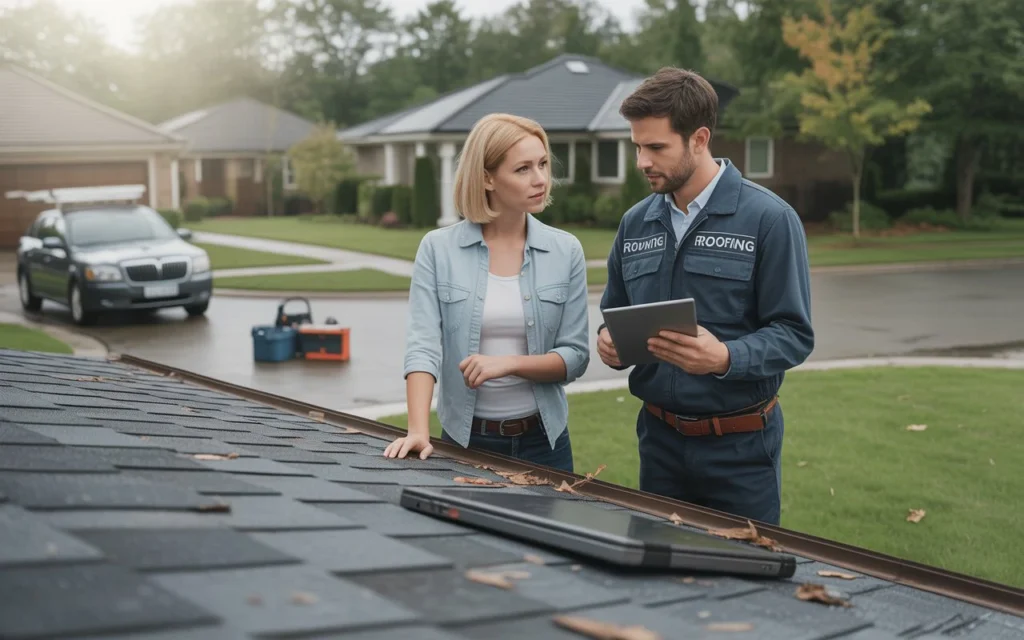
A roofer does more than repair. They act as your advocate with insurers.
Roofer’s Role 📑
- Conducts detailed inspection with photos and reports
- Identifies hidden structural or material issues
- Attends adjuster meetings to prevent overlooked damages
- Helps negotiate fair payouts
- Ensures repairs meet warranty and local code standards
📊 Typical Claim Timeline
| Step | Average Timeframe |
|---|---|
| Initial homeowner inspection | 1–2 days |
| Roofer professional check | 2–4 days |
| Claim filing | Within 1 week |
| Adjuster visit | 7–14 days |
| Claim approval & estimate | 2–3 weeks |
| Roof repairs completed | 2–6 weeks |
⭐ Final Recommendation
If you are wondering, “Should I call a roofer or insurance first after roof damage?” the safest step is to call a roofer first. A professional roofing inspection strengthens your claim, documents hidden problems, and ensures you don’t get underpaid. Once you have the roofer’s report, file your claim with confidence and work alongside both the roofer and insurance adjuster until the job is complete.
For reliable inspections and claim support, visit 👉 Akron Roofing Experts.