
- Introduction
- ⭐ Why Inspections After Installation Are Important
- 🏠 Tip 1: Inspect Shingles and Overall Appearance
- 🛠️ Tip 2: Check Roof Flashing Around Critical Areas
- 💧 Tip 3: Verify Proper Roof Ventilation
- 🌧️ Tip 4: Confirm Gutter and Drainage Setup
- 🔍 Tip 5: Inspect for Cleanup and Debris Removal
- 📂 Tip 6: Review Warranties and Documentation
- 🧾 Tip 7: Schedule an Independent Roof Inspection
- 📊Quick 7-Step Checklist After Roof Installation
- 🏠 Importance of Monitoring Your Roof Over Time
- Conclusion
Introduction
Have you ever thought, “How do I know my new roof was installed the right way?” Many homeowners trust their contractor, pay the bill, and assume the job is perfect—only to discover leaks, loose shingles, or poor ventilation later. A roof is one of the most expensive parts of your home, and a single mistake can cost thousands in future repairs. That’s why knowing exactly what to check after roofers installed a new roof is so important. With the right checklist, you can make sure your home is protected, your warranty stays valid, and your investment lasts for decades.
⭐ Why Inspections After Installation Are Important
Even skilled roofers can make mistakes. A post-installation inspection ensures you get the quality you paid for and prevents hidden problems from growing worse.
✅ Key Benefits of Inspecting a New Roof
- 📄 Spot errors early before they lead to leaks.
- 📄 Make sure the roof meets building codes.
- 📄 Protect your manufacturer and contractor warranties.
- 📄 Increase your home’s value with verified workmanship.
🏠 Tip 1: Inspect Shingles and Overall Appearance
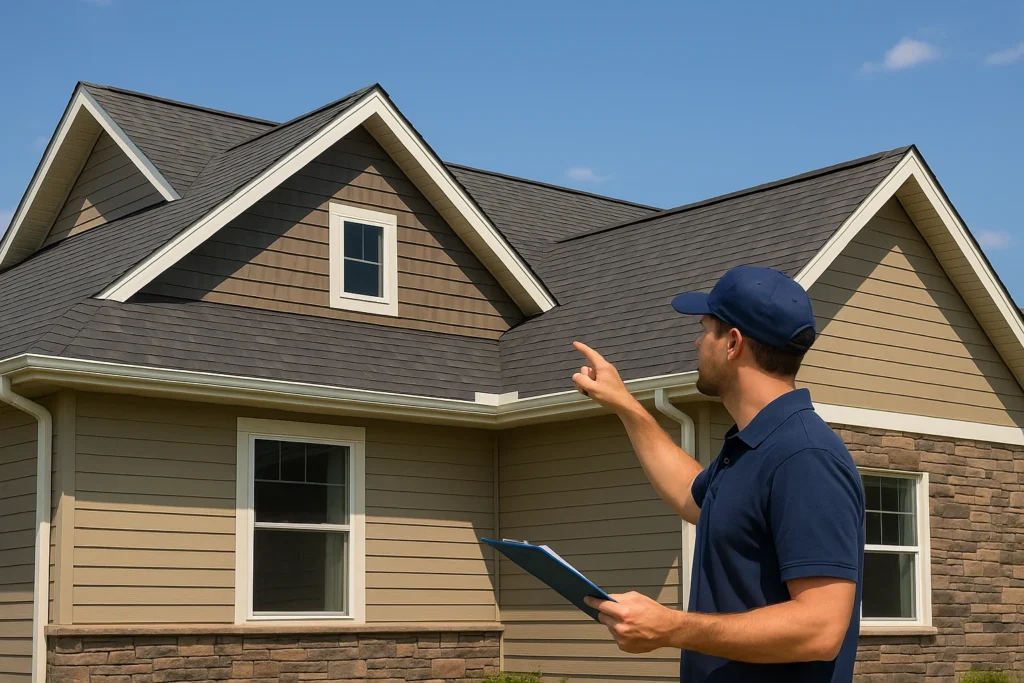
Step back and look at your roof from different angles. Shingles should be neat, straight, and secure.
- 📄 No gaps between shingles.
- 📄 No raised edges or curling.
- 📄 Rows should look even and aligned.
- 📄 Nail heads should not be visible from the ground.
| Shingle Issue | What It Means | Why It Matters |
|---|---|---|
| Curling edges | Poor ventilation or bad install | Causes leaks and shortens life |
| Exposed nails | Improper fastening | Leads to rust and water damage |
| Misaligned rows | Bad workmanship | Weakens wind resistance |
👉 For professional roof inspections and expert advice, visit Akron Roofing Experts.
🛠️ Tip 2: Check Roof Flashing Around Critical Areas
Flashing is thin metal placed around chimneys, valleys, and vents. If installed wrong, it’s the number one cause of roof leaks.
📄 Where to Inspect Flashing
- Around chimneys.
- At roof valleys where slopes meet.
- Around skylights.
- Near plumbing and ventilation pipes.
Loose or missing flashing is a red flag. According to the National Roofing Contractors Association, over 80% of roof leaks in U.S. homes are linked to faulty flashing.
💧 Tip 3: Verify Proper Roof Ventilation
Good ventilation prevents heat and moisture from building up in your attic. Without it, shingles wear out early, wood warps, and mold grows.
📄 Ventilation Points to Check
- Ridge vents along the roof’s peak.
- Soffit vents at the eaves.
- Box or gable vents on larger roofs.
- Balanced airflow between intake and exhaust vents.
| Vent Type | Purpose | Warning Sign |
|---|---|---|
| Ridge Vent | Releases hot air | Missing slot or poor cut |
| Soffit Vent | Brings cool air inside | Blocked by insulation |
| Box Vent | Extra exhaust | Uneven spacing |
The U.S. Department of Energy notes that proper attic ventilation can lower energy bills by up to 12% annually.
🌧️ Tip 4: Confirm Gutter and Drainage Setup
Your new roof should work with your gutters to push water away from your home.
- 📄 Gutters should slope slightly toward downspouts.
- 📄 Drip edges must be installed to stop water from seeping under shingles.
- 📄 Downspouts should carry water at least 3 feet away from the foundation.
Poor drainage doesn’t just hurt your roof. It damages siding, basements, and landscaping.
🔍 Tip 5: Inspect for Cleanup and Debris Removal
A quality contractor cleans up the property after finishing the job.
- 📄 Yard should be free of nails and scrap materials.
- 📄 Gutters and attic should be cleared of roofing debris.
- 📄 Driveway and pathways checked with magnetic sweeps for metal pieces.
Leftover nails and materials are not only unprofessional—they’re dangerous for kids, pets, and vehicles.
📂 Tip 6: Review Warranties and Documentation
Paperwork is proof of quality and protection. Without it, future claims may be denied.
📄 Important Documents to Collect
- Manufacturer’s warranty for shingles and materials.
- Contractor’s workmanship warranty.
- Proof of permits and inspections (where required).
- Detailed invoice with itemized labor and material costs.
Industry data shows roof warranty disputes are one of the top three homeowner complaints after construction projects. Always get your paperwork in writing.
🧾 Tip 7: Schedule an Independent Roof Inspection
Even if you trust your roofer, an unbiased inspection gives peace of mind.
📄 Benefits of Third-Party Inspections
- Confirms workmanship meets building codes.
- Identifies hidden problems contractors may have missed.
- Provides a written report for insurance or resale purposes.
The cost of a third-party inspection is small compared to the potential cost of water damage from unnoticed mistakes.
📊Quick 7-Step Checklist After Roof Installation
| Step | What to Check | Why It Matters |
|---|---|---|
| 1 | Shingles aligned and secure | Stops leaks and wind damage |
| 2 | Flashing installed tightly | Prevents water entry |
| 3 | Ventilation balanced | Extends roof life and saves energy |
| 4 | Gutters and drip edges | Moves water away from home |
| 5 | Cleanup complete | Safety and property value |
| 6 | Warranties in hand | Protects your investment |
| 7 | Independent inspection | Confirms quality work |
🏠 Importance of Monitoring Your Roof Over Time
Your job doesn’t stop after installation. Regular roof care keeps warranties valid and prevents future insurance problems.
📄 Ongoing Roof Maintenance Checklist
- Inspect your roof twice a year.
- Clean gutters every spring and fall.
- Remove overhanging branches and debris.
- Look inside the attic for leaks or wet spots.
- Schedule professional inspections every 2–3 years.
Conclusion
A new roof is a major investment, and making sure it was installed correctly is essential. By following these checking shingles, flashing, ventilation, gutters, cleanup, documentation, and scheduling an independent inspection—you’ll know your home is safe and your money was well spent. Regular maintenance afterward ensures your roof lasts its full lifespan.
👉 For expert roofing inspections, maintenance, or repairs, trust Akron Roofing Experts to help you protect your home.