
- ❓ Introduction
- 📄 Why Emergency Roof Repairs Must Happen Fast
- ⭐ Main Causes of Roofing Emergencies
- 📊Causes of Roof Emergencies and Risk Factors
- 👷 First Steps to Take in a Roof Emergency
- 🏗️ Temporary Repairs You Can Do Before Help Arrives
- 📊Temporary Fixes vs. Permanent Repairs
- 📚 How Insurance Handles Roof Emergencies
- 🛡️ Preventing Future Roof Emergencies
- 📊Roof Lifespan by Material
- 🏢 Why Professionals Are the Best Choice
- 📑 Emergency Roofing FAQ
- ⭐ Key Takeaways
❓ Introduction
What if your ceiling started leaking in the middle of the night? Would you know what to do first—protect your family, call insurance, or patch the damage? Roof emergencies don’t wait for a convenient time. I’ve faced that stress, and I know how fast panic sets in when water pours into your home. This guide gives you the knowledge you need to take control in a roof emergency and act with confidence.
📄 Why Emergency Roof Repairs Must Happen Fast
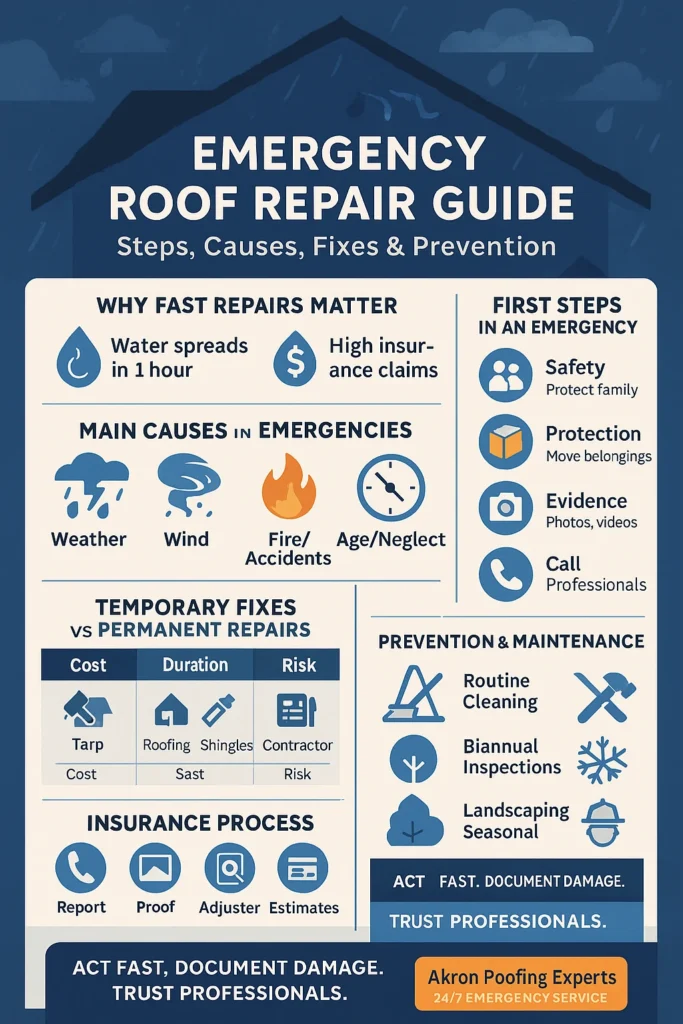
Every minute counts during a roof emergency. Water can spread across ceilings and walls in less than an hour. Mold begins forming within 24–48 hours after exposure. The Insurance Information Institute estimates that wind and hail account for nearly 39% of homeowners’ insurance claims. Unchecked roof leaks cost thousands in structural repairs, flooring replacements, and electrical hazards. Acting immediately keeps damage contained and repair bills smaller.
⭐ Main Causes of Roofing Emergencies
🌧️ Severe Weather
- Heavy rainfall forces water into cracks and weak shingles.
- Hail strikes weaken asphalt granules, leaving shingles bare.
- Snow and ice dams trap moisture and push water under shingles.
🌪️ High Winds
- Gusts lift shingles and expose underlayment.
- Wind-driven debris cracks flashing and vents.
- Falling branches puncture roofing materials.
🔥 Fire and Accidents
- Chimney fires cause heat and smoke damage.
- Lightning or sparks may burn roofing surfaces.
- Nearby construction accidents send debris crashing into roofs.
🕒 Age and Neglect
- Roofs older than 20 years deteriorate faster.
- Neglected gutters overflow and erode the roof edge.
- Cracked flashing and missing sealant create entry points for water.
📊Causes of Roof Emergencies and Risk Factors
| Cause | Example Problem | Risk Level | Typical Result |
|---|---|---|---|
| Storm & Heavy Rain | Leaks in shingles | High | Water stains, mold growth |
| Wind & Falling Debris | Tree branch impact | Critical | Broken shingles, punctures |
| Fire/Lightning | Burnt roofing sections | Severe | Structural compromise |
| Old Roof Materials | Curling shingles, weak flashing | High | Multiple leaks, sagging |
👷 First Steps to Take in a Roof Emergency
When disaster hits, quick decisions protect both your family and your property.
- Keep People Safe 👪: Move family members and pets away from leaking areas.
- Protect Belongings 📦: Cover furniture with tarps or plastic sheets. Place buckets under drips.
- Collect Evidence 📸: Take photos and videos of all damage. Save repair receipts for insurance.
- Limit the Leak 🛠️: Use a tarp, roofing cement, or sealant to slow water.
- Call Professionals ☎️: Emergency roof repair is dangerous. Contact licensed roofers such as Akron Roofing Experts.
🏗️ Temporary Repairs You Can Do Before Help Arrives
Temporary solutions protect your home while you wait for contractors.
- Tarping: Secure a heavy tarp with boards and nails to cover missing shingles.
- Roofing Cement: Spread on small cracks or flashing leaks.
- Sealants: Rubberized sprays or caulk close small openings.
⚠️ Warning: Never climb a wet or storm-damaged roof without safety gear.
📊Temporary Fixes vs. Permanent Repairs
| Solution | Cost Estimate | Duration | Risk Level | Who Should Do It? |
|---|---|---|---|---|
| Tarp Cover | $50–$200 | Days–Weeks | High | Homeowner (with caution) |
| Roofing Cement Patch | $25–$100 | Weeks | Medium | Homeowner/Handyman |
| Shingle Replacement | $150–$500/section | Years | Low | Roofing Professional |
| Structural Roof Repair | $2,000–$10,000+ | Decades | Low | Licensed Contractor |
📚 How Insurance Handles Roof Emergencies
Insurance can save thousands if you follow the right steps.
- Call Immediately: Report the damage within 24 hours.
- Provide Proof: Send pictures, videos, and receipts for temporary work.
- Get an Adjuster Visit: Insurance companies inspect before approving claims.
- Compare Estimates: Cross-check the insurance adjuster’s report with your roofer’s evaluation.
According to industry data, average storm-related roof repairs range from $1,200 to $3,000, while total replacements can exceed $12,000. Documenting every detail helps maximize claim approval.
🛡️ Preventing Future Roof Emergencies
🧹 Routine Maintenance
- Clean gutters every spring and fall.
- Remove branches, leaves, and moss buildup.
🔎 Biannual Inspections
- Inspect after heavy storms.
- Look for curling, cracked, or missing shingles.
🌲 Landscaping Control
- Trim trees near the roofline.
- Remove weak or diseased branches.
❄️ Seasonal Prep
- Install ice shields in snowy climates.
- Reinforce fasteners before hurricane season.
📊Roof Lifespan by Material
| Roofing Material | Average Lifespan | Maintenance Need | Notes |
|---|---|---|---|
| Asphalt Shingles | 15–30 years | Moderate | Most common in U.S. homes |
| Metal Roofing | 40–70 years | Low | Energy efficient and durable |
| Tile Roofing | 50–100 years | Moderate | Heavy; needs reinforced framing |
| Slate Roofing | 75–200 years | Low | Premium cost but lasts longest |
| Wood Shakes | 20–40 years | High | Needs frequent treatment |
🏢 Why Professionals Are the Best Choice
Roofing is one of the most dangerous home repair jobs. Statistics show over 150,000 ER visits every year from ladder and roofing accidents. Professionals have:
- Safety equipment to prevent falls.
- Knowledge of building codes.
- Warranties that protect your investment.
- Tools for fast and permanent repairs.
📑 Emergency Roofing FAQ
⭐ Key Takeaways
- Roof emergencies spread damage fast and must be addressed immediately.
- Temporary solutions buy time but are not substitutes for professional repair.
- Insurance can cover storm-related emergencies if properly documented.
- Preventative maintenance extends roof life and reduces risk.
- Professional contractors are the safest, most reliable option.
If you need immediate help, reach out to Akron Roofing Experts for 24/7 emergency roofing solutions.