

- 🌟 Introduction: Is Your Roof Trying to Tell You Something?
- 📄 Why Replacing Your Roof on Time Matters
- 🏠 Lifespan of Common Roofing Materials
- 👀 Key Signs That It’s Time for a Roof Replacement
- 📑Roof Damage Signs and Their Meaning
- 📅 Best Time of Year to Replace Your Roof
- 📊Best and Worst Seasons for Replacement
- 📚 Roof Replacement Costs
- 📖 FAQs About Roof Replacement
- ⭐ Conclusion: Don’t Wait Until It’s Too Late
🌟 Introduction: Is Your Roof Trying to Tell You Something?
Have you noticed stains on your ceiling, shingles falling off, or higher energy bills? Many homeowners don’t realize their roof is in trouble until costly damage has already happened. Your roof is the shield that protects your entire home. If it fails, everything underneath is at risk. The big question is: how do you know when it’s time for a new roof, and when should you replace it?
📄 Why Replacing Your Roof on Time Matters
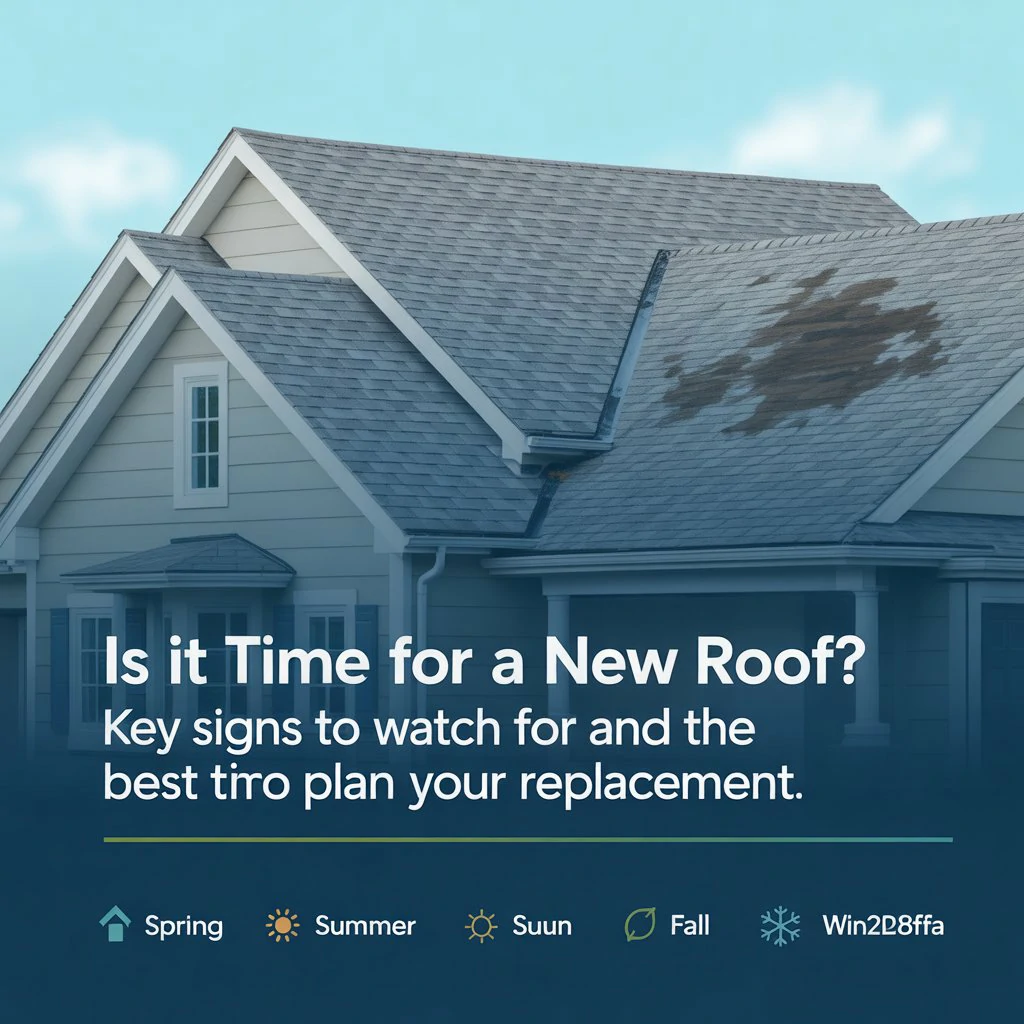
A roof replacement may seem like a big expense, but waiting too long can cause even bigger problems. When your roof weakens, your home becomes vulnerable.
- 🏚️ Structural damage from leaks and rot
- 💸 High repair bills from patching the same problems
- 🧾 Insurance challenges with outdated roofs
- ⚡ Energy loss due to poor insulation
👉 According to the National Association of Home Builders (NAHB), asphalt shingle roofs last 20–30 years, while metal roofs can last 40–70 years. Replacing your roof before it fails protects your home and saves you from larger expenses later. For expert help, visit Akron Roofing Experts.
🏠 Lifespan of Common Roofing Materials
| Roofing Material | Average Lifespan | Notes |
|---|---|---|
| Asphalt Shingles | 20–30 years | Affordable and popular choice |
| Metal Roofs | 40–70 years | Energy-efficient and durable |
| Clay/Concrete Tile | 50–100 years | Long-lasting but heavy |
| Slate Roofs | 75–150 years | Premium material, very durable |
| Wood Shakes/Shingles | 20–40 years | Natural look, needs maintenance |
Even the best roofs can wear out sooner if they face severe weather or lack maintenance.
👀 Key Signs That It’s Time for a Roof Replacement
1. 🧱 Roof Age
- Most roofs need replacement after 20–25 years.
- If you don’t know your roof’s age, check your home records or ask a professional.
2. 🧩 Damaged or Missing Shingles
- Shingles should lie flat.
- Cracks, curling edges, or bald spots mean they’ve worn out.
- Large sections of missing shingles expose your home to leaks.
3. 🌧️ Leaks and Interior Stains
- Water stains on walls or ceilings point to roof failure.
- Persistent leaks mean patching won’t work anymore.
4. 🌀 Granules in Gutters
- Shingles shed protective granules as they age.
- Finding a large amount in your gutters signals it’s time for replacement.
5. 💨 Sagging Roof
- A drooping roof deck often means trapped moisture or weakened structure.
- This requires urgent replacement.
6. ❄️ Ice Dams in Winter
- Heat loss through the roof causes snow to melt unevenly, forming ice dams.
- Ice dams suggest poor insulation or roof deterioration.
7. 🌬️ Storm Damage
- High winds rip off shingles.
- Hail dents and cracks weaken protection.
📑Roof Damage Signs and Their Meaning
| Sign | What It Means | Action Needed |
|---|---|---|
| Curling shingles | Aging materials | Replacement soon |
| Missing shingles | Weak protection | Repair or replace |
| Ceiling stains | Water intrusion | Full inspection |
| Granules in gutters | Shingle wear | Monitor/replace |
| Sagging roof | Structural weakness | Immediate replacement |
| Ice dams | Heat loss, poor insulation | Repair/replace |
| Frequent leaks | System failure | New roof required |
📅 Best Time of Year to Replace Your Roof
The season you choose for replacement impacts both cost and quality.
🍂 Fall – Best Season
- Mild temperatures help materials seal properly.
- Less rainfall ensures smooth installation.
- High demand, so book early.
🌸 Spring
- Perfect for fixing winter damage.
- Moderate demand, easier scheduling.
☀️ Summer
- Early summer works well.
- Extreme heat can make shingles soft.
❄️ Winter
- Snow and freezing temperatures slow work.
- Cold can make shingles brittle.

📊Best and Worst Seasons for Replacement
| Season | Pros | Cons |
|---|---|---|
| Spring | Fixes winter issues, mild weather | Moderate demand |
| Summer | Long days, dry weather | Heat challenges, peak season |
| Fall | Best weather, strong sealing | Busy season, must schedule early |
| Winter | Off-season discounts | Cold delays, brittle materials |
📚 Roof Replacement Costs
Prices vary depending on material, home size, and labor.
- Asphalt shingles: $5,000–$12,000
- Metal roofs: $10,000–$25,000
- Slate roofs: $20,000–$50,000+
Other factors:
- 📏 Roof size and slope
- 🛠️ Old roof removal
- 📍 Local labor rates
A professional inspection provides the most accurate estimate. Learn more at Akron Roofing Experts.
📖 FAQs About Roof Replacement
⭐ Conclusion: Don’t Wait Until It’s Too Late
Your roof is your home’s most important protection. Watching for key signs—from missing shingles to sagging areas—can save you thousands in repairs. The best time to replace a roof is during spring or fall when the weather is mild. Acting early ensures safety, improves efficiency, and boosts home value.
For expert roof inspections and professional replacement, visit Akron Roofing Experts.