
Introduction
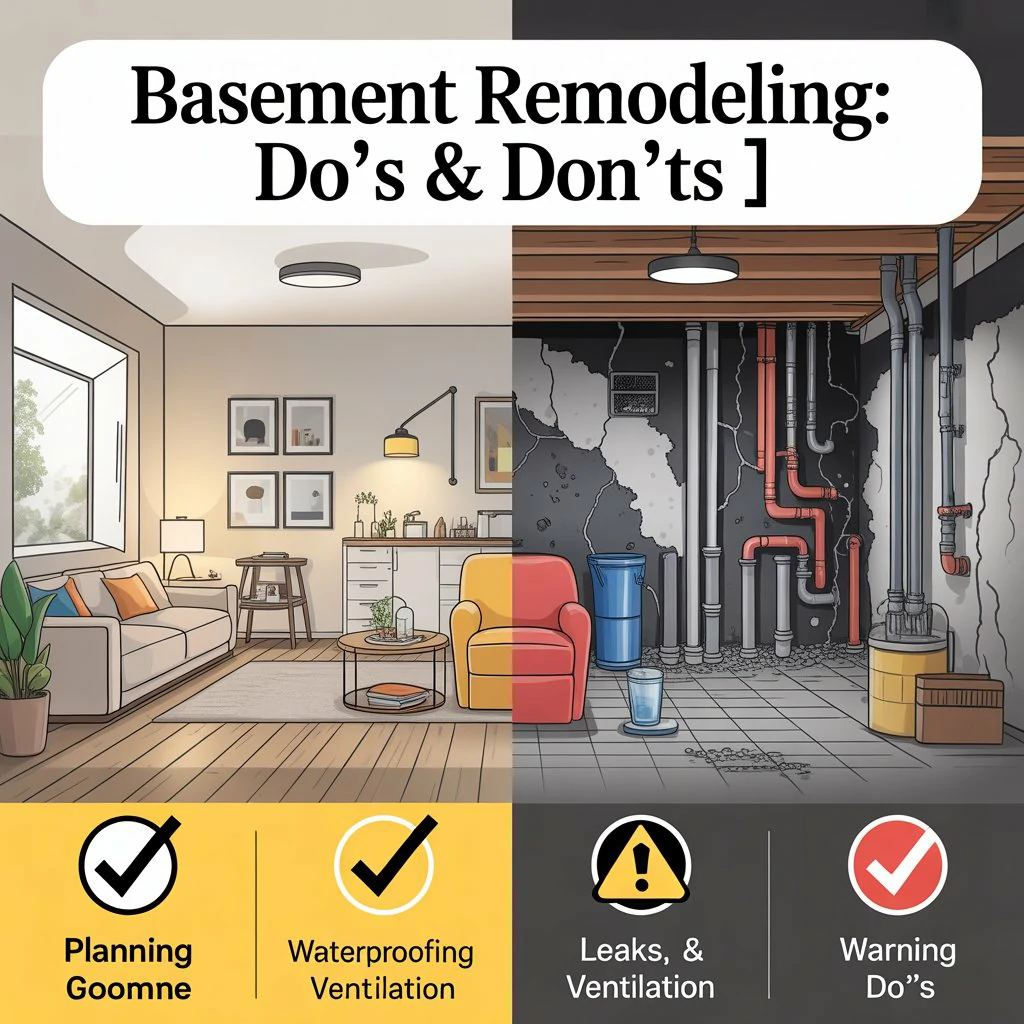
Have you ever stood in your basement and thought, “What a waste of space—why can’t this be a cozy living area or a guest room?” If so, you’re not alone. A finished basement can add valuable square footage, boost resale value, and provide new space for your family. But here’s the challenge: remodeling a basement is not like renovating any other room in your home. Hidden moisture, structural issues, and code requirements can easily turn your dream project into a nightmare.
That’s why knowing the do’s and don’ts of basement remodeling is essential. This guide will help you avoid costly mistakes, protect your investment, and create a safe, comfortable space you’ll enjoy for years. For professional help, visit 👉 Akron Roofing Experts.
📑 The Do’s of Basement Remodeling
✅ Do Plan Thoroughly
Every successful remodel starts with a strong plan. Without one, you’ll face rising costs, missed deadlines, and endless frustration. According to the National Association of Home Builders, clear planning reduces unexpected expenses by up to 20%.
- Identify your goals: guest suite, gym, theater, or office.
- Map out plumbing, lighting, and furniture placement.
- Set a budget with a 10–15% buffer for surprises.
- Consult a professional for structural and design input.
💧 Do Prioritize Waterproofing
Waterproofing is the first defense against future headaches. Basements are naturally prone to moisture, and ignoring this step can lead to mold, structural damage, and health hazards. The Insurance Information Institute reports that water damage averages $2,700 per claim nationwide.
- Seal wall and floor cracks.
- Install a sump pump and battery backup.
- Check exterior grading and gutters to direct water away.
- Use vapor barriers behind walls and under flooring.
🌞 Do Consider Natural Light
A dark basement feels cramped and unwelcoming. Bringing in sunlight makes the space brighter and healthier.
- Install egress windows for light and safety.
- Add glass doors where possible.
- Use reflective surfaces like mirrors and glossy finishes.
- Choose light-colored flooring to brighten the room.
🧊 Do Proper Insulation
Insulation ensures comfort and energy efficiency. Poor insulation causes 25–30% energy loss, according to the U.S. Department of Energy.
- Use moisture-resistant foam board or spray foam.
- Seal gaps around pipes and electrical outlets.
- Consider soundproof insulation for theaters or bedrooms.
- Hire a professional to inspect hidden air leaks.
🪵 Do Choose Moisture-Resistant Flooring
Flooring makes or breaks your basement’s durability. Avoid materials that absorb water and mold.
- Best options: luxury vinyl planks, engineered wood, ceramic tiles.
- Avoid solid hardwood—it warps under moisture.
- Area rugs can add warmth without trapping water.
🌬️ Do Ensure Proper Ventilation
Air quality is critical. The EPA found indoor pollutants can be 2–5 times higher than outdoors, and basements without airflow make it worse.
- Extend your HVAC system.
- Install exhaust fans in bathrooms or laundry zones.
- Use dehumidifiers to keep humidity between 30–50%.
👷 Do Consult a Professional
DIY can work for small projects, but basements often require professional expertise. Licensed contractors ensure compliance with local building codes and prevent dangerous errors in electrical or plumbing work.
🔧 Do Opt for a Drop Ceiling
Drop ceilings hide pipes and wires while offering easy access for repairs. They also reduce noise and improve the finished look.
🔄 Do Design for Flexibility
Your family’s needs may change over time. A flexible design saves money in the long run.
- Create open layouts with movable dividers.
- Keep plumbing access points exposed for future bathrooms.
- Choose multipurpose lighting and outlets for adaptability.
🚫 The Don’ts of Basement Remodeling
❌ Don’t Neglect Moisture Control
Ignoring moisture is the biggest mistake. Mold grows within 24–48 hours in damp conditions, according to the CDC. Covering up wet walls only hides the issue until it becomes more expensive. Always address water before finishing.
📝 Don’t Overlook Permits
Permits may seem like a hassle, but they protect your investment. Without them:
- You could face fines.
- Insurance may deny claims.
- Buyers may walk away during inspection.
🔍 Don’t Skip Inspections
Structural or safety issues must be identified before remodeling. A few hundred dollars for inspection prevents thousands in repairs. Inspect for:
- Foundation cracks.
- Pest infestations.
- Radon gas.
- Existing wiring or plumbing issues.
🚪 Don’t Forget Emergency Exits
Any livable basement space requires a legal emergency exit. Egress windows or doors save lives and make the basement legally habitable. They also increase home value.
⏳ Don’t Rush the Renovation
Basement projects take time—usually 4–8 weeks depending on complexity. Rushing leads to mistakes, sloppy finishes, and costly do-overs. Take it step by step for long-lasting results.
🎨 Don’t Overcomplicate the Design
Adding too many features clutters the space and inflates costs. Keep it simple, functional, and timeless to maximize usability and comfort.
📊 Basement Remodeling Do’s and Don’ts Comparison
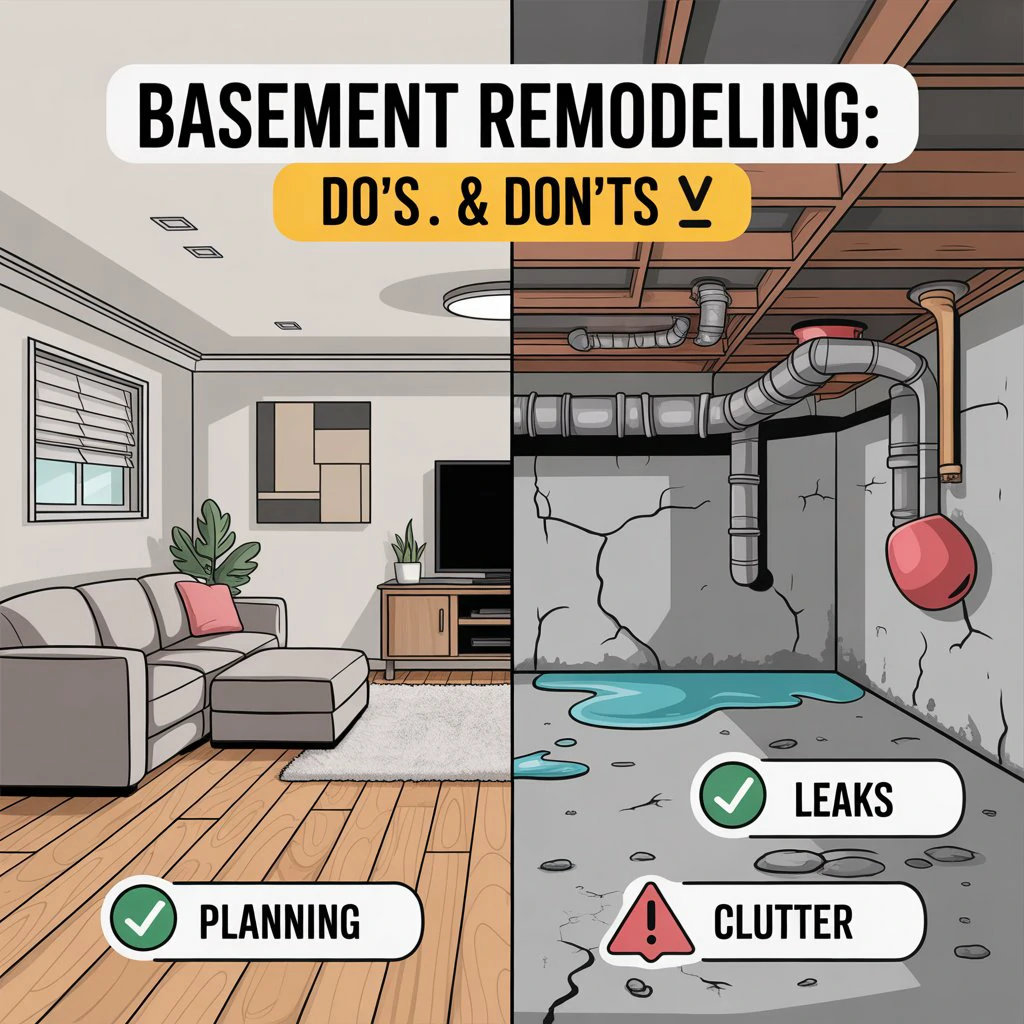
| ✅ Do’s | 🚫 Don’ts |
|---|---|
| Plan thoroughly with budget and design | Skip inspections or safety checks |
| Waterproof before finishing | Ignore moisture problems |
| Maximize light and ventilation | Forget emergency exits |
| Use moisture-resistant flooring | Rush through work |
| Consult professionals | Avoid permits |
| Design for flexible use | Overcomplicate design |
📑 Average Basement Remodeling Costs
| Task | Average Cost (USD) | Importance |
|---|---|---|
| Waterproofing | $2,000–$6,000 | Prevents mold and damage |
| Insulation | $1.50–$3.50 per sq. ft. | Comfort and energy efficiency |
| Flooring | $3–$12 per sq. ft. | Durability and mold resistance |
| Drop Ceiling | $1,500–$3,000 | Clean look and accessibility |
| Egress Window | $2,500–$5,000 | Safety and code compliance |
⭐ Final Thoughts
A basement remodel is one of the best home upgrades, delivering a 70–75% return on investment, according to Remodeling Magazine’s Cost vs. Value Report. But success comes only if you follow the do’s—like waterproofing, planning, and ventilation—and avoid the don’ts—like skipping inspections or ignoring permits.
🔍 FAQs
Done right, your basement can transform from dark storage into a bright, functional, and valuable living space. For professional advice or expert contractors, contact 👉 Akron Roofing Experts.