
- Introduction ❓📄
- What Are Self-Drilling Tek Screws? 🛠️📄
- Why Are They Called “Tek Screws”? 📑
- Types of Self-Drilling Tek Screws 📂🔩
- Advantages of Using Tek Screws 🌟🛠️
- Applications in Roofing and Construction 🏠📄
- Installation Process 🧰👷
- Material Choices for Tek Screws 🧾⚙️
- Common Sizes of Tek Screws 📏🔩
- Safety Tips When Using Tek Screws 🦺⚠️
- Industry Statistics 📊📄
- Tek Screws vs. Traditional Screws ⚖️📄
- When to Use Tek Screws Instead of Bolts 🔧⚡
- Maintenance and Longevity 🌦️🛡️
- Environmental Benefits 🌍♻️
- Common Questions Answered 🛠️⭐
- Final Thoughts ⭐📄
Introduction ❓📄
Have you ever been frustrated with screws that slip, strip, or simply fail to hold materials tightly? If you’ve worked on roofing, construction, or metal projects, you know how much time and effort weak screws can waste. I’ve been there too—simple projects became complicated just because the fasteners weren’t strong enough. That’s when I turned to self-drilling tek screws, and everything changed.
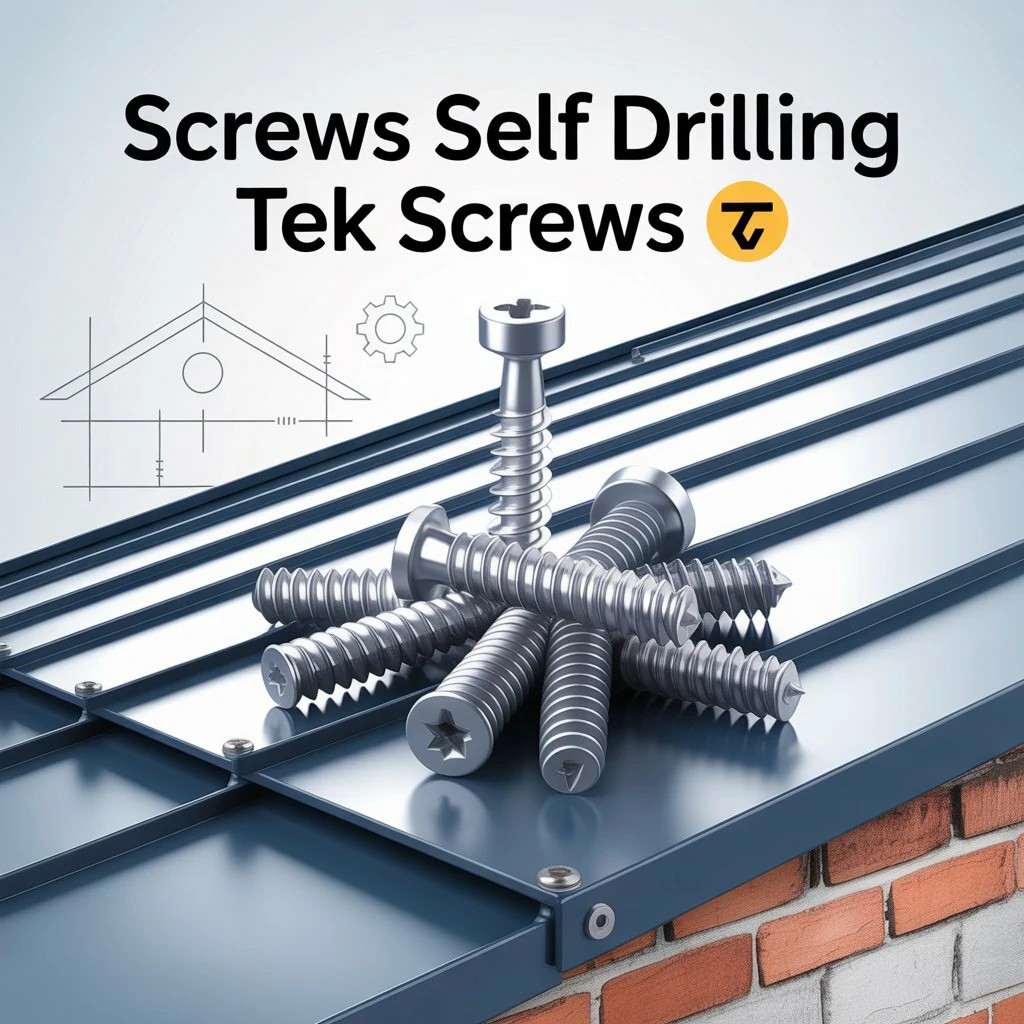
These screws are designed to cut through steel, wood, and sheet metal with precision. They save time, reduce labor, and provide a secure hold. In this article, we’ll explore everything about screws self drilling tek screws—their types, uses, advantages, installation, safety, and why they are trusted in roofing and construction.
For more expert roofing advice, check out 👉 Akron Roofing Experts.
What Are Self-Drilling Tek Screws? 🛠️📄
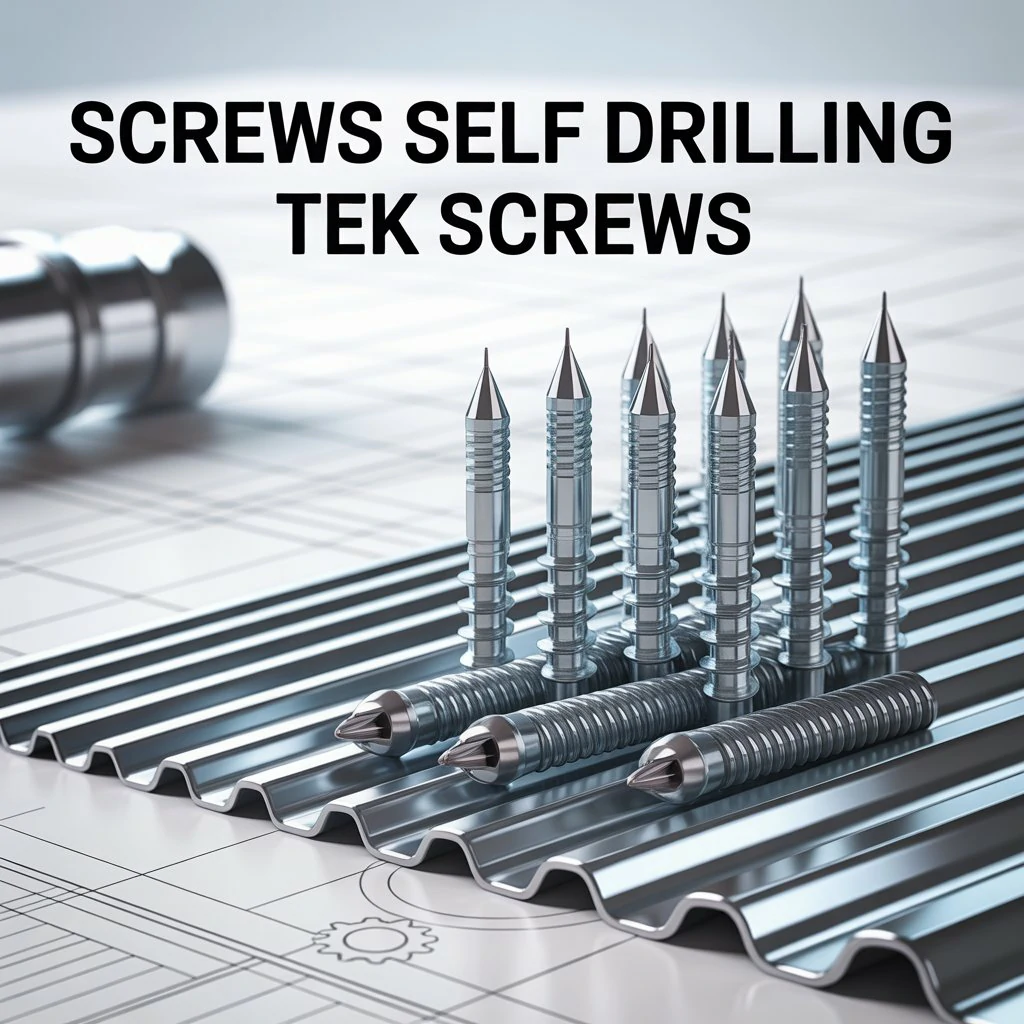
Self-drilling tek screws are specialized fasteners with a drill-bit tip that allows drilling and fastening in one step. Unlike traditional screws, they do not need a pilot hole.
Key Features ⭐
- Drill-shaped tip for smooth penetration
- No pilot hole required
- Strong threads for secure grip
- Available in multiple head styles such as hex washer, pan, and flat head
- Coated for corrosion resistance, making them ideal for roofing
Why Are They Called “Tek Screws”? 📑
The term “Tek” comes from the company that first designed these screws, but today it has become a general name for all self-drilling screws with drill-point tips. They are widely used in:
- Roofing and cladding installation
- HVAC systems
- Automotive and machine assembly
- General construction
Types of Self-Drilling Tek Screws 📂🔩
| Type | Head Style | Best Use Case |
|---|---|---|
| Hex Washer Head | Provides strong grip | Roofing sheets, metal-to-metal fastening |
| Pan Head | Smooth finish | Wood panels, thin metal sheets |
| Flat Head | Countersunk design | Furniture and flush installations |
| Winged Tek Screws | Added wings to prevent damage | Metal-to-wood fastening |
| Stitch Screws | Small, precise size | Securing sheet laps together |
These types make tek screws versatile for a wide range of industries.
Advantages of Using Tek Screws 🌟🛠️
- Time-Saving ⏱️ – No pre-drilling needed, installs in one step.
- Durability 💪 – Made from hardened steel, designed for heavy loads.
- Corrosion Resistance 🌧️ – Zinc or ceramic coatings protect against rust.
- Cost-Effective 💵 – Reduces labor time and tool wear.
- Precision Fit 📌 – Drill point ensures exact placement.
Applications in Roofing and Construction 🏠📄
Roofers and contractors rely on screws self drilling tek screws because they secure roofing sheets directly onto purlins or frames without extra steps.
Common Roofing Uses
- Fixing metal roofing sheets to steel purlins
- Attaching cladding panels
- Installing ridge caps and trims
- Securing insulation boards
Other Construction Uses
- Framing and ductwork
- Steel-to-steel connections
- Wood-to-metal fastening
- Heavy equipment assembly
Installation Process 🧰👷
| Step | Action | Tip |
|---|---|---|
| 1. | Choose correct screw type | Match screw head to project |
| 2. | Use proper drill driver | High-torque driver recommended |
| 3. | Position screw at 90° | Ensures straight drilling |
| 4. | Apply steady pressure | Avoid overtightening |
| 5. | Check tightness | Ensure leak-proof sealing in roofing |
Material Choices for Tek Screws 🧾⚙️
- Carbon Steel Tek Screws – Affordable, strong, best for indoor projects.
- Stainless Steel Tek Screws – Long-lasting, rust-resistant, best for outdoor roofing.
- Zinc-Plated Tek Screws – Budget-friendly, light-duty corrosion protection.
Common Sizes of Tek Screws 📏🔩
| Screw Size | Typical Use |
|---|---|
| #8 x ½” | Light gauge metal fastening |
| #10 x ¾” | HVAC ductwork |
| #12 x 1″ | Roofing sheets to steel purlins |
| #14 x 1 ½” | Heavy steel framing |
| #14 x 2″ | Metal-to-wood fastening |
Safety Tips When Using Tek Screws 🦺⚠️
- Always wear safety glasses to protect from shavings
- Maintain correct drill speed to avoid burning the tip
- Avoid overtightening to prevent stripping
- Use sealing washers for roofing to prevent leaks
Industry Statistics 📊📄
| Statistic | Value |
|---|---|
| Global demand | Over 5 billion units annually |
| Roofing usage | 65% of commercial roofing projects rely on tek screws |
| Time savings | Up to 40% faster installation than traditional screws |
Tek Screws vs. Traditional Screws ⚖️📄
| Feature | Traditional Screws | Self-Drilling Tek Screws |
|---|---|---|
| Pilot Hole | Required | Not required |
| Installation Time | Longer | Faster |
| Tool Wear | Higher | Lower |
| Holding Power | Moderate | Strong |
| Cost Efficiency | Lower | Higher |
When to Use Tek Screws Instead of Bolts 🔧⚡
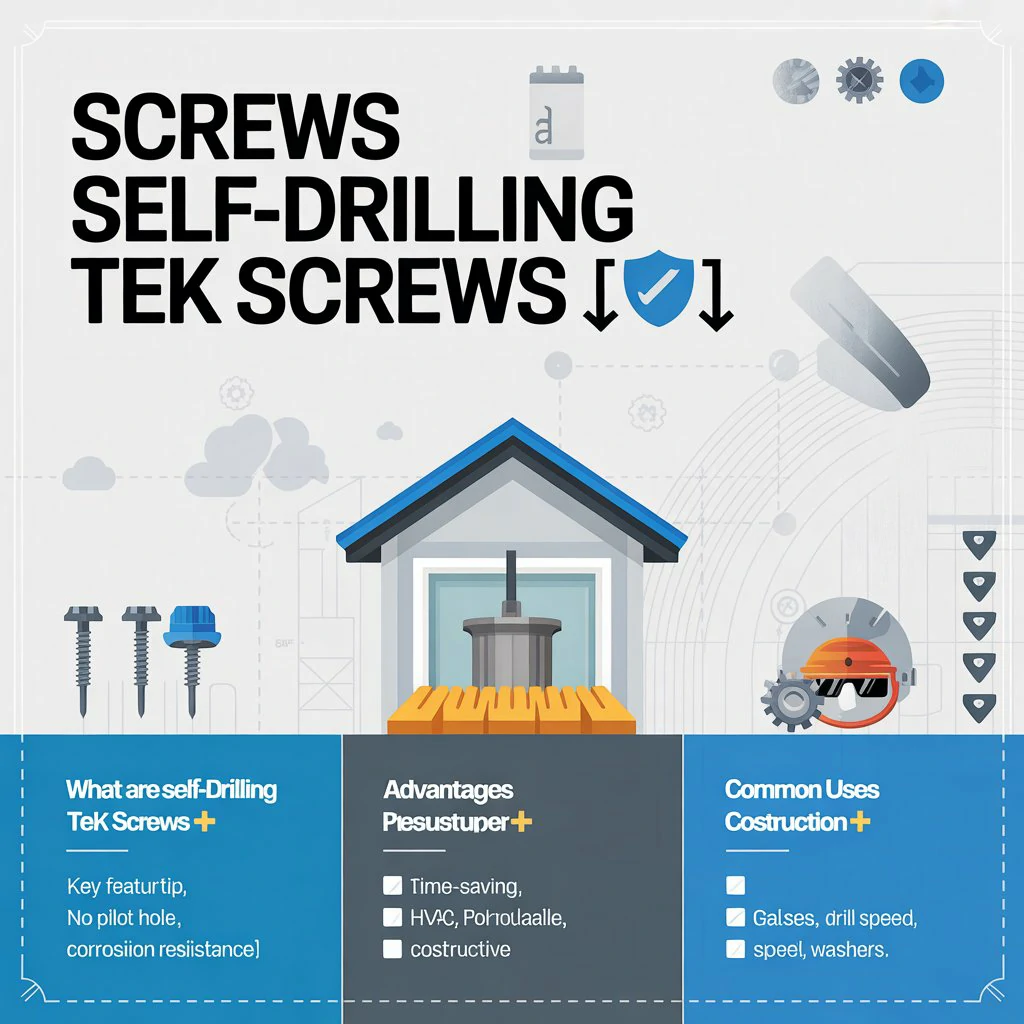
Bolts are useful for structural steel connections, but they need nuts, washers, and precise alignment. Tek screws are faster and ideal for:
- Roofing installations
- Quick repairs
- Projects where speed and strength are more important than heavy structural loads
Maintenance and Longevity 🌦️🛡️
- Inspect screws annually in roofing applications
- Replace any screws showing signs of rust or looseness
- Use UV and weather-resistant coated screws for outdoor projects
Environmental Benefits 🌍♻️
- Reduced energy use since no pilot holes are needed
- Long lifespan means fewer replacements
- Stainless steel tek screws are fully recyclable
Common Questions Answered 🛠️⭐
Final Thoughts ⭐📄
Screws self drilling tek screws are trusted by professionals across roofing, construction, and manufacturing because they save time, cut costs, and provide lasting strength. Whether you’re working on a metal roof, HVAC system, or heavy machinery, these screws ensure efficiency and reliability.
For the best roofing solutions, get expert help from 👉 Akron Roofing Experts.