
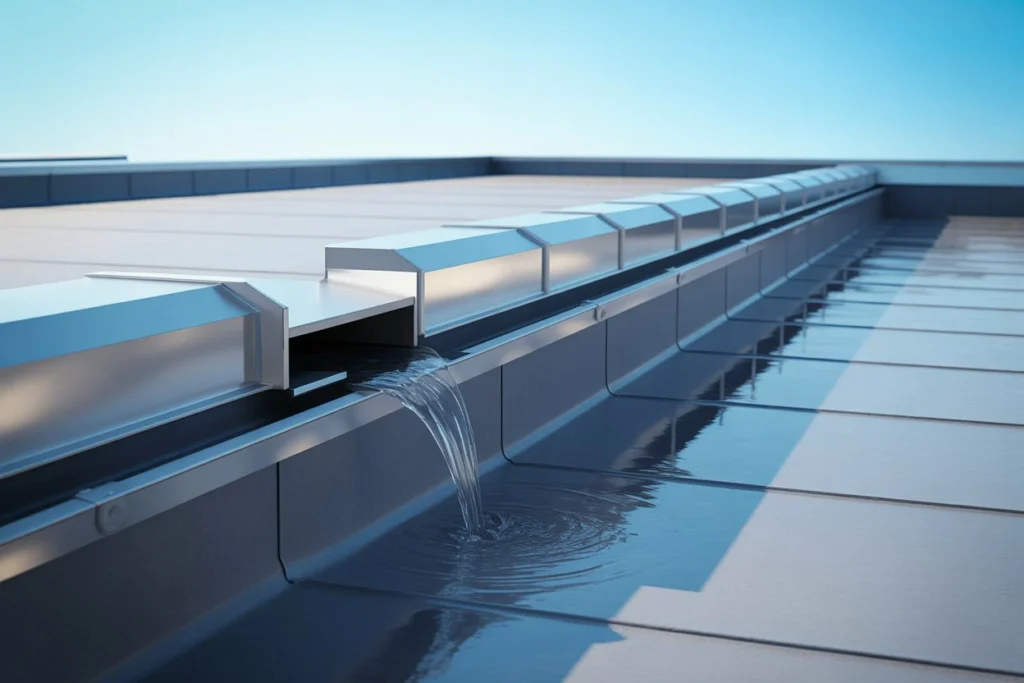
- 🤔 Introduction: Have You Ever Worried About Water Sitting on Your Roof?
- 📄 What Is a Roof Scupper?
- ⭐ Why Are Scuppers Important?
- 📄 Types of Roof Scuppers
- 📄 Scupper Installation Process
- 📄 Can You Add Scuppers to an Existing Roof?
- 📄 Maintenance Needs of Scuppers
- 📄 Common Problems With Scuppers
- 📄 Alternatives to Scuppers
- 📄 Scuppers and Building Codes
- 📄 Scuppers for Residential vs. Commercial Buildings
- 📄 Cost of Installing Scuppers
- People also ask🙋
- 🏁 Conclusion
🤔 Introduction: Have You Ever Worried About Water Sitting on Your Roof?
Have you ever walked past a building after a heavy storm and noticed water still sitting on the roof? The thought of that water slowly seeping into walls, damaging insulation, or even causing leaks inside is enough to worry any homeowner or business owner. I know the pain of costly roof repairs, mold problems, and structural issues that often come from poor drainage. That’s where roof scuppers come in.
Scuppers might look like simple openings, but they are a critical part of keeping your roof safe. If you’ve ever wondered what they are, how they work, and whether you need them for your building, this guide will walk you through everything step by step.
📄 What Is a Roof Scupper?
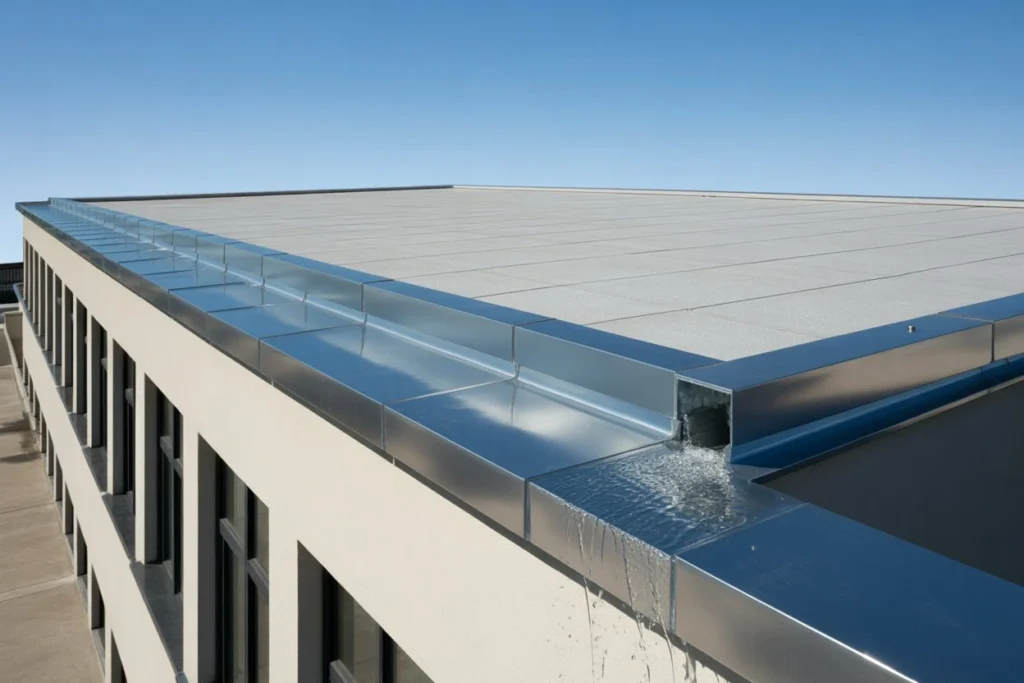
A roof scupper is an opening in the edge or parapet wall of a roof that allows water to flow off safely. They are most common on flat or low-sloped roofs, where water doesn’t naturally drain away. Without them, water would pool on the roof surface and eventually cause damage.
Key facts about scuppers:
- Usually made of durable metals such as aluminum, copper, or galvanized steel.
- Installed along the roof edge or within parapet walls.
- Often connected to downspouts or designed to let water fall away freely.
- Can be functional and decorative, blending into a building’s architecture.
In simple terms, scuppers are the safety valves of your roof. They allow water to escape before it turns into a serious problem.
⭐ Why Are Scuppers Important?
Scuppers might not seem like much at first glance, but they protect both your roof and your building. Here’s why they matter so much:
- Prevent Ponding Water 💧: Standing water adds weight, strains your roof, and accelerates wear on roofing membranes.
- Stop Costly Leaks 🧰: Water that doesn’t drain properly eventually seeps into cracks and damages insulation, ceilings, and walls.
- Protect Roof Lifespan ⏳: A well-drained roof lasts longer and requires fewer repairs over time.
- Save Money 💲: Repairs for water damage can run into thousands of dollars. Scuppers reduce those risks.
- Emergency Backup ⭐: If your primary drainage system gets clogged, scuppers act as a secondary release to prevent flooding.
📊Benefits of Roof Scuppers
| Benefit | How It Helps | Why It Matters |
|---|---|---|
| Prevents Ponding 💧 | Moves water off the roof | Avoids leaks and membrane stress |
| Extends Roof Life ⏳ | Reduces pressure on materials | Roof lasts longer |
| Saves Costs 💲 | Minimizes water damage repairs | Thousands saved over time |
| Acts as Backup ⭐ | Secondary drainage outlet | Protects against clogs in main drains |
| Improves Energy Efficiency ⚡ | Keeps insulation dry | Lowers heating and cooling costs |
📄 Types of Roof Scuppers
🏢 Through-Wall Scuppers
- Built directly into the parapet wall.
- Often connected to downspouts to guide water to the ground.
- Best for large commercial roofs with heavy water flow.
💧 Open-Faced Scuppers
- Simple cutouts at the roof’s edge.
- Allow water to pour directly off the side of the roof.
- Affordable and easy to install but may splash water on walkways.
📦 Box Scuppers
- Enclosed units that channel large volumes of water.
- Provide more control over water direction than open-faced designs.
- Often paired with protective flashing to reduce leaks.
🎨 Decorative Scuppers
- Designed with artistic details while still functional.
- Common in historical or high-end architecture.
- Combine style with practical drainage.
📊 Types of Roof Scuppers
| Type of Scupper | Description | Best For | Pros | Cons |
|---|---|---|---|---|
| Through-Wall 🏢 | Openings through parapet walls, often connected to downspouts | Large commercial roofs | Strong drainage, controlled water flow | Requires wall modifications |
| Open-Faced 💧 | Cutouts in the roof edge allowing free flow | Smaller roofs, simple designs | Affordable, easy installation | Splashing water near walls |
| Box 📦 | Enclosed units channeling water in volume | Buildings with heavy rainfall | High capacity, neat water control | More expensive |
| Decorative 🎨 | Styled with aesthetic finishes | Historical or luxury buildings | Adds architectural beauty + drainage | Costly, custom-built |
📄 Scupper Installation Process
Adding scuppers requires expertise. Roofing contractors follow a careful process to ensure they work correctly:
- Assessment 📝: A roofing professional inspects the roof design and determines the best locations for scuppers.
- Cutting Openings 🧰: Openings are cut into the parapet wall or roof edge.
- Installing Flashing 🛡️: Metal flashing is fitted around the opening to prevent leaks.
- Fitting the Scupper 📦: The scupper unit is secured in place with sealants and fasteners.
- Connection 🔗: Some scuppers connect to downspouts, while others let water exit freely.
- Testing 💧: Water flow is tested to ensure proper drainage away from the building.
Because the process involves cutting into structural elements, scupper installation should always be handled by a licensed roofing contractor.
📄 Can You Add Scuppers to an Existing Roof?
Yes, scuppers can be added after a roof is built, but it is complex. Contractors need to cut into existing walls, install proper flashing, and sometimes modify the drainage system. While possible, it’s more expensive than installing them during initial construction.
If you suspect your building needs scuppers, consult a roofing engineer first. They can confirm feasibility and provide cost estimates.
📄 Maintenance Needs of Scuppers
Like all drainage systems, scuppers need routine care:
- Cleaning 🧹: Remove leaves, twigs, and dirt that block water flow.
- Inspecting for Damage 🔍: Check for rust, cracks, or holes in the scupper metal.
- Testing Drainage 💧: Ensure water flows away properly, not back toward the building.
- Roof Upkeep 🏢: Keep surrounding areas clear to prevent blockages.
📊Scupper Maintenance Checklist
| Maintenance Task | Frequency | Why It’s Important |
|---|---|---|
| Cleaning 🧹 | Twice per year + after storms | Removes debris and prevents clogs |
| Damage Inspection 🔍 | Quarterly | Detects rust, cracks, leaks early |
| Drainage Check 💧 | After heavy rainfall | Ensures water flows correctly |
| Roof Cleaning 🏢 | Ongoing | Stops buildup around scuppers |
📄 Common Problems With Scuppers
❌ Clogging
Leaves and debris are the most frequent culprits. Without cleaning, water backs up quickly.
❌ Undersized Scuppers
If the scuppers are too small for the roof size, they won’t drain enough water during storms.
❌ Rust and Corrosion
Metal scuppers eventually corrode if not maintained, especially in coastal or industrial areas.
❌ Improper Installation
Poorly sealed flashing leads to leaks around the scupper opening.
📊 Common Problems With Scuppers
| Problem | Cause | Solution |
|---|---|---|
| Clogging ❌ | Leaves, twigs, dirt | Regular cleaning + leaf guards |
| Undersized Design ❌ | Poor planning | Replace with larger scuppers |
| Rust/Corrosion ❌ | Weather, poor coating | Use copper or galvanized steel |
| Leaks ❌ | Improper flashing | Professional resealing |
📄 Alternatives to Scuppers
- Roof Drains 💧: Installed at roof centers, effective for large water volumes.
- Gutters 🏠: Common on sloped roofs, can also work on low-sloped designs.
- Internal Drainage Systems 🔗: Hidden inside buildings, effective but more costly to install and repair.
📊 Alternatives to Scuppers
| Alternative | Description | Pros | Cons |
|---|---|---|---|
| Roof Drains 💧 | Central drains in flat roofs | Handle large water volumes | Higher risk of clogging |
| Gutters 🏠 | Edge channels guiding water | Affordable, familiar | Needs regular cleaning |
| Internal Systems 🔗 | Hidden pipes inside walls | Neat, effective | Costly installation + repairs |
📄 Scuppers and Building Codes
Local building codes often require secondary drainage outlets for flat roofs. Scuppers meet this requirement, ensuring compliance with safety standards. For example, the International Building Code (IBC) states that roofs with primary drains must also include emergency drainage—commonly scuppers.
Ignoring code requirements can result in fines and expensive retrofits later. Always check with local roofing contractors familiar with regulations in your area.
📄 Scuppers for Residential vs. Commercial Buildings
- Commercial Buildings 🏢: Usually have large, flat roofs that demand multiple scuppers for fast drainage.
- Residential Homes 🏠: Less common, but used on modern or custom flat-roofed houses.
In both cases, scuppers reduce long-term maintenance costs and prevent damage from standing water.
📄 Cost of Installing Scuppers
Prices vary based on materials, labor, and building design. On average:
- Basic open scuppers: $300–$600 each.
- Box or decorative scuppers: $700–$1,500 each.
- Retrofitting existing roofs: Higher due to extra labor.
📊 Cost of Installing Scuppers
| Scupper Type | Average Cost (USD) | Notes |
|---|---|---|
| Open-Faced 💧 | $300 – $600 | Budget-friendly, simple |
| Through-Wall 🏢 | $500 – $1,000 | Requires downspouts |
| Box 📦 | $700 – $1,200 | High water capacity |
| Decorative 🎨 | $1,000 – $1,500+ | Custom-built designs |
| Retrofit Installation 🧰 | $1,500+ | Higher due to wall/roof modifications |
People also ask🙋
🏁 Conclusion
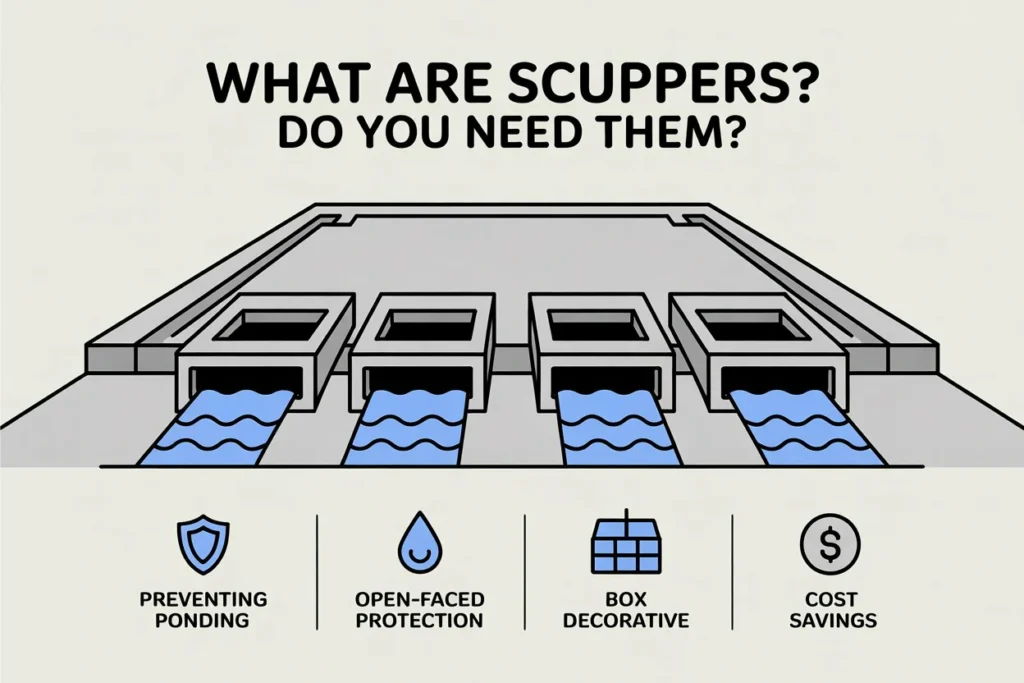
If your building has a flat or low-sloped roof, the answer is simple: yes, you need scuppers. They provide essential drainage, prevent costly water damage, and extend your roof’s lifespan. While alternatives exist, scuppers remain one of the most practical and cost-effective solutions for keeping roofs dry and safe.
Don’t wait until water damage becomes obvious. Schedule an inspection with a professional roofing contractor today to ensure your drainage system is working properly.