
- 🤔 Introduction: Is Your Home Safe After the Storm?
- 📑 What Is Storm Damage?
- 🌬️ Types of Storm Damage
- 📊 Common Storm Damage
- 🏚️ Signs of Storm Damage in Your Home
- 🧑🔧 Why Quick Action Matters
- 📋 Storm Damage Inspection Checklist ✅
- 🏠 Roof Storm Damage in Detail
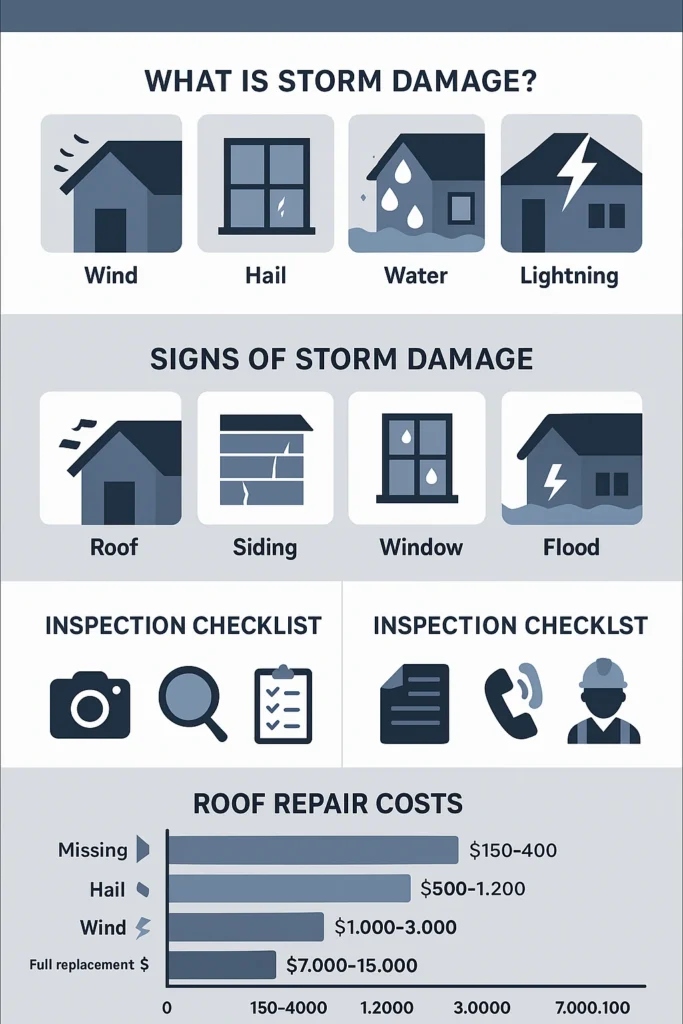
- 📊Roof Repair Costs (U.S. Averages)
- 📞 Professional Storm Damage Help
- 🧑💼 Insurance and Storm Damage Claims
- 🛡️ How to Prevent Future Storm Damage
- 📊 Prevention Tips
- 🌟 Conclusion
- ❓ FAQs
🤔 Introduction: Is Your Home Safe After the Storm?
Have you ever stepped outside after a storm and wondered if your house is really safe? The rain may stop, the winds may fade, and the skies may clear, but that does not mean your home escaped without harm. Many people only notice roof leaks, cracked windows, or damaged siding weeks later—when repairs become more expensive. Storms often leave behind hidden damage that threatens both safety and value. That is why knowing what storm damage looks like and how to act fast is so important.
📑 What Is Storm Damage?
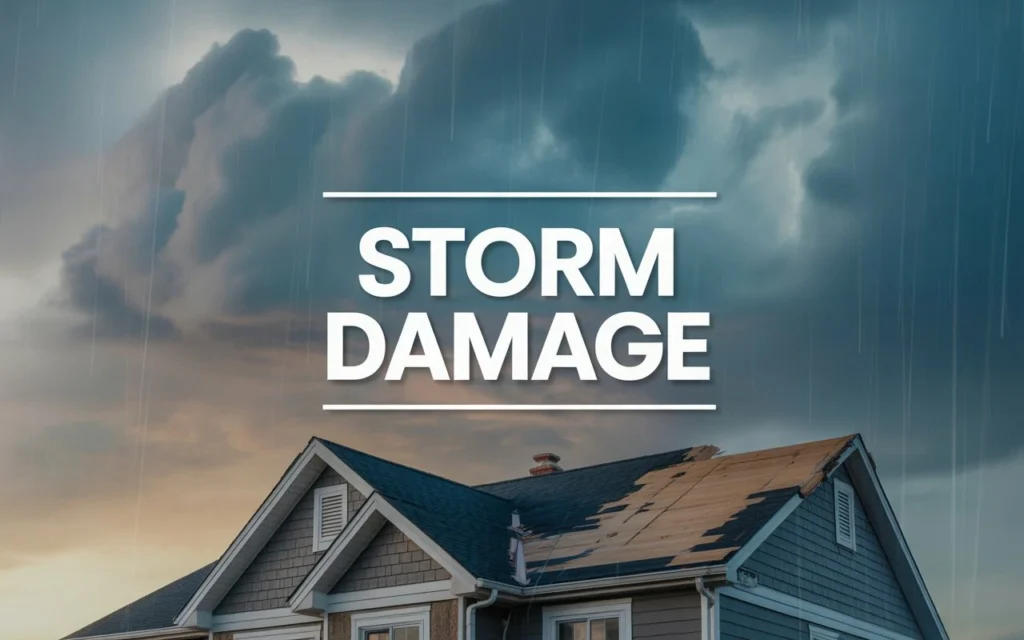
Storm damage happens when severe weather weakens or destroys parts of a home or building. It can be caused by hail, wind, heavy rain, flooding, or even lightning. The most vulnerable areas are:
- 🏠 Roofing: Shingles, flashing, and gutters
- 🪟 Windows and Doors: Glass, seals, and frames
- 🧱 Siding: Panels, paint, or protective layers
- 💧 Foundations and Basements: Flooding and moisture damage
According to the National Weather Service, hail alone causes more than $1 billion in property losses each year in the United States. This makes storm damage one of the most expensive weather-related risks for homeowners.
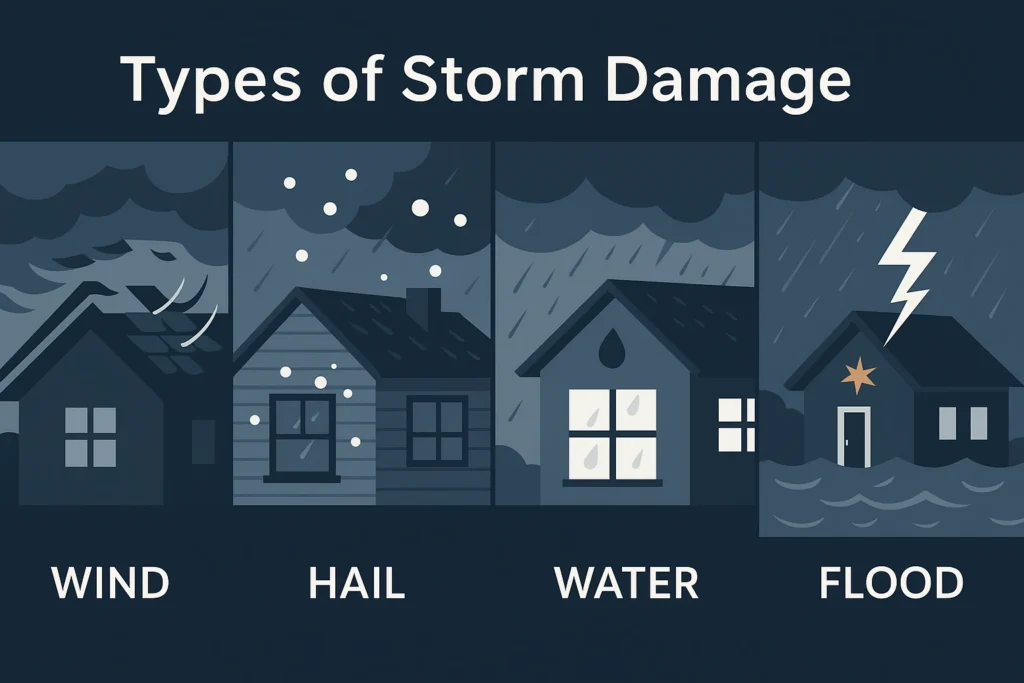
🌬️ Types of Storm Damage
🌪️ Wind Damage
Strong winds can reach 50 miles per hour or more, ripping shingles, bending gutters, and even tearing siding off walls. Flying debris like branches or outdoor furniture can strike roofs and windows, leaving costly dents and cracks. Missing shingles expose wood decking to water, which leads to leaks and rotting.
🧊 Hail Damage
Hailstones may look small, but they can cause serious problems. Even hail the size of a quarter dents gutters, cracks shingles, and damages skylights. Large hailstones—sometimes more than 4 inches wide—can punch holes in roofs and leave siding shattered. Hail damage is especially dangerous because it weakens materials silently, and leaks often appear weeks later.
🌧️ Water Damage
Heavy rains soak roofs, flood basements, and damage walls. Water that sneaks into cracks creates mold, ruins insulation, and weakens the foundation. Just one inch of floodwater can cost up to $25,000 in repairs, according to FEMA.
⚡ Lightning Damage
A lightning strike may cause a fire, destroy appliances, or crack roofing materials. Even if flames do not appear, electrical systems can be ruined, leading to expensive replacements.
🌊 Flood Damage
Flash floods fill basements, crawl spaces, and garages within minutes. Standing water erodes concrete, warps wood, and creates the perfect environment for mold. Flood damage is one of the hardest and most expensive problems to repair.
📊 Common Storm Damage
| Storm Type | Typical Damage | Repair Urgency |
|---|---|---|
| Wind | Missing shingles, siding ripped, debris dents | High |
| Hail | Cracked shingles, dented gutters, broken glass | High |
| Water | Mold, leaks, rotting wood | Very High |
| Lightning | Fires, electrical surges | Extreme |
| Flood | Basement flooding, soil erosion | Extreme |
🏚️ Signs of Storm Damage in Your Home
Roof Damage 🚨
- Missing or loose shingles
- Shingle granules in gutters
- Dark stains on ceilings
- Sagging roofline
Siding Damage 🧱
- Holes, cracks, or warping
- Rust or moisture behind siding
- Loose or fallen panels
Window Damage✨
- Cracks or shattered glass
- Broken window seals causing fogging
- Drafts from damaged frames
Gutter Damage 💦
- Detached or bent gutters
- Pooling water near foundations
- Overflow during rainfall
🧑🔧 Why Quick Action Matters
Storm damage only gets worse with time. A single missing shingle may cost around $150 to fix. If left unchecked, water will seep in, cause mold, and spread across insulation, raising repair bills to $5,000 or more. Insurance companies also expect homeowners to act quickly. Waiting too long often leads to denied claims.
📋 Storm Damage Inspection Checklist ✅
Here is a simple checklist to follow after a storm:
- 📸 Take Photos of any visible damage
- 🔍 Check Roof for missing or cracked shingles
- 🚪 Inspect Windows and Doors for cracks or broken seals
- 💧 Look for Water Intrusion in ceilings, walls, or basements
- 🧱 Check Siding for dents, cracks, or missing panels
- 🪣 Examine Gutters for bends, clogs, or detachment
- 📞 Call a Roofing Contractor if you suspect hidden issues
🏠 Roof Storm Damage in Detail
Hail Damage on Roofs 🧊
- Dark, round marks where shingles lost granules
- Soft spots when walking on shingles
- Leaks showing up weeks after the storm
Wind Damage on Roofs 🌬️
- Entire shingles torn away
- Loose flashing near chimneys or vents
- Gutters pulled away from the roofline
Water Damage on Roofs 💧
- Ceiling stains
- Wet insulation in the attic
- Mold growth near roof decking
📊Roof Repair Costs (U.S. Averages)
| Damage Type | Average Cost |
|---|---|
| Missing shingles | $150 – $400 |
| Hail damage | $500 – $1,200 |
| Wind damage | $1,000 – $3,000 |
| Full replacement | $7,000 – $15,000 |
📞 Professional Storm Damage Help
Many signs of storm damage are invisible to the eye. Professional contractors use drones, thermal imaging, and moisture meters to detect hidden issues. This ensures that problems are fixed before they spread. For professional inspections and repairs, you can trust Akron Roofing Experts to restore your home safely.
🧑💼 Insurance and Storm Damage Claims
Filing a claim is often stressful, but following the right steps makes it easier:
- Document all damage with photos and videos
- Contact your insurance company right away
- Get a professional inspection report
- Review your coverage and deductible
- Approve contractor estimates
A 2023 study by the Insurance Information Institute showed that 1 in 35 homes files a claim for wind or hail damage each year. Quick reporting ensures fair coverage.
🛡️ How to Prevent Future Storm Damage
- Trim trees near your home 🌳
- Install Class 4 impact-resistant shingles
- Seal windows and doors with weatherproof caulk
- Clean gutters in spring and fall
- Install sump pumps with backup power
📊 Prevention Tips
| Area | Prevention Strategy |
|---|---|
| Roof | Use impact-resistant shingles |
| Windows | Add storm shutters |
| Gutters | Clean twice yearly |
| Yard | Remove weak branches |
| Basement | Add sump pump and backup |
🌟 Conclusion
Storms are powerful, but their damage can be managed. From hail that cracks shingles to winds that tear siding, every part of a house is at risk. Acting quickly saves money, prevents mold, and keeps your family safe. If you suspect storm damage, call a professional today. For trusted inspections and repairs, visit Akron Roofing Experts and protect your home with expert care.